
Increasingly significant role of Estonia in the EU: Is Kosovo seen from the Baltics
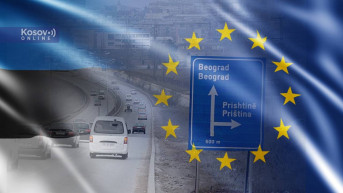
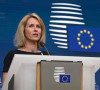
In the new distribution of leading positions within the EU, the Western Balkans will be viewed from the Baltics. Instead of Spanish Josep Borrell, the new head of the EU for foreign affairs and security is nominated to be the Estonian Prime Minister, Kaja Kallas. The head of the EU Office in Kosovo, Czech diplomat Tomas Szunyog, is expected to be replaced by the current Estonian Ambassador to the EU, Aivo Orav.
Written by: Arsenije Vuckovic
Interviewees from Kosovo Online, from Pristina to Belgrade, interpret the European figures from the Baltics in a dual manner when it comes to the integration process of the Western Balkans, but also the much more important issue of the influence on the dialogue between Belgrade and Pristina, as Estonia is one of the first EU countries to recognize Kosovo's independence.
(Im)partiality
Strahinja Subotic, Program Manager at the Center for European Policy, believes that the selection of Estonian politicians for some of the leading EU positions will hinder the progress of the Belgrade-Pristina dialogue because this country is unequivocal in its support for Kosovo's independence. However, he suggests that EU officials could compensate for this by appointing someone as the chief mediator who will respect the EU's neutral stance on this issue.
"We at the Center for European Policy recently visited Estonia, and the entire Baltic region, and I can say that they are very well informed about Kosovo, considering that they strongly support its independence, which is good for Kosovo but bad for Serbia. They are aware that Estonia is subjective in this regard. It is expected that Estonia will insist on largely satisfying the interests of Kosovo, i.e., Pristina, and less so those of Belgrade, which will complicate the dialogue," says Subotic in an interview for Kosovo Online.
According to him, there is hope that Kaja Kallas, as the head of European diplomacy, would primarily focus on Russia and delegate a representative to lead the dialogue between Belgrade and Pristina.
Subotic says that this would continue the practice initiated by the current head of EU diplomacy, Josep Borrell, who appointed Slovak diplomat Miroslav Lajcak as the chief mediator.
"We do not know if that will happen. First, we need to wait for Kaja Kallas's nomination to pass in the European Parliament. After that, we need to see if the European Council will approve her candidate to succeed Lajcak," Subotic explains.
He expects that the new mediator in the Belgrade-Pristina dialogue will not come from Estonia, which would allow for the objectivity of the European External Action Service.
"I hope they will likely find someone more moderate, probably from Central Europe, who knows Serbia a bit better and not just Kosovo. This way, a signal will be sent to both Belgrade and Pristina that the EU is a creation that remains status-neutral regarding Kosovo, considering that five countries still do not recognize Kosovo. In this regard, I believe the European Council, where high officials of all member states sit, will insist on this. Therefore, Kaja Kallas will have to be a bit more objective than she might want to be concerning the dialogue between Belgrade and Pristina," concludes Subotic.
EU Position
Political analyst from Pristina, Afrim Hoti, tells Kosovo Online that Estonian politicians, Kaja Kallas as the new head of foreign affairs, and Aivo Orav as the new head of the EU Office in Pristina, will have to follow the EU's neutral policy on the dialogue issue, despite Estonia being one of the first countries to recognize Kosovo's independence.
"Definitely, whoever comes from Europe will lead the process under the EU's umbrella, and it is irrelevant whether that person comes from Estonia or Slovakia. They must maintain the neutral position that the EU has held so far," emphasizes Hoti.
When asked if Kosovo is even visible from the Baltics, this analyst states that Estonian politicians are well-acquainted with Kosovo's issues, especially since 1999 and the subsequent recognition of its independence in 2008.
"Estonia is among the countries that recognized Kosovo in the first wave of recognition. It seems that the Kosovo government has also established diplomatic and very close relations with Estonia. In this sense, perhaps due to the similarity in their positions, as Estonia was part of the Russian Empire, the Russian Federation, they seem to be much more sensitive and active regarding the processes in and around Kosovo," emphasizes Hoti.
Complicating Factors
Research associate at the Center for Social Research, Nikola Perisic, considers Kaja Kallas's election as the new head of European diplomacy to be highly questionable for Serbia, given that she comes from a country that unequivocally recognizes Kosovo.
"This is questionable, especially since she comes from a state that is very anti-Russian. These countries often, and usually without reason, perceive Serbia as a country close to Russia and consequently have an a priori negative stance towards everything Serbia proposes and its various interests. This is yet another complicating factor at this moment, and we should not expect her to pursue a favorable policy towards Serbia," Perisic tells Kosovo Online.
He recalls that the selection of European officials dealing with specific topics, such as the Belgrade-Pristina dialogue, is crucially based on their experience and understanding of the genesis of the problem.
"They need to have experience to know how to position themselves in a given situation, to understand the conflict's genesis and everything that led to such a situation. This is what gives them an advantage and actually provides them with authority when conducting negotiations and proposing certain solutions. However, we see that career politicians, who have completed their political careers in their respective countries, are now coming to various European institutions, essentially seeking to advance their careers," Perisic explains.
Along with Kaja Kallas, Estonia should also provide the new head of the EU mission in Pristina. Perisic questions how familiar these politicians are with the problems not only of the Belgrade-Pristina dialogue but also of the Western Balkans.
"The question is how familiar they are with this topic, but it is clear that the EU's policy towards Kosovo will not change, as seen by the EU's desire to extend Lajcak's mandate in leading negotiations. On the other hand, they want to give focus to the Baltic states in the new composition of European institutions due to the situation in Ukraine. After Biden's meeting with representatives of the Baltic states, we see that they are more represented in various Western-led alliances," says Perisic.
He assesses that it will take some time for EU officials from Estonia to familiarize themselves with the context of Kosovo's issues.
"They are probably comparing it with some of their problems and topics but are not familiar with the entire context of the situation in Kosovo. They will likely need to undergo a certain familiarization process, which could further slow down negotiations and agreements on the final resolution of Kosovo and Metohija's status," concludes Perisic.
Soft or Hard Diplomacy
Member of the Forum for International Relations and former ambassador Srecko Djukic tells Kosovo Online that the selection of EU leaders from Estonia, a state that recognizes Kosovo, will not be decisive for Serbia because EU representatives are obligated to represent the Union's policy, not their countries. The examples of Josep Borrell and Miroslav Lajcak best confirm this.
"In our public, this is associated with, and even part of the political establishment associates it with. However, every EU representative or any other international or national organization representative acts within the mandate they have. Therefore, whoever the mediator is, they must act in accordance with EU policy. We had Lajcak from Slovakia, Borrell from Spain. These two countries have not recognized Kosovo and Metohija, but they acted precisely from the EU's position, which sought full normalization and practically recognition between Belgrade and Pristina," says Djukic.
According to him, the character of the selected EU representatives and whether they will employ tools of soft or hard diplomacy will be much more decisive.
He emphasizes that Estonian Prime Minister Kaja Kallas is considered a proponent of "hard diplomacy," but she will only be able to practice this within the framework of EU policy.
"She can't go beyond that. There's nowhere else to go. Just as Lajcak acted within the framework of EU policy, not the policy of his home country," Djukic explains.
This diplomat states that Serbia does not have special relations with Estonia or most Baltic countries. He attributes this to both Serbia and these states, noting that neither side has made efforts to establish closer and broader diplomatic relations.
However, he emphasizes that this should not be of particular significance because, although politicians change in the EU, its established policy does not.
"All this can be viewed through another lens because these Baltic countries are on the edge of the Russian Federation, they have had negative experiences with Russia, and they have a different policy towards Russia compared to ours. But again, take Lajcak and his country as an example. That's not the priority. What matters is what we want to achieve and whether we can justify, defend, and persist in our policy during negotiations. People change positions, but the policy does not change if people change, or it changes only in details," concludes Djukic.
View from the Baltics
Srdjan Barac, an associate at the Center for Social Stability, assesses that the dialogue between Belgrade and Pristina and the issue of Kosovo are visible from the Baltics, but it would have been much better for Serbia if Estonian Prime Minister Kaja Kallas had not been chosen as the head of European diplomacy.
"Is it visible from the Baltics? It is, but not in the way we would like it to be. I think it would have been better if someone else had taken that position. They recognized Kosovo, and they are in a region that feels very threatened from their perspective. For this reason, they are very obedient to Western partners or those dictating the pace or direction, and I think this might be even worse for Serbia's interests. However, often when we hope for such outcomes, we might fare better. Perhaps I will contradict myself, and maybe it won't be harsher compared to those who understand our position," Barac tells Kosovo Online.
According to him, despite all EU officials being required to implement common policies, they are still individuals who, along with their countries, have their own foreign policy stances.
He adds that Estonia recognized Kosovo and accepted the narrative that only Albanians suffered there, which is why they will have much more understanding for them.
"But the key, at the end of the day, is the course set from Brussels and what is consensually decided as the official policy of the European Union towards Kosovo. For now, this course is still not good enough for Serbia, although there have been slight changes, micro changes, where they did put some pressure on Albin Kurti, but very little. This pressure was more noticeable from across the Atlantic, and I think the pressure from the Atlantic was more significant," concludes Barac.

comments