
Kaja Kallas - the new conductor of the Belgrade-Pristina dialogue, who will be composing the repertoire?
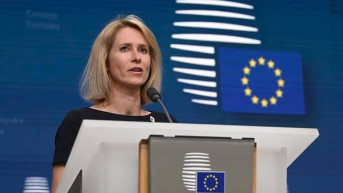
When Kaja Kallas, the current Prime Minister of Estonia, succeeds Josep Borrell and takes over the office in Brussels along with the package of foreign policy challenges facing the European Union, she will also inherit the Belgrade-Pristina dialogue, which has been mediated by EU High Representatives for Foreign Affairs and Security Policy since 2012. Kallas faces two options: either to appoint an operative for the dialogue, similar to Miroslav Lajcak, or to directly tackle the open issues in the negotiations, like Catherine Ashton and Federica Mogherini did.
Written by: Dušica Radeka Djordjevic
Analysts predict that Kallas will focus more on the wars in Ukraine and Gaza, leading them to believe she will appoint her own representative for the Belgrade-Pristina dialogue. The critical question is how this Estonian politician and lawyer will handle the "scales of justice" in this process.
Since Estonia recognized Kosovo shortly after its unilateral declaration of independence, Pristina is likely to be less skeptical of Kallas than it was of Spaniard Borrell or Slovak Lajcak. However, does this give Belgrade cause for concern?
EU spokesperson Peter Stano stated yesterday that the goal of the Belgrade-Pristina dialogue is the normalization of relations, not the recognition of Kosovo's independence. This is the framework within which Kallas is expected to operate, according to the EU's mandate for mediating the dialogue. While Stano mentioned recognition as a potential logical consequence, this remains hypothetical.
Estonia has supported Kosovo in all international organizations, and as Prime Minister, Kallas has stated that her country fully supports Kosovo's efforts on its path to the EU and NATO. However, she will lead the negotiations as a high representative of the EU. Historically, whenever the dialogue has been in trouble, leading EU countries or the Quint have stepped in to outline its course.
Strahinja Subotic from the Center for European Policy told Kosovo Online that it is in Belgrade's interest for Kaja Kallas to appoint her own representative or delegate for the dialogue after Miroslav Lajcak's term ends. This would allow someone else to handle the task in a more objective manner, as Estonia, under Kallas, strongly supports Kosovo.
Estonia is a distant country with limited knowledge of the Belgrade-Pristina relationship.
As Subotic highlights, Kallas will be "110 percent focused on Russia during her mandate," as well as on Israel. If she were to engage with the Belgrade-Pristina dialogue, it would be among her last priorities, which is detrimental to regional stability.
"I assume that member states are aware of this and will actually ask her to delegate someone, as it turned out to be a good thing that Borrell appointed Lajcak. Resolving the relations between Belgrade and Pristina requires the constant presence of a delegate who will travel nonstop between Belgrade and Pristina and adequately inform all member states about the situation on the ground," says Subotic.
The proposal for Kallas to be the head of EU diplomacy, according to Subotic, is not surprising, given that she comes from Estonia, a country that has been the loudest opponent of Russia.
"Kallas has made numerous proposals on how to sanction Russia, and these proposals have often been adopted. Therefore, she has great power and potential to exert stronger pressure on Russia now that she is at the helm of the EU's foreign policy," Subotic believes.
Political scientist Ognjen Gogic suggests that Kallas might have better relations with representatives from Pristina, but he points out that the EU's approach to the dialogue does not depend on the High Representative and that it is not the High Representative who defines the EU's expectations of the dialogue.
"As Prime Minister of Estonia, she had meetings with Kurti and Osmani, and generally, warm messages were exchanged, which is a significant difference compared to Borrell, who was immediately met with suspicion by Pristina. However, the EU's approach to the dialogue is defined by the EU Council, which leads the EU's foreign policy. When the negotiations were led by High Representatives Mogherini and Ashton, they were backed by Angela Merkel's political authority. When Borrell took over, he initially did not have clear instructions from EU states on the direction the dialogue should take until Macron and Scholz defined their Franco-German plan, which became the European proposal and was later adopted in the form of the Brussels and Ohrid agreements," Gogic explains.
He believes that Kallas, like Borrell, will delegate the leadership of the Belgrade-Pristina dialogue to a mediator who will take over from Miroslav Lajcak, probably starting in January. "If I compare her to Catherine Ashton and Federica Mogherini, who also previously held this position, there were no other significant foreign policy issues at that time, while Kallas will have other priorities, primarily the wars in Ukraine and Gaza, which will occupy most of her working time. Ashton and Mogherini had more success in all this than Borrell for several reasons, the first being that they were backed by Angela Merkel, and also because at that time, the issues seemed simpler, more technical than political. Additionally, the EU membership perspective for this region was clearer then, so both Belgrade and Pristina were more interested in fulfilling their obligations. Borrell did not have that kind of incentive to offer the parties, which led to a stalemate in the dialogue. This did not primarily depend on him, nor will it depend on Kallas," Gogic concludes.
For political analyst Arton Demhasaj, it is more important who will succeed Borrell and who will lead the dialogue. Demhasaj argues that if the EU wants to make progress in the negotiations, it needs to change its approach. The EU should not only act as a facilitator but also as a mediator, setting deadlines for the parties to comply with and implement the agreement's points.
"If the parties fail to implement parts of the agreement, the EU must take measures, i.e., impose sanctions against those who do not implement what was agreed. This is the right time for the EU to change its approach to the parties and define the obligations that the parties must fulfill, simply playing the role of a policeman," Demhasaj states.
"If I compare her to Catherine Ashton and Federica Mogherini, who also held this position, there were no other significant foreign policy issues at that time. Kallas, however, will have other priorities, primarily the wars in Ukraine and Gaza, which will occupy most of her working time. Ashton and Mogherini had more success in this regard than Borrell for several reasons. First, they had the backing of Angela Merkel, and the issues then seemed simpler, more technical than political. Additionally, the prospect of EU membership for this region was clearer, so both Belgrade and Pristina were more motivated to fulfill their obligations. Borrell did not have that kind of incentive to offer the parties, which led to a stalemate in the dialogue. This did not primarily depend on him, nor will it depend on Kallas," Gogic notes.
For political analyst Arton Demhasaj, who will succeed Borrell and lead the dialogue is less important than the EU changing its approach if it wants to make progress in the negotiations. Demhasaj argues that the EU should not only act as a facilitator but also as a mediator, setting deadlines for the parties to comply with and implement the agreement's points.
"If the parties fail to implement parts of the agreement, the EU must take measures, such as imposing sanctions against those who do not implement what was agreed. This is the right time for the EU to change its approach to the parties and define the obligations that the parties must fulfill, simply playing the role of a policeman," Demhasaj states.
Regarding the Estonian Prime Minister, Demhasaj believes that Kaja Kallas is sufficiently familiar with the developments in the dialogue because the mediators have always informed EU member states about the process.
"I don't think there will be difficulties in understanding the issues between Kosovo and Serbia. However, the dialogue between Kosovo and Serbia has been unsuccessful for 12 years since the agreements reached are not being implemented. If the EU continues to play only the role of facilitator, the situation will remain the same," Demhasaj thinks.


0 comments