
Is it possible to reach an agreement on holding elections for the National Assembly of Serbia in Kosovo?
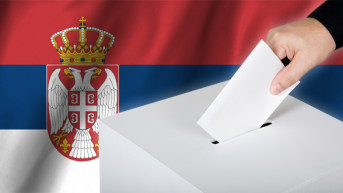
Will the Serbs in Kosovo vote in their places or go to polling stations in central Serbia in the upcoming parliamentary elections for the National Assembly of Serbia? It is still unknown because the Government in Pristina has not yet responded to Belgrade's request to allow voting in Kosovo. Interlocutors of Kosovo Online from Belgrade, North Mitrovica, and Pristina are closer to the belief that this scenario will repeat itself, as it did during the referendum on changes to the Serbian Constitution in January and the parliamentary and presidential elections on April 3, 2022, when despite pressure from the international community, the Kosovo Government did not allow Serbian elections to be held in Kosovo.
The positions of the parties before the extraordinary parliamentary elections scheduled for December 17 are the same as a year and a half ago: for Pristina, the ban on the elections is a matter of defending the Kosovo Constitution, and for Belgrade and the Serbs in Kosovo, it is a matter of violence, violation of rights, and all agreements.
Petar Petkovic, the Director of the Office for Kosovo and Metohija, addressed the head of the OSCE Mission in Kosovo, Michael Davenport, asking for the Mission's engagement in organizing and holding elections in Kosovo, delivering electoral material to polling stations, collecting ballots, and transporting them after the voting is complete, in accordance with the procedures used in previous election processes in Kosovo up to 2020.
Petkovic also reminded of the importance of respecting United Nations Security Council Resolution 1244 and relevant OSCE decisions regarding organizing elections and the citizens' right to freely exercise their voting rights in Kosovo.
The OSCE responded by informing the Pristina Government and other relevant actors of Belgrade's request, with the message that they were ready for the process but required the support of Kosovo's institutions, as initially agreed between Belgrade and Pristina in 2012 with the support of the EU and the Quint.
In the meantime, the Republic Electoral Commission of Serbia decided to establish the City Electoral Commission for the city of Pristina, which will be responsible for the conduct of elections in the units of local self-government in the Kosovo Administrative District. Municipal electoral commissions will also be established for the Municipalities of Pec (for polling stations in the Pec Administrative District), Gora (for places in the Prizren Administrative District), North Mitrovica, and Gnjilane (Kosovo-Pomoravlje Administrative District).
Lawyer Milan Antonijevic says that he doesn’t have a lot of optimism regarding the parliamentary elections scheduled for December 17 and whether voting will be allowed in Kosovo, and points out that he hopes that international pressure on the Pristina authorities and possible negotiations on this issue in the coming weeks will yield results.
Antonijevic points out for Kosovo Online that the international community has previously been quite vocal and clear about the need to hold elections for Serbian institutions both in northern Kosovo and in enclaves.
"I believe that this is something the OSCE will support once again. We will see how successful it will be. Sometimes, Pristina authorities are uncooperative with such requests, and sometimes they evaluate that it's in their interest to comply. Given that the burden of the negotiation's failure lies with Pristina authorities, there might be a slight degree of optimism that elections will be allowed this time. However, it will require coordinated pressure and more positive actions from Pristina authorities, which we haven't seen in previous months and years", our interviewee stated.
He also emphasizes that the OSCE, when it comes to elections, has been well-positioned in support of Serbia and has wanted to genuinely do everything within its power to ensure the elections take place.
"But whether it will happen or if we will have some hybrid model is hard to assess. This is indeed a matter of political issues, and Kosovo Prime Minister Albin Kurti often exploits that. In the previous election cycle, he evidently decided to make it more difficult for the Serbs to vote in Kosovo and thus displayed negative energy that is not beneficial for anyone at this moment. It is the duty of Pristina authorities to enable everyone to vote and return to what we had in the previous election cycles", Antonijevic said.
He also points out that the ban on holding elections can potentially be a source of new tensions.
"Every time you hinder the exercise of basic rights, in this case, the right to vote and be elected, you diminish the rights of the Serbs in Kosovo. Wherever you live, you have the right to vote without difficulties, crossing an administrative line, or going to a neighboring municipality in Serbia to vote. These are all issues that the Pristina authorities must resolve in a certain way. Regardless of the decision on Kosovo's status, everyone living in the north and enclaves will have the right to vote. So, it would be good to find a model that will work as soon as possible. Either what was in previous election cycles or something even more acceptable to the Serbian community, making it easier for them to vote. I think this should be considered", Antonijevic emphasizes.
He adds that anyone thinking of denying the right of the Serbs in Kosovo to vote at this moment is not acting in the interest of either the Serbian community or anyone who wants a normal coexistence in the region.
Eugen Cakolli from the Kosovo Democratic Institute also expects the Government of Kosovo, based on the established practice, to reject the request to allow voting in the extraordinary parliamentary elections in Serbia scheduled for December 17 in Kosovo.
He points out that the request to hold elections in Kosovo was not sent directly to Kosovo institutions but through the OSCE mission.
"It is not common practice for elections in one country to be organized in the territory of another unless there is an agreement, an agreement on the recognition of mutual jurisdiction in that country, which would mean that this is voting outside the country, which Serbia already applies. Therefore, I believe that it is in the interest of both sides not to insist on holding Serbian elections, especially in these circumstances. Especially not without a potential agreement between the parties or a discussion between the parties on how they want to resolve this issue. It is in the interest of Serbian citizens in Kosovo to participate in Serbian elections, and this can be easily ensured through an agreement between the two sides, which would provide for holding elections on both of their territories. This would implicitly mean that both parties recognize the jurisdiction of the other", Cakolli stated for Kosovo Online.
He adds that Kosovo and Serbia should "seize the moment in the dialogue, initiate negotiations, and reach an agreement on organizing both Serbian and Kosovo elections".
"I expect that when it comes to the elections scheduled for December 17, there will be no voting in Kosovo at all. The Serbs from Kosovo will go to Serbia and vote at polling stations, which has been a practice established several years ago. I doubt there will be any political will from the Serbian authorities to organize voting in Kosovo using the principle of 'voting abroad'. Considering that the Office for Kosovo and Metohija in Pristina does not meet the criteria to be a polling station, as the number of Serbian citizens who could vote is very large, it would imply that hundreds of thousands of Serbian citizens would have to come to Pristina to vote, which would not be a practical solution. Therefore, I believe it is in the interest of both sides to start discussions on this issue and find a solution for the upcoming elections, regardless of when they will be held", Cakolli says.
When asked if he expected pressure from the international community, primarily the Quint countries, on the Kosovo authorities to allow the Serbs in Kosovo to vote, Cakolli says he expects that as in previous cases when Serbian elections were organized, there will be calls from the international factor for both sides to find a solution.
"I don't think it will come in the form of pressure as was the case before, due to the current situation related to the dialogue. Just the announcement of elections in Serbia has sent a signal to all parties that there is no willingness to implement previously reached agreements. Therefore, I believe even the position of the international community will be 'softer', and they won't insist on holding the elections, as was the case with the referendum and elections organized in Serbia in recent years", Cakolli believes.
Boris Bratina, a Professor at the Faculty of Philosophy at the University of Pristina with a temporary seat in Kosovska Mitrovica, also believes that there are slim chances that the extraordinary parliamentary elections scheduled in Serbia for December 17 will be held in Kosovo.
"Previous elections have been prohibited also. It has obviously become not only the practice of the Albanians but also the practice of approving such a stance by all international factors, be it EULEX, KFOR, and others, who are certainly unlikely to agree to secure the elections. I doubt that Pristina will allow the voting to take place", Bratina states.
He pointed out that if Pristina were to allow voting in Kosovo for Serbian institutions on December 17, it would be a "sign of thawing", but one should be very cautious regarding all the moves made by Kosovo authorities.
"At this moment, we must be very cautious because the small signs or omens we see as a thaw can always turn the other way. We witnessed that before September 24, there was one situation, and it seemed like everything was going well, and then, after that, in one day, it looked like the entire state policy over the past three years had fallen apart. Now we see that it is not really the case, and the authority of the Serbian state is more internationally respected. However, we should know that the EU and the US are making a joint effort to support Kosovo's independence. They need what they are looking for, and they can say, 'Now it's a bit better, so we'll allow you to hold elections', although I doubt it", he emphasized.
He believes that if Pristina does not allow the elections, this "tense situation" will persist.
"I think it's clear to everyone in the world what is happening here, but some are pretending to be clueless to achieve their goals. For the Albanians and the pseudo-international community, it is essential to achieve their goals, which will lead them, first to de facto and then de jure recognition of Kosovo, which, of course, will not happen", Bratina concluded.



0 comments