
Pavkovic: Presidential issue remains open, new elections in Kosovo most likely scenario
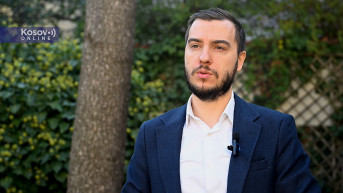
Milos Pavkovic, Director of Strategy at the Center for European Policy in Belgrade, believes that new elections are the most likely scenario for Kosovo's political crisis, because in the final week before the constitutional deadline for electing a president expires, the issue remains unresolved.
Pavkovic told Kosovo Online that political relations in Kosovo today are no clearer than they were the day after the June elections.
“After three rounds of parliamentary elections, we still have political instability in Kosovo. The government was formed simply because Self-Determination won enough seats to form a government, but the issue of the president remains open. Officially, we do not have a candidate, the constitutional deadline is running and will expire very soon,” Pavkovic said.
He added that there had been negotiations between the Democratic League of Kosovo and Self-Determination in early September.
“There was a candidate who withdrew, so none of that came to anything. The situation has not been resolved after three rounds of parliamentary elections, there is no political agreement, the crisis continues and the most likely scenario is that the constitutional deadline will expire and we will have another parliamentary election,” he said.
Asked whether there is a possibility that Self-Determination could condition its support for its presidential candidate on the adoption of the Law on the Special Court, Pavkovic says this is uncertain.
“That is an interesting question. Following the verdict against Hashim Thaci, there is considerable dissatisfaction among both political representatives and citizens of Kosovo with the verdict of the Specialist Chambers, and in that context there is great potential for synergy, that is, for support for such a law. This is something Albin Kurti could potentially use as a bargaining chip in exchange for support for a presidential candidate. However, that is in theory, while in practice there are no indications that there is any candidate. So, although this could potentially represent a good opportunity, I am not optimistic, nor do I expect it to actually enable this kind of political bargaining that would lead to the election of a president,” Pavkovic said.
He expects the opposition to try to take advantage of the wave of dissatisfaction over the verdict.
“I believe the opposition will try to place responsibility on Kurti and then use this wave of dissatisfaction to win more votes in some new election. I think that, based on this verdict of the Specialist Chambers, the opposition will try to take Kurti's strongest card away from him, and that is the card of nationalism. Citizens are dissatisfied with the court's verdict, while the Kosovo government has been unclear on the issue or has failed to meet citizens' expectations, which is why I expect the opposition to criticize the government and try to take that strongest card of nationalism away from Kurti and claim it for itself, thereby attempting to take, that is, win over some of Kurti's voters and achieve a better election result in possible new elections,” our interlocutor explained.
He said that Kurti now has no possibility of holding potential elections at the end of December during the holidays, which could make his electoral result more difficult.
“The diaspora is another strong card Kurti has, and traditionally the diaspora vote has tipped the balance in Kurti's favor during previous election cycles. However, because of the constitutional deadlines, Kurti now has no possibility of postponing the elections, for example, until the end of December, when the diaspora traditionally comes home. On the other hand, Kurti has proven to be a very stubborn politician who is not inclined toward compromise and has essentially shown that he is prepared to go headfirst into a wall in any situation. So I would not be surprised if he also goes to early elections now, because he does not want to share power or enter coalition governments, even at the cost of completely losing power,” Pavkovic concluded.



0 comments