
Is Kosovo ready to begin EU accession negotiations?
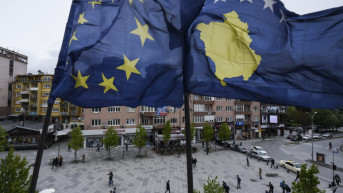
Despite uncertainty surrounding the election of a president and the possibility of new elections, Kosovo officials have recently launched a more assertive campaign regarding accession negotiations with the European Union and membership in the Council of Europe. The European Commission told Kosovo Online that Kosovo’s progress slowed last year due to internal deadlock, while interlocutors point to the blocked dialogue with Belgrade and the fact that five EU member states do not recognize Kosovo’s independence as key obstacles to its European path.
Written by: Jelena Novakov
Kosovo submitted its application for EU membership in December 2022 and has since been awaiting the European Commission’s questionnaire, which contains around 3,000 questions and covers democratic stability, the rule of law, minority protection, economic criteria related to market competition, as well as the capacity to assume and effectively implement the obligations of EU membership.
Kosovo’s Minister of Foreign Affairs Glauk Konjufca emphasized last week, during talks with Belgian counterpart Maxime Prévot, that Kosovo has been waiting for more than three years for the EU membership questionnaire, but remains committed to its European path.
In the Western Balkans, Kosovo is the only entity that is not a candidate country, a point recently reiterated by chief EU negotiator Jeton Zulfaj, who added that Pristina is actively working to achieve that status. He also assessed that the opening of negotiations should be accelerated and noted that Kosovo should use this year to advance the process through cooperation with EU member states and institutions.
During a visit to Albania, Zulfaj stated that Kosovo continues to await the EU’s decision on candidate status, but that officials will not remain idle in the meantime. According to him, Kosovo, with Albania’s assistance, will begin aligning responses to the questionnaire in anticipation of the screening process, as well as working on establishing inter-institutional coordination structures.
At a meeting with the acting head of the EU Office in Kosovo, Eva Palatova, Zulfaj said Kosovo deserves to move forward toward membership, claiming it leads the region in democratic progress indices and has a strong economic performance. However, the 2025 Enlargement Report indicated a slowdown due to the internal situation and institutional blockages.
At the same time, interlocutors point out that one of the key obstacles is the fact that five EU countries—Spain, Greece, Romania, Slovakia, and Cyprus—do not recognize Kosovo’s independence. This was also acknowledged by Kosovo’s Prime Minister Albin Kurti, who in an op-ed for the Catalan newspaper El Periódico described these states as a “major obstacle” on Kosovo’s path to the EU. According to him, there is no dispute between Kosovo and Spain, and therefore no obstacle for Madrid to recognize Kosovo’s independence.
Despite these challenges, public support for EU membership in Kosovo remains high. A survey by the Regional Cooperation Council shows that 78 percent of citizens support EU accession, while a poll by the International Republican Institute indicates support as high as 89 percent.
European Commission assessment
The European Commission stated that the 2025 Enlargement Report for Kosovo showed a slowdown in reform progress due to internal political divisions and institutional stalemate, but emphasized that the EU remains ready to cooperate with Kosovo authorities and support its European path.
“The 2025 Enlargement Report clearly shows that progress in EU-related reforms has slowed over the past 12 months, primarily due to domestic political divisions, the slowdown of legislative activity ahead of the February elections, and the prolonged political stalemate that followed,” a European Commission spokesperson said.
She added that the Commission expects the swift formation of institutions and a return to reforms, stressing that priority should be given to implementing the Growth Plan and related agreements worth up to €882 million.
“The EU is ready to work with Kosovo authorities and continue supporting Kosovo on its path toward the European Union,” the spokesperson said.
She also noted that the continuation of high-level dialogue will be possible once conditions are met, adding that High Representative Kaja Kallas will convene such a meeting when circumstances allow.
Dialogue and the Community of Serb-majority Municipalities
Former diplomat Zoran Milivojevic emphasized that dialogue with Belgrade will be crucial for opening the EU accession process. According to him, after the EU lifted measures against Kosovo, conditions were created for continuing discussions on its European future.
He reiterated that the European Commission signed a Stabilisation and Community Agreement with Kosovo, as the EU itself cannot do so due to the non-recognition by five member states.
Another limitation, he noted, concerns Kosovo’s political system, including last year’s institutional blockages and the possibility of new elections if a president is not elected by April 28. He stressed that the continuation of the Belgrade–Pristina dialogue is essential.
“The dialogue is blocked. Positions are diametrically opposed. Serbia firmly maintains that no substantive negotiations are possible unless Kosovo fulfills its obligation under the Brussels Agreement, namely the establishment of the Community of Serb-majority Municipalities. The Self-Determination authorities are not prepared to fulfill this,” Milivojevic said.
He added that the EU insists on the review of the statute of the Community before the Constitutional Court of Kosovo, which is a condition both for Council of Europe membership and for unblocking the dialogue. Milivojevic expressed skepticism about progress due to the lack of willingness in Pristina to engage on this issue.
He also pointed to a broader geopolitical push to accelerate Kosovo’s process, similar to Ukraine and Moldova.
“There is a geopolitical context that places this region within broader eastern policy priorities—related to Ukraine and Moldova—with efforts to accelerate these processes ahead of a major outcome in the war in Ukraine. There is a strong current within the EU pushing the Kosovo issue forward, led by Germany and supported by other countries focused on geopolitical considerations,” he said.
According to him, Albin Kurti and the current authorities in Pristina are attempting to align with Brussels through concessions.
Obstacles within the EU
Five EU member states—Greece, Spain, Romania, Slovakia, and Cyprus—do not recognize Kosovo, and according to Enlargement Commissioner Marta Kos, developments regarding these countries are being monitored and are “encouraging,” although she did not elaborate.
Analyst Nexhmedin Spahiu assessed that Kosovo’s European future largely depends on these states.
“It does not depend on the political situation. It depends primarily on the fact that five EU countries have not recognized Kosovo, which places it outside the competition compared to other Western Balkan countries,” he said.
He added that EU integration is unlikely to be a central issue in election campaigns, which will instead focus on domestic political disputes, corruption, and crime. Nevertheless, public interest in EU membership remains strong.
“Citizens would like to be in the EU, to move freely and have free movement of goods, but they do not have a clear idea how to achieve that or which politicians could deliver it faster,” Spahiu concluded.
0 comments