
Kosovo still in the Council of Europe’s waiting room
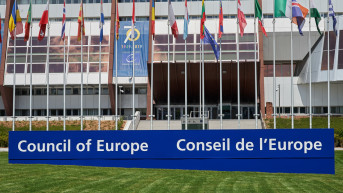
For the second year in a row, Kosovo has failed to overcome the final procedural hurdle and secure the approval of the Council of Europe’s Committee of Ministers for membership in the organization. In fact, Kosovo’s request was not even placed on the agenda of today’s ministerial meeting. For official Belgrade, this outcome is the only correct one—primarily because only states can be members of the Council of Europe, and Kosovo does not have such status in the United Nations. Additionally, it is believed that there can be no place in an organization dedicated to the protection of human rights and the rule of law for Pristina, given its treatment of the Serbian community.
Written by: Dusica Radeka Djordjevic
The Committee of Ministers of the Council of Europe meets once a year, and the issue of Kosovo’s membership was not on the agenda last May either, despite the Parliamentary Assembly of the Council of Europe (PACE) having adopted a positive recommendation for Kosovo’s membership a month earlier. Notably, the PACE opinion is advisory and non-binding.
To admit a new member, the Committee of Ministers must secure support from at least two-thirds of all CoE member states—i.e., 31 votes. In theory, Kosovo would have the necessary majority, as 34 out of 46 CoE members recognize its independence. However, even among those recognizers, some states believe Pristina must first demonstrate readiness to form the Community of Serb-Majority Municipalities (CSM), at the very least by submitting the European-drafted CSM statute to Kosovo’s Constitutional Court. This point was repeatedly raised with Pristina over the past year.
Serbian Foreign Minister Marko Djuric, who attended today’s Committee session in Luxembourg, stated that in his address he reminded participants that Serbia was admitted to the Council of Europe 22 years ago as a democratic state within its UN-recognized borders.
“We advocate for democratic principles, not ethnocratic and ethno-nationalist ones. In that sense, it is significant that the Quint countries did not support the inclusion of Pristina’s membership request on the agenda,” said Serbia’s top diplomat.
He added that Albin Kurti’s regime continued violating the collective rights of Serbs over the past year, and that this was clearly taken into account by member states. Still, he emphasized that the diplomatic efforts of President Aleksandar Vucic, Serbia’s foreign ministry, and its parliamentary representatives have once again yielded results.
Despite the fact that PACE rapporteur for Kosovo, Dora Bakoyannis, proposed last year that Kosovo be invited to join the Council of Europe, former Serbian Ambassador to the CoE, Dragana Filipovic, noted that the Committee of Ministers did not accept the proposal, as the key issue remains Pristina’s failure to fulfill its international obligation from the Ohrid Agreement—and previously from the Brussels Agreement—to establish the CSM.
“That was truly the minimum of the minimum. The absence of political will to respect minorities and their rights, which is a fundamental principle of the Council of Europe and tied to the Declaration of Human Rights, carries significant weight,” Filipovic told Kosovo Online.
While Kosovo may have had the required number of votes in the Committee of Ministers, Filipovic stressed that numbers alone are not enough. This is a highly significant issue for the Council of Europe and its member states, who evaluate such matters in light of political context and the viability of admitting what remains a disputed entity.
“The message from the Committee of Ministers is clear—it is absolutely not yet time for such a step, and for multiple reasons. Internally, Pristina is politically unstable, unable to form a new parliament and government. On the other hand, such a move could further destabilize the Balkans, where stability is of critical importance to all,” she explained.
At today’s session, the Council of Europe also discussed the global geopolitical situation and its role in addressing ongoing challenges. The Committee also considered the Secretary General’s proposal for a New Pact for Democracy. This, Filipovic noted, indicates that there are more pressing issues at hand and that nothing should be done that could cause instability—especially in southern Europe.
Professor of European Integration, Dritero Arifi, believes the main reason Kosovo’s allies did not push for its membership to be placed on the Committee’s agenda was that Pristina failed to submit the European draft statute for the CSM to the Constitutional Court for review.
“If we had a functioning government, there might have been hope for progress. The German Embassy in Pristina has clearly stated that the previously set conditions remain in place and that they cannot push any membership agenda until those conditions are fulfilled,” Arifi told Kosova Press.
The Group for Legal and Political Studies (GLPS) in Pristina concluded that the reason Kosovo’s membership request was not discussed at the Committee of Ministers meeting lies, among other things, in the political deadlock—Kosovo’s parliamentary parties have been unable to form a stable government since the elections held on February 9.
“Sliding Approach”
Kosovo’s next opportunity to advance within the Council of Europe will come later this month, during the session of the PACE Political Affairs Committee in Crete, where it may seek Special Guest status instead of the current “Other Delegation” status.
Pristina requested Special Guest status at the end of November last year, and the request appeared on the Committee’s agenda in March. However, it was removed from consideration as a majority of committee members voted against it—including MPs from Kosovo-recognizing countries such as Hungary and Germany.
Filipovic argued that Pristina’s attempt to obtain Special Guest status fits into its “sliding approach” strategy toward full membership in the Council of Europe. Though Kosovo is already a member of some international organizations—mostly financial—membership in the CoE, a significant European political institution, would mark a political leap forward.
She emphasized that Special Guest status has only ever been granted to Belarus, and only to states that have formally applied for membership.
“Kosovo has submitted a membership application, but its international status remains questionable. It is not a state, nor is it a UN member. Kosovo already participates in the work of PACE under the ‘Other Delegation’ status, granted in 2016. While it has no voting rights, it may speak in committee meetings if the topic is relevant to its interests,” the former ambassador explained.
Filipovic believes Kosovo’s request for Special Guest status may reappear on the PACE Political Affairs Committee agenda later this month, but she doubts it would pass easily, as Pristina has made no tangible progress in improving relations with minority communities or human rights—especially regarding the establishment of the CSM, which it continues to ignore despite being obligated to act.
“I would say this issue is still on the back burner when it comes to the Political Affairs Committee meeting in Crete. Serbia has the ability to lobby member states, and it is crucial—though I have no doubt they are doing so—that our delegation at the Council of Europe remains active and presents valid arguments for why this should not happen,” Filipovic concluded.

0 comments