
Kosovo without new recognition for four years – has the line been drawn?
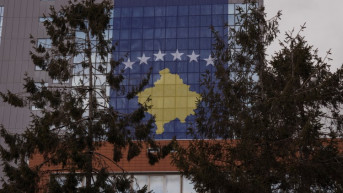
Kosovo has not received any new recognition for a full four years, since September 2020, when it was last recognized by Israel, and the reasons for this are interpreted in several ways. According to one view, Pristina no longer has strong support from its allies in this area due to the current government, which tends to act unilaterally on issues where its partners expect cooperation. Another opinion is that countries around the world have, for the most part, already taken firm positions regarding Kosovo's status, and changes in favor of Pristina can only be expected from a small portion of them, and only under certain conditions.
Written by: Dusica Radeka Djordjevic
As the term of the current Kosovo government comes to an end, the opposition increasingly points out that Albin Kurti's leadership will be remembered, among other things, for failing to secure any new recognition for Kosovo.
In the spring, Foreign Minister Donika Gërvalla stated that there would be recognitions, but she couldn't promise when. Since then, nothing has changed.
On September 12, at a parliamentary session, LDK leader Lumir Abdixhiku said they were starting the session with a "deep sense of national isolation," and that "for four years, Kosovo has not received any new recognition, gained no new memberships, and is under sanctions."
DPK MP Ariana Musliu-Shoshi recently stated that Albin Kurti's government has "degraded relations with states that recognize Kosovo" and has not taken any steps with those that don't recognize it.
"We have regressed, and we have neither recognition nor membership," Musliu-Shoshi said.
The data from Pristina and Belgrade on how many states currently recognize Kosovo differ. Gërvalla claims that Kosovo is recognized by 117 countries, while Belgrade's records show that the number of recognizers is 83, plus three countries that are considered "frozen recognizers"—Peru, the Dominican Republic, and Egypt. Belgrade also claims that 107 UN member states do not recognize Kosovo, including 27 that have withdrawn their recognition. Kosovo is also not recognized by the Holy See and Palestine, which are not full UN members.
For Pristina, the five European Union countries that do not recognize Kosovo—Greece, Spain, Slovakia, Romania, and Cyprus—are of primary importance, as the first four are also NATO members. Recognition by these countries is key to Kosovo’s EU integration and NATO membership. Although some have been pointed to as likely future recognizers, it seems they are all waiting for the outcome of the Belgrade-Pristina dialogue.
Pristina-based analyst Artan Muhaxhiri believes Kosovo has not gained new recognitions in recent years because they were previously secured with the help of its major allies, the United States and major European countries. However, that kind of support is now absent because the current Prime Minister Albin Kurti does not have the same level of cooperation with the international community as previous governments did.
“Kosovo is a small country and does not have enough resources to invest in lobbying for new recognitions. So far, new recognitions were based on the help of major allies, the US, and large European countries, and Kosovo reciprocated by being cooperative in dialogue and many geopolitical and geostrategic projects related to the Balkans. It was a kind of 'quid pro quo' situation. However, the situation has changed. Prime Minister Kurti does not have the same level of cooperation with the international community that previous governments had, and now international support for new recognitions is lacking. This is very unfavorable, but it is the reality," Muhaxhiri told Kosovo Online.
Prime Minister Kurti, as he sees it, must change his approach in order to gain positive momentum and hope for new recognitions and memberships in significant organizations.
“There was a great chance for Kosovo to become a member of the Council of Europe, but it was lost due to mediocre political gains. Without a change in approach, I don’t think there will be positive changes regarding new recognitions, not even from the five EU states or smaller countries on different continents like Asia and Africa. Without significant lobbying, without investing a lot of money, and investing many political resources, I don’t think there will be substantial changes in this regard,” says Muhaxhiri.
When asked whether some of Kosovo’s allies are still lobbying for new recognitions or if they are waiting for the outcome of the Belgrade-Pristina dialogue, he says that the involvement of Kosovo's allies in securing new recognitions is not evident, nor is there much discussion about it in diplomatic circles.
"That’s why I think if Kosovo showed more willingness to make progress in dialogue, for new arrangements and agreements with Serbia and the international community, and if Kosovo made the already signed agreements a reality, if there were significant steps forward, then there would be discussions about new recognitions. There was talk a few years ago that Greece was very close to recognizing Kosovo, but now that option is no longer discussed. So, I don’t think there will be positive changes in this aspect without Kosovo’s investment," concludes Muhaxhiri.
Political scientist and researcher at the Institute for European Studies in Belgrade, Rajko Petrović, told Kosovo Online that the European Union countries that have not recognized Kosovo are waiting for the conclusion of the dialogue between Belgrade and Pristina to take a final position, but he is convinced that they will not change their stance.
As for the rest of the world, the countries that do not recognize Kosovo, Petrović adds, are principled in defending their long-standing positions, while at the same time, the collective West has exhausted its capacities in this area, making it difficult to find a country willing to recognize Kosovo.

"Of course, there is concern that more countries could recognize the independence of so-called Kosovo. I am primarily referring to the five EU member states—Spain, Slovakia, Romania, Greece, and Cyprus. There were insinuations over the past four years that Greece might be the country to recognize the independence of so-called Kosovo; however, fortunately, that has not happened. These EU members are indeed waiting for the conclusion of the dialogue between Belgrade and Pristina, but given that this process will clearly take a longer period of time, I believe they will not change their positions because they also have a number of internal problems related to the secessionist ambitions of certain regions within their own countries. Therefore, by defending international law and Serbia’s interests, they are, in this case, also defending themselves," Petrovic stated.
He pointed out that during the voting on the Resolution on Srebrenica at the United Nations, there was near-total alignment: countries that do not recognize Kosovo voted against it, abstained, or did not attend the session in 99% of cases.
"Many of these countries are trying to use such examples, including the recognition or non-recognition of Kosovo, to show the collective West and its centers of power that they are no longer willing to pursue a submissive policy towards them. This especially applies to nearly all African countries, as well as a good portion of Latin America and Asia. It should also be added that Russian and, very likely, Chinese diplomacy plays a significant role in defending Serbian national interests internationally. The votes of these countries against Kosovo’s independence and against resolutions like the one on Srebrenica influence how certain other countries around the world will vote, much like how many Non-Aligned Movement countries followed former Yugoslavia's lead in international votes," Petrovic explained.
He is also convinced that the process of withdrawing recognitions is not over.
"I am absolutely convinced that there are still several countries that could withdraw their recognition of so-called Kosovo. Based on the experience of countries that have already done so, especially in the Caribbean region, we know that these governments recognized so-called Kosovo without being fully informed about what they were recognizing. Some of them received symbolic financial assistance from the regime in Pristina, but Serbia managed to convince them that they had made a mistake and to correct it," Petrovic added.
He also pointed out that the fact there have been no new recognitions of Kosovo in the past four years is a significant diplomatic victory for Serbia. The withdrawals of recognition are also a success, which, he says, can only be compared to China's diplomatic efforts in derecognizing Taiwan.
According to Helena Ivanov, a research associate at the Henry Jackson Research Centre, the positions that countries have taken regarding Kosovo’s status will likely remain unchanged unless there is a significant shift in the global geopolitical situation or until the dialogue on the normalization of relations between Belgrade and Pristina concludes.
She explains that there are three groups of countries that base their positions on Kosovo’s status on different motivators.
In the group of countries with a principled stance that is unlikely to change, Ivanov includes the United States, the United Kingdom, and a large number of Western countries that believe Kosovo is an independent state, as well as countries like Russia and China, which hold the position that Kosovo is Serbia, a stance that, he notes, is also based on principled grounds.
"The second group of countries is most likely waiting for the dialogue on normalization to be completed, and depending on how it ends, they may potentially change their stance. However, at this moment, while the dialogue is ongoing, they have no motivation to change their position. Here, we can talk about EU member states that have not recognized Kosovo as an independent state. Their main motivation for not recognizing it is often either close partnerships with Serbia or their own internal political issues, such as the case of Catalonia in Spain," Ivanov told our portal.
In the third group, according to his assessment, are the countries that have been heavily lobbied.
"We can talk here, for example, about some African countries that have been convinced one way or another to take a position on Kosovo. As long as the geopolitical situation remains as it is now, I don't think we should expect this position to change. However, if there were a significant shift in the geopolitical scene, it might motivate certain countries to change their stance. The conclusion of the dialogue on the normalization of relations between Belgrade and Pristina could also potentially influence a change in their position," Ivanov explains.
Although there have been no new recognitions of Kosovo for four full years, our interlocutor believes that Pristina's partners are lobbying on this issue.
"Serbia is actively lobbying, and I believe Kosovo and all of Kosovo's partners are lobbying as well. However, it should be noted that there have been situations and 'threats' recently, especially since Pristina has made several unilateral moves that the Quint countries did not necessarily agree with. There have been suggestions that Kosovo's main and strongest partners, who among other things are lobbying for more countries to recognize Kosovo's independence, might reduce their support for such lobbying, scale it back to a minimum, or stop it entirely. Whether this has actually happened behind the scenes is unclear, but I think that there is intense lobbying on both sides and that there are limits to how successful that lobbying can be," says Ivanov.



comments