
Gogic: Energy a security and geopolitical issue for Kosovo, Pristina caught between US and European visions
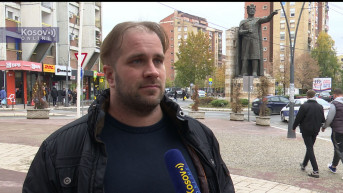
Political scientist Ognjen Gogic told Kosovo Online that the interests of various international actors, primarily the United States and Germany, intersect over the issue of energy in Kosovo. While Washington promotes connecting the Western Balkans through gas pipelines that would supply US liquefied natural gas, Berlin advocates a different approach, with greater reliance on renewable energy sources.
According to Gogic, Pristina is attempting to balance between these influences while also preserving room for independent decision-making.
For Kosovo, energy is an issue that extends beyond electricity supply and generation capacity, as security and geopolitical interests also intersect in this area, political scientist Ognjen Gogic says.
He points out that Kosovo relies on lignite-fired electricity generation while covering its shortfall through imports, leaving the question of long-term energy security and the sustainability of the existing model unresolved.
“Energy, therefore, is not merely an energy issue for Kosovo, but also a security and geopolitical issue. A great many interests actually intersect over energy. Kosovo has a problem; it faces an unresolved question of energy security and the long-term sustainability of its energy sources,” Gogic said.
He identifies the US initiative to connect Western Balkan countries through gas pipelines carrying liquefied natural gas from the Adriatic and Greece as one of the major international projects influencing the region’s energy future.
In his assessment, Washington’s objective is not merely to address the energy needs of individual countries, but to establish a broader regional energy system in which US gas supplies would play a significant role.
“The Americans expect not only Kosovo, but the entire Western Balkans to be connected to the gas pipelines they are promoting. We are talking about liquefied natural gas that would be supplied via the Adriatic and Greece and would effectively connect the entire Western Balkans. This is also linked to the project, or initiative, to displace Russia’s presence in the energy sector here,” Gogic explained.
He believes that, in this context, Kosovo is becoming part of a broader US energy interest.
“Kosovo is actually part of this package of US interests. The Americans are projecting their interests here, without thinking solely about what is in Kosovo’s interest or about its energy security. They simply want to establish their own energy order here, under their auspices,” Gogic said.
However, he noted that the Government in Pristina had not fully supported the US project, partly because of its assessment that building the necessary infrastructure would require substantial investment and could create a new dependence on a single energy source.
“The Government in Pristina was not fully interested in the US project because it argued that it was an expensive project and that Kosovo would have to invest a great deal of money in developing the infrastructure. There is a risk that it could then become constrained by or locked into a single energy source, in other words, that dependence on that source could be created,” he said.
According to Gogic, Pristina is more interested in diversifying its energy sources, with greater reliance on renewable and clean energy. In this approach, he also sees the influence of Germany, which, he says, has a different vision for the development of Kosovo’s energy system from the one promoted by the United States.
“Germany has a different concept, a different vision of what Kosovo’s energy security and energy policy should look like. That means relying on other energy sources, primarily renewables. So this is essentially a clash of concepts, both locally and domestically, as well as internationally,” Gogic said.
Under these circumstances, he added, Kosovo is attempting to balance between different international influences while retaining the ability to benefit from the support and projects offered by different partners.
“The interests of different actors intersect here. Kosovo is caught in between. It is trying to strike a balance, while also seeking to retain both sources of assistance and influence. Time will tell how successful it will be in doing so,” the political scientist said.
In his assessment, the energy issue is also connected to the broader relationship between Pristina and Washington, particularly the Kosovo authorities’ efforts to ensure that their strategic partnership with the United States is not based exclusively on accepting US proposals.
Gogic believes that Pristina does not want to become entirely dependent on a single energy source, even when US projects are concerned, nor does it want its strategic relationship with Washington to be one-sided.
“What Kosovo certainly does not want is to be completely constrained by and dependent on a single source, even if that source is American. Kosovo wants the strategic partnership between the United States and Kosovo not to be reduced solely to energy issues and not to be one-sided, in the sense of being dictated by the principle that whatever America says, Kosovo must do,” Gogic said.
He added that Pristina was seeking to retain the freedom to accept some proposals while rejecting others, which, in his interpretation, demonstrated a certain divergence between the two sides.
“They want it to be more of a partnership, a more two-way relationship, in which Kosovo has a certain degree of freedom to accept some things and reject others. And this is where we can see that there is a divergence,” Gogic said.
Gogic identifies disagreement over energy policy, alongside the issue of the Serbian community, as one of the reasons why the strategic dialogue between Kosovo and the United States has not been launched.
“One of the reasons why there is no strategic dialogue with the United States, why it has not been launched, in addition to the issue of the Serbian community, is this disagreement over energy policy, because Kosovo simply does not share the US vision for this region,” Gogic concluded.



0 comments