
Ceku: Energy crisis could have been avoided, expensive electricity threatens domestic production
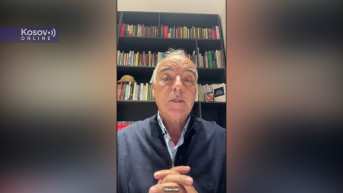
Former Minister of Energy and Mining Etem Ceku believes that the current energy crisis in Kosovo could have been avoided had projects to build new generation capacity and rehabilitate existing thermal power plants been continued. He warns that high electricity costs are particularly damaging to the economy and could prompt domestic companies to relocate production to other countries.
Speaking to Kosovo Press, Ceku said that abandoning the “New Kosovo” and “Kosovo C” projects, coupled with the lack of more extensive rehabilitation of the Kosovo A and Kosovo B thermal power plants, had left Kosovo dependent on electricity imports.
“Of course, it did not have to come to this. How could we have avoided it? By continuing the lignite-based power generation projects, by developing the ‘New Kosovo’ and ‘Kosovo C’ projects that existed at the time, which would have provided a solution not only for electricity supply but for many other problems as well,” Ceku said.
In his assessment, such an investment would also have been more financially viable than the reliance on imports to date.
“Building new electricity generation capacity—not only back then, when it was being discussed and the project had already reached an advanced stage, but even constructing a 500-megawatt unit—would have made Kosovo stable in terms of electricity supply because it would have had its own generation capacity. The construction costs would also have been much lower than the import costs we have incurred so far. In financial and economic terms, our country would have benefited by approximately 40 to 50 percent,” the former minister said.
Ceku believes that, alongside the construction of new capacity, it was also necessary to carry out comprehensive rehabilitation of the units at the Kosovo A and Kosovo B thermal power plants and to pursue much stronger development of renewable energy sources.
“Comprehensive rehabilitation of the units, refurbishment of the Kosovo A and Kosovo B thermal power plants and the development of a much stronger green energy sector would certainly have resolved Kosovo’s supply problems. Instead, now, on the eve of winter, we are facing difficulties with electricity supply,” Ceku warned.
The former minister particularly warned about the consequences of the energy crisis for the business sector.
“The situation is alarming for businesses. Our economy is now operating on generators. Look at how much the price of fuel for generators has increased and how much that costs. Look at the burden this places on production, for example in the meat-processing industry. Industry throughout Kosovo, whatever the sector, and particularly the private sector, is being suffocated by the high cost of generating electricity with generators,” Ceku said.
According to him, Kosovo must also develop alternative energy sources, primarily solar and wind power, although increasing domestic generation should be the priority.
“Kosovo must turn to alternative sources, which are unavoidable—solar and wind energy. The Government must do more to encourage domestic generation instead of purchasing electricity at extremely high costs and prices that place a burden on Kosovo’s businesses and economy,” the former minister stressed.
Ceku did not rule out further increases in electricity prices, noting that this would depend on developments in international markets and broader global crises.
According to him, even when the state subsidizes the price of electricity, the cost is ultimately borne by citizens and businesses because the state budget is funded through their taxes.
“Of course, someone will have to pay. The Government pays, but the Government’s budget comes from our taxes. The question is not who will pay for it. Subsidies are also financed from a budget funded by citizens and our businesses, while companies in Kosovo are already paying high prices,” Ceku said.
He identified the possibility of companies relocating production outside Kosovo because of high energy costs as the greatest risk.
“The extreme politicization of the energy issue must come to an end. A working group needs to be established which, through the Assembly and the Government, would be tasked with developing this sector. Political consensus is needed to support the development of the energy sector. Otherwise, if our country continues down this path, in the years ahead it will be paying several times more for electricity,” the former minister said.


comments