
Kurti against the US request: Can Kosovo really manage without American aid?
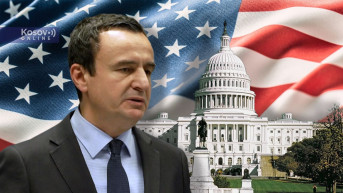
Washington's requests to calm the situation in the north of Kosovo addressed to the authorities in Pristina, one after the other, are rejected at the door of Albin Kurti's cabinet, and the price that Kosovo could pay due to such manner of the current Prime minister, according to the opinion of the interlocutors of Kosovo Online, would be the highest on the political level. According to their opinion, we should not expect sharp cuts on the Pristina-Washington route, but gradual measures are quite certain. Their herald, they remind, was the cancellation of a joint military exercise.
Many analysts in Kosovo warn that the US sanctions will not end there, and opposition politicians remind Kurti every day that Kosovo received the major part of recognitions thanks to the support of the US and that it can only go backward if the course that Kurti outlined is maintained.
The US ambassador to Kosovo, Jeffrey Hovenier, said that America was concerned that the authorities in Kosovo had not responded positively to the demands of Washington and other partners for de-escalation in the north, and announced that if they continued on that path, there would be consequences. However, Hovenier had also pointed out that the US was Kosovo's closest partner and that "the commitment of the American people to Kosovo itself and the people of Kosovo remains as stable as ever".
The question is, what can Washington do to fill the space between "stable commitment" and possible consequences for Kosovo, and can Pristina manage without American help on the economic, political, and every other level?
Igor Novakovic, director of research at the ISAC fund, tells Kosovo Online that there will not be any sudden interruptions or strong fractures in US relations with Kosovo, but that "softer pressures" are possible.
"Until now, this story, both when it comes to the EU and the US, has gone on gradually. The EU has been announcing measures for a month, and when they were finally passed, they are not called sanctions, although I would not say that they are mild, but very serious There is room for the EU to do something more. The same applies to America. So this with the measures will go gradually," Novakovic says.
He believes that Kosovo can survive without the US economically because, as he says, it does not live on donations from America and the EU, but has the largest income from remittances from citizens who work abroad.
"On the political level, some things can be painful for Kosovo when it comes to whether it will succeed in realizing its interests. The main reason for this behavior of the US is that it is important for them, as well as for the entire West, to avoid a new hot spot in Europe at a time when they are having the biggest war on the continent since the Second World War and the goal is to avoid a new conflict. There is a fear that there is a potential conflict here that will eventually draw their resources away from Ukraine and the East," Novakovic notes.
Regarding the possibility of Washington influencing the removal of Kurti's government, if Pristina is not on track with US interests, Novakovic says that if there was pressure to call new elections, Kurti would use them as confirmation of his popularity.
"The only person advocating alternative policies to Kurti is Ramush Haradinaj, who has around seven percent of support. The others, LDK and PDK, are quite silent and they probably don't want to take this hot potato made by Kurti. Because they would have to deal with Kurti in the opposition, and he was the one who, when he was in the opposition, made something terrible of the CSM. With such radicalization of Kosovo society that exists, they would have an even bigger problem. So, even if the government falls, we will have elections in which Kurti will very likely win again," Novakovic assesses.
Until recently it was unthinkable that the US would reconsider its support for Kosovo, Vice President of the Center for Foreign Policy Suzana Grubjesic says for Kosovo Online, but, as she points out, the Kosovo authorities managed to gamble away that alliance, taking their support for granted.
"Not realizing how important it is for the US that the region remains peaceful in the context of Russian aggression against Ukraine, the Kosovo authorities have become a disruptive factor in the region with their stubbornness. The US is determined that such behavior will not go without consequences and the first measures have already been taken - the joint military exercise has been canceled and the support for the recognition of Kosovo in the international community has been halted. This specifically means that Kosovo's admission to the Council of Europe has been put on hold and that admission to some other international organizations, such as UNESCO, Interpol, or NATO, is out of the question," Grubjesic says.
She adds that nobody even mentions Kosovo's membership in the United Nations anymore.
"Given that the US has always been the biggest supporter of Kosovo's independence, any denial of that support in combination with the penalties applied by the US and the EU, such as the denial of financial aid, reduces the room for maneuver of the Kosovo authorities on the internal level as well, and there are increasingly loud oppositions to such politics," our interlocutor says.
She reminds that the Americans already replaced the Kosovo Prime Minister Albin Kurti once, precisely because of his uncooperativeness and unwillingness to compromise.
"I don't believe it would be a problem for them to do it a second time," she concludes.
Professor of constitutional law from Pristina, Mazllum Baraliu, says for Kosovo Online that "no country, no matter how big it is, even those that are consolidated, developed economically and socially, without cooperation with other countries, without exchange of values, would not be able to manage easily".
"Every country needs cooperation. Especially Kosovo, which is still in the process of consolidation, as a country is small and needs friends and financial and technical assistance in numerous fields, from economy to science. Isolation is not the right path for Kosovo and this government should take care that there is more cooperation with all countries, especially with the US," Baraliu says.
Regarding the message of the American ambassador in Pristina, Jeffrey Hovenier, about the concern of the US because Kosovo ignores its demands for de-escalation, as well as the announcement by the State Department that the Kosovo government did not coordinate with Washington the decision to declare the "Northern Brigade" and "Civil Protection" as terroristic organizations, Baraliu believes that those statements should be taken with a grain of salt and that often one thing is said in public, and the other happens "behind the curtain".
"If it is to be judged by the statement of Svecla, who said that there was coordination, and the other side responds like this, it is not known whose diplomatic direction is going which way. In diplomacy and international relations, two-track or multi-track policies have been conducted several times in order to achieve certain goals. But, I still believe that there was coordination because the Kosovo government is not strong enough to decide on its own. Without cooperation, no country can get far, especially countries like Kosovo and Serbia, which are left aside by the EU and the international community, which lead the wrong policy towards the countries of the Western Balkans," according to our interlocutor.
As for the pressure on Kosovo to fulfill the demands of the EU and the US, which the Kosovo Prime Minister refuses to do, Baraliu thinks that it is only presented that way and that Kurti does not actually oppose them.
"The EU and the international community attacked Kosovo because it is the most sensitive link in this geopolitical and geostrategic context that is currently taking place in Europe and the world, so it is easiest to attack the weakest link that is not strong enough to resist all pressures. It is obvious that the pressure is there, but it is also known that Prime Minister Kurti is not like the previous political elites who ruled Kosovo. He uses a different model of governance and has some principles that they cannot break very easily. In fact, he does not oppose, he does almost everything as they say. At first, he shows resistance, but in the end, he fulfills everything," Baraliu says.
He also points out that the status of Kosovo is still undecided, because "the EU does not recognize it as a state, and treats it not only neutrally, but sometimes also negatively".
"Any other country, especially EU members, has instruments to react. And Kosovo cannot, and that is why we have this situation. But, of course, I do not think that Kurti is as powerful as they are powerful and free to attack everything, not only Kosovo but also Serbia and other Balkan countries," Baraliu says.

0 comments