
Kurti is buying time by setting conditions for the CSM; Washington has no more patience, and neither has Berlin
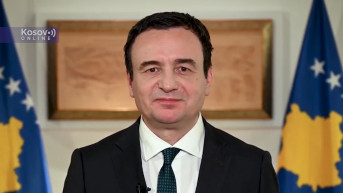
After Washington's message - that the Community of Serb-majority Municipalities will be formed with or without him, Kosovo Prime Minister Albin Kurti started to "buy time" by setting conditions that he knows are unacceptable not only to Serbia but also to the international community, according to Kosovo Online's interlocutors. Bad signals for Kurti are coming not only from Washington but for the first time from Berlin as well.
Namely, Kurti was told by the German embassy in Pristina that "no preconditions should be set" for the CSM.
"A constructive approach is urgent given the fragile security situation in northern Kosovo, and preconditions should not be set," spokesperson Sebastian Leuschner said for Gazeta Express.
The President of the Council for Strategic Policy and the former Minister of Defense of Serbia, Dragan Sutanovac, says for Kosovo Online that "after the latest reactions that came from Brussels and Washington, Kurti realized that his idea of raising tensions and provoking conflict did not receive support, but caused strong indignation."
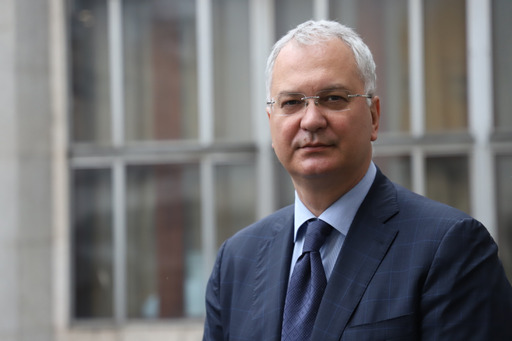
"Persistent attempts to present himself as the Balkan's Zelensky and Serbia as imperial Russia, by rejecting the agreement on the license plates... first of all he harmed the interests of the citizens of Kosovo because it called into question the relationship of the main sponsors towards Pristina. Now he is trying to carry out a maneuver in which he allegedly accepts the Franco-German plan, which has become an EU plan in the meantime, but he would still like to bypass the obligations that Pristina took over by the Brussels Agreement, which was ratified by the Assembly of Kosovo," Sutanovac says.
Dejan S. Miletic from the Center for the Study of Globalization says for Kosovo Online that "Kurti and his conditioning meet with negative echoes not from Serbia, but above all from the EU and the US, and in this sense what they are doing is poking a finger in the eye of the international community," and for Kosovo Online, he analyzes the six conditions set by the Kosovo Prime Minister.
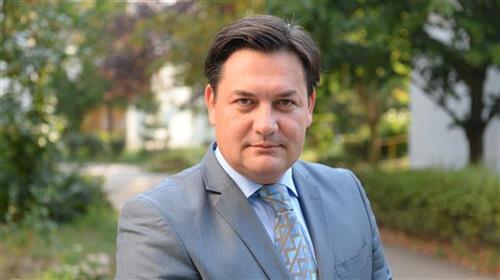
"Let's be clear, the CSM and the Brussels Agreement passed the parliament in Pristina, and that cannot be the subject of subsequent talks. It was all negotiated and agreed upon in 2013 and 2015, and no conditions can be an obstacle. The CSM will have the authority level that was agreed upon in 2015, through 22 points very precisely. It is another matter of how it will be formally called, the jurisdictions are extensive and very important for the survival of the Serbian people and security," Miletic says.
Regarding Kurti's request for reciprocity, Miletic states that "Serbia takes great care of their minorities, and they are not endangered, and on the other hand, in Kosovo and Metohija, you have constant threats to freedoms and rights, practically an apartheid, and Kosovo cannot ask for reciprocity because it is not a state and its international status is governed by the Resolution 1244".
"There are no illegal institutions of Serbia in Kosovo. Everything there is in the interest of the Serbian people, support for people on the ground who are directly threatened, searched, arrested, and tried without any control. I say this because every level of support provided by the Brussels Agreement is legal. Speaking about weapons or parallel institutions, if someone is armed, it is the Albanian people. And, of course, the CSM cannot be part of the final agreement and get implemented after mutual recognition, because that is absolutely unacceptable and there's no discussion there."
Sutanovac points out that, in his opinion, "we are entering a time of renewed turbulence that can end in several ways, from the resignation of Kurti and the fall of the government with the idea of buying a certain amount of time, to attempts in causing new instability, which would have the goal of increasing tensions further."
"Nevertheless, this time, clear messages are coming from Washington, as well as from Brussels and other power centers of the EU countries, that the formation of the CSM is an obligation that must be fulfilled, and there is an impression that there is a unity not only in that request but also in the possible consequences for Kurti himself. Considering that talks are planned in Brussels in a very short time, things will be much clearer then. Personally, I do not think Kurti is planning to accept the request for the CSM formation, and although he accepts in principle, he will essentially disavow the EU proposal, which will additionally complicate Pristina's position. On the other hand, Serbia must impose more topics in the negotiations, such as guarantees for the position of churches, monasteries, and cultural and historical assets, the return of the illegally seized property, and permanent security, especially for Serbs living south of the Ibar... As things are, although it seems that we are rapidly moving towards a solution, I think that we are quite far from that moment and that Kurti is currently the biggest brakeman," he stated.
0 comments