
Lajcak's January Deadline: Can 2024 be decisive for the Belgrade-Pristina dialogue?
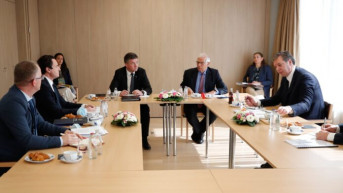
European officials seem optimistic about a breakthrough in the Serbia-Kosovo dialogue in the coming year, setting ambitious deadlines. However, the situation on the ground does not align with this optimism in Brussels. Both the EU and the US are eager to achieve tangible results in an uncertain election year, but questions arise about the realism of European envoy Miroslav Lajcak's forecasts that the normalization agreement will be formalized in January, unlocking and initiating the dialogue.
Especially considering that the government in Pristina and Kosovo Prime Minister Albin Kurti have yet to take any significant steps towards unblocking negotiations and calming the situation. This includes issues related to elections in the north and the formation of the Community of Serbian Municipalities, an obligation of the Albanian side for over a decade.
Moreover, even after Lajcak's statements that the Community of Serbian Municipalities is a legal obligation for Kosovo and emphasizing that Serbia does not need to initial the statute as it is an "internal Kosovo issue," Kurti continued his conditional approach. The Kosovo Prime Minister responded to Lajcak, stating he is "ready to draft the statute next year together with his ministers for communities and return and local self-government, Nenad Rasic and Elbert Krasniqi."
The European Union quickly reacted, stating that Kosovo had already had the opportunity to do what Kurti is now offering. The draft statute of the Community of Serbian Municipalities, presented by its representatives on October 21, was considered the best possible, and Kosovo had the chance to independently draft it over the past ten years.
"In this advanced stage of the process where the establishment of the Community is expected to begin soon, Kosovo has been invited to provide its comments and suggestions on the draft," the EU stated.
On the other hand, Kosovo Serbs and Belgrade have taken several steps towards unblocking the dialogue and calming the situation. Citizens from four municipalities in the north initiated a petition for the removal of illegitimate Albanian mayors elected in the April elections boycotted by Serbs, where the turnout was slightly above three percent. Additionally, the Serbian government decided to allow freedom of movement for all vehicles from Kosovo, including those with Kosovo license plates, who were compelled to use Serbian plates due to Pristina's decisions.
In response, Kurti conditioned recognition of Serbian license plates on the implementation of the decision on Kosovo plates.
Director of the Office for Kosovo and Metohija Petar Petkovic reacted to Kurti's statements on the draft statute of the Community of Serb Municipalities, pointing out that "he persistently tries to blame Belgrade for failures in the dialogue, using misdirection and deceiving the public to conceal the fact that Pristina is violating all possible agreements and accords reached in Brussels and undermining every attempt at normalization with Serbia."
For Serbian Ambassador to the US Marko Djuric, there is no doubt that 2024 will not be easy, but he emphasizes that "from the perspective of someone sitting and observing opportunities from Washington, it seems that we will have partners here for maintaining stability in the region."
"Despite different views on the issue of Kosovo and Metohija, which is an integral part of Serbia for us and an independent state for them, I think we share a common interest in preserving stability," Djuric said.
He emphasizes that the priority for the state concerning Kosovo in the coming year will be to preserve the survival and existence of the Serbian people, the most robust guardian of Serbian interests in the southern province, adding that it is crucial for pressure to continue from America on the Albin Kurti government for not respecting agreements and demanding a rational and peaceful approach to resolving Belgrade-Pristina relations.
"Serbia is facing numerous challenges on Kosovo and Metohija, accumulated over decades, amid war in the region and international turbulence. Besides the extremist regime in Pristina, Serbia has continued to provide support," said Djuric.
Djuric points out that it is essential for the US to continue pressuring Kurti's government for not only disrespecting existing agreements but also basic democratic principles and norms.
He notes that Kosovo is not a democracy but is under the rule of an ethnonationalist whose main goal is reducing the influence of Serbs and eliminating the Serbian factor from political life in Kosovo.
"This was demonstrated by removing Serbs from central institutions, ignoring the existence of the Serbian List, eliminating the possibility for Serbs to manage municipalities where they are the majority, and their marginalization from the police, the security system, and outright repression, resulting in more than 70 Serbs imprisoned in Kurti's prisons today, according to lawyer Nebojsa Vlajic's data," Djuric enumerated.
He also reminds of the fact that for a full year, Serbian goods, only because they are Serbian, cannot enter Kosovo. However, this should not be surprising given that people like Albin Kurti and Dželjalj Sveclje are known for attacks, overturning EULEX vehicles, and trucks carrying "Coca-Cola" goods in 2016 just because they were produced in Zemun.
"These are extremists and fanatics in the political sense, from whom we can expect very little good," emphasized the Serbian Ambassador.
Therefore, he says it is crucial for the US in 2024 to consistently maintain the demand for a normal, rational, peaceful approach to resolving Belgrade-Pristina relations.
"To insist that agreements be respected, that the human and security rights of Serbs in Kosovo are not further trampled. This is a crucial precondition for preserving stability, and I believe that, despite differences over status, we can seek a partner for such efforts even in some countries that have recognized and supported Kosovo, including the US," Djuric conveyed.
When asked about the expectations for the upcoming year, given the elections in the US and the EU, he responds that 2024 is a year of great challenges and turbulence on the international stage, a year of the struggle to build a different order from many centers of global power and influence, as well as for preserving and strengthening existing positions from other centers.
He points out that in such a situation, it is of paramount importance for Serbia to have a clear picture of world events so that the highest state leadership and institutions can plan their moves properly.
Serbia has managed, he notes, in the energy and other vitally important spheres, from supply stability to currency stability and the continued inflow of foreign direct investment, to continue with a consistent policy in conditions of almost immediate war surroundings.
Therefore, he says, the task of all who represent Serbia on the international stage will be to continue building networks of influence that should enhance the country's position in the future.
"What is certain is that Serbia will continue to pursue a rational and responsible policy of extending a hand and building friendships, in the USA, and I am confident, in many other places in the world, as it pursues an independent, sovereign, balanced foreign policy. Therefore, I have no doubt that, despite the severe global turbulence and problems, we will be able to expect to conclude the next year with success," said Ambassador Djuric.
Dragisa Mijacic, the coordinator of the working group of the National Convention of the European Union for Chapter 35, says that 2024 will be a demanding year for the dialogue between Serbia and Kosovo, as there are many open questions and much noise in communication, whether it comes from Pristina or Belgrade.
Speaking about what can be expected in the continuation of the negotiations between Belgrade and Pristina, given Lajcak's messages that January is the deadline for formalizing the Agreement on the normalization path, and there is an announcement of changes to Chapter 35 to incorporate the obligations of the agreement reached in Ohrid, Mijacic believes that both Belgrade and Pristina will tend to delay the process.
"Both sides will continue to hope that elections in America and the EU will result exactly as they wish, and in a way that will contribute significantly to their positions within the dialogue. So this year will probably be another extremely unstable year when it comes to the normalization process," Mijacic says for Kosovo online.
He emphasizes that at this moment, the most important thing is to preserve peace, composure, and human lives.
"And simply, that process of normalization will go as we saw it this year, which means very few steps and a lot of pressure," says Mijacic.
He also commented on the messages from Kosovo's Prime Minister Albin Kurti, who, in response to Lajcak's statement that the Community of Serbian Municipalities (CSM) is a legal obligation of Kosovo and that it is not necessary for Belgrade to initial the CSM statute because it is an "internal document of Kosovo," replied that he is ready to write his version of the statute with his ministers for communities and returns and local self-government, Nenad Rasic and Elbert Krasniqi.
"What Kurti wants to write the statute of the CSM with his ministers really does not hold. The European Union offered a model of this document on which both sides expressed themselves, and about which negotiations are very active. Kurti's statement aims more to create some kind of cacophony in the public than to contribute in any way to the process of dialogue and normalization," emphasizes Mijacic.
On the other hand, he points out that Belgrade also has certain statements regarding the acceptance of the Agreement on Normalization and Chapter 35 of the EU accession negotiations, which relates to Kosovo.
"That matter was agreed upon in Ohrid, the operationalization of these provisions will come in January, exactly what Lajcak announced. So neither side will be able to influence that, it will simply be an integral part of the decision of the European Commission and the European Council on which neither Serbia nor Kosovo will be able to influence," our interlocutor notes.
Research fellow at the Institute of International Politics and Economics Aleksandar Mitic believes that it is not impossible to unblock the dialogue between Serbia and Kosovo after January because the European Union is in a hurry. However, he points out that the question is what Belgrade can gain from this process if, as he says, the method of causing hybrid crises and pressuring the Serbian side to make concessions continues.
Mitic believes that Lajcak's deadline to formalize the Agreement on the normalization path in January is absolutely unrealistic due to the upcoming holidays and the fact that we will only see the reaction of Pristina to the concessions that Belgrade made in the past few days, which, he notes, are extremely painful.
"Of course, the European Union is in a hurry; it creates an artificial urgency because it enters an election year that is very unpleasant for it. We know that 2024 is a significant year for elections, both in the United States and the EU, including the European Parliament, where forces that are much more skeptical towards the so-called statehood of Kosovo are expected to strengthen. So, time is not on the side of the EU; it is not on the side of the European Commission, and in a way, it is not working for the Albanian cause in Kosovo," Mitic states for Kosovo Online.
He adds that these attempts to gradually force Belgrade to de facto recognize certain elements of the statehood of Kosovo are also due to these reasons.
"It is a process, a method that has worked extremely well for Kurti and the Quint so far. They have been causing various crises over the past two years to reach this point, to finally acknowledge the RKS plates. They can say that this method has proven successful so far – provoking hybrid crises and then practically demanding that Belgrade, under pressure, give up on some of its 'red lines'," our interlocutor believes.
If this method continues, Mitic does not see a particularly optimistic scenario for Belgrade.
"Belgrade must clearly state its 'red lines,' and we need to know where they are and whether the methods used in the past two years, and even earlier, will continue to work to the detriment of Belgrade and Kosovo Serbs," he concludes.
He adds that it is not impossible for the dialogue itself to be unblocked.
"After all these events, it is certain that there will be some pressure on Pristina to at least formally return to the dialogue. The main question is what Belgrade gets from all of this. If these methods and this rhythm and agenda of the dialogue continue, I don't see much point for Belgrade to participate in such a process," says Mitic.
Analyst from Pristina Skelzen Maliqi expects the dialogue process between Kosovo and Serbia to continue after January next year, which, in his opinion, would be a positive scenario. He believes that Brussels and Washington have found a formula to unblock the negotiations.
"We can expect the process to continue, and it will intensify a bit. The new measure of the Government of Serbia to allow entry into Serbia with Kosovo plates from January 1st is a kind of announcement that some agreements will be applied. I expect the implementation of the Ohrid Agreement to start, and the part of the implementation that seems to have been negotiated in the meantime, what will be applied first, and what will be applied later. This is a positive scenario," says Maliqi for Kosovo online.
He continues, on the other hand, that for the last three or four years, there has been a blockade because, as he says, they have not gone to the essence, i.e., the "fundamental agreement on status."
"The compromise with the Franco-German proposal is such that Serbia is not obliged to sign anything, it doesn't have to change its Constitution or recognize Kosovo, but it recognizes it de facto because it will not create obstacles for passports, documents... According to this proposal, we can move on, but whether the Kosovo side will create obstacles, we will see. Kurti has now softened his rhetoric; he says he will prepare the draft statute of the Community of Serbian Municipalities himself," Maliqi said.
He expects the dialogue process to resume by March, but due to the entire situation in Serbia and Kosovo, it is unpredictable how it will happen.
As he stated, the decision of the authorities in Serbia to allow the movement of vehicles with Kosovo plates showed readiness to implement the agreement, but it remains to be seen what the Kosovo Prime Minister Albin Kurti will do, as he has also started to "sit on two or three chairs."
"The Brussels administration, in cooperation with the US, has found some formula. Now they say that no signature is needed, just the agreed-upon needs to be implemented. Some signs show that it is moving in that direction, but whether they will find a mechanism to unblock the dialogue remains to be seen. There is generally doubt in both Vucic and Kurti that they will try to do something about it. As for the mediators in the dialogue, they claim that everything is done," Maliqi added.
When asked how realistic the deadline set by the EU envoy for dialogue, Miroslav Lajcak, for the formalization of the Agreement on the Normalization Path, i.e., the end of January, is, Maliqi says that this timeframe is optimal.
"The deadlines are realistic, and they can be accelerated. I heard that Kurti said it is possible to finalize everything in March. So the deadlines are realistic, but they are not, because politicians are unpredictable, and the situation is such that elections await us in the US and the EU during the next year. The dialogue process will have to be completed before then, and I hope it will happen. If it doesn't end by then, there could be a new situation where all agreements will have to wait," Maliqi concluded.

0 comments