
Letter of Patriarch Porfirije to the Pope – What influence can the Vatican have on the position of Serbs in Kosovo?
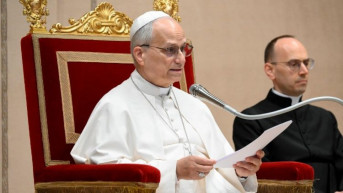
The letter addressed by Serbian Patriarch Porfirije to Pope Leo XIV, ahead of the implementation of Kosovo’s Law on Foreigners, in which he warned that its announced application would endanger the survival of the Serbian people and Orthodox holy sites in Kosovo, is, according to Serbian historians interviewed by Kosovo Online, a logical step. They note that the Vatican does not recognize Kosovo and has previously played a positive role during Kosovo’s attempt to gain admission to UNESCO. In their view, the Vatican’s influence in Catholic countries could contribute to improving the position of Serbs in Kosovo.
Written by: Dusica Radeka Djordjevic
The Law on Foreigners in Kosovo began to be implemented on 15 March, accompanied by additional measures requested by the European Union at the last moment, on 14 March.
A day earlier, on 13 March, Patriarch Porfirije sent letters to Pope Leo XIV, as well as to the Presidents of Russia, the United States, and France—Vladimir Putin, Donald Trump, and Emmanuel Macron—along with the Prime Ministers of Italy, the United Kingdom, and Germany, as well as the UN Secretary-General António Guterres and UNESCO Director-General Khaled El-Enany, calling on them to use their authority to urge the authorities in Pristina to suspend the implementation of what he described as a highly discriminatory Law on Foreigners.
Patriarch Porfirije warned that the implementation of this law would not only jeopardize the functioning of the University in Kosovska Mitrovica, as well as primary and secondary schools attended by Serbian pupils under Serbia’s educational system, and the entire healthcare system serving Serbs in Kosovo and Metohija, but would also threaten the very survival of the Serbian people and Orthodox holy sites.
“By implementing this law, Serbs would lose the possibility to receive education and healthcare, while employees in education and healthcare would lose their jobs, which would lead to an even more massive, if not final, departure of Orthodox Serbs from this centuries-old Christian land, where, to this day, there are around 1,300 Orthodox churches, monasteries, and other—previously destroyed—Christian holy sites,” Patriarch Porfirije emphasized.
He also recalled that nowhere else in Europe, as in Kosovo and Metohija, is there such a concentration of Christian heritage in one place, four of which are inscribed on UNESCO’s List of World Heritage in Danger.
Historian Aleksandar Rakovic notes that Patriarch Porfirije sent around ten personalized letters, each tailored to its recipient, first outlining the historical relations between the Serbian people and the respective states or leaders, and then suggesting what concrete steps each could take to improve the position of Serbs in Kosovo and ensure their protection. The letter addressed to the Pope should be viewed in that context.
“When all of this is taken together, it can only contribute to enabling Serbs to remain in Kosovo and Metohija, and this move by Patriarch Porfirije deserves commendation, as he sought not to leave anything to chance, but to do everything possible,” Rakovic stated for Kosovo Online.
In his view, these letters—both individually and collectively—may yield results, as they represent a global appeal by Patriarch Porfirije to key international actors.
Rakovic further notes that Catholics among Albanians in Kosovo constitute around two percent of the population and represent an elite segment of society, while also recalling that the hierarchy of the Roman Catholic Church among Albanians in Kosovo and Metohija had, in the past, taken a strongly critical stance toward the Serbian Orthodox Church and Serbian holy sites.
“They sought to appropriate Serbian medieval holy sites and present them as their own. This campaign has been ongoing for decades and intensified particularly after NATO’s intervention in Kosovo and Metohija and the subsequent occupation of the southern Serbian province,” he stated.
Facts Highlighted
At the same time, Rakovic points out that the Vatican played a positive role in preventing Kosovo’s admission to UNESCO and thereby preventing claims over four of the most significant Serbian holy sites in Kosovo and Metohija.
“Given the positive role the Vatican played at that time, it is natural that appeals continue to be addressed to it to protect Serbian, Orthodox, Christian holy sites in Kosovo and to influence the Catholic hierarchy among Albanians in Kosovo and Metohija to refrain from spreading claims that these were originally their churches. In light of these positive experiences with UNESCO, as well as the constructive role played by Pope Francis in halting the canonization of Alojzije Stepinac, it seems that this contributed to Patriarch Porfirije’s decision to write to the new Pope—to remind him of the facts and in the belief that such a letter could help curb claims over Serbian medieval heritage and discourage further attempts to expel Serbs from Kosovo and Metohija,” Rakovic explained.
According to him, the letter to the Pope is likely also grounded in the Christian heritage of Kosovo and Metohija.
“Kosovo and Metohija is the Jerusalem issue of Europe. It is such a sacred issue that few others compare. This was once the case with Constantinople, which was unfortunately resolved unfavorably for Orthodox Christians. In order to avoid a similar outcome for Kosovo and Metohija, we must do everything possible diplomatically, remain patient, and await the moment when a just solution will be reached,” Rakovic assessed.
He added that the outcome regarding the contested laws remains to be seen, as the situation surrounding their implementation is currently frozen.
“However, even such a frozen situation is preferable to a scenario in which, in the coming months, Albanians would proceed with administrative expulsions of Serbs from Kosovo and Metohija,” Rakovic emphasized.
Historian Aleksandar Gudžic, commenting on the Patriarch’s letter, noted that the Vatican holds influence in Catholic countries, which is why Pope Leo XIV was among those addressed by the head of the Serbian Orthodox Church prior to the implementation of the Law on Foreigners in Kosovo, based on the assumption that the Vatican could contribute to improving the position of Serbs in Kosovo.
“The Pope is influential globally, particularly within the Catholic world, and the Vatican exerts influence over Catholic countries. The Patriarch’s reasoning is that this could significantly contribute to improving the position of Serbs in Kosovo,” Gudzic stated.
At the same time, he recalled that the Vatican has not recognized Kosovo.
“The Patriarch’s calculation is that an appeal to the Vatican at this moment may help improve the position of Serbs, and his decision to address the Pope and the Vatican should be understood in that context,” Gudzic assessed.
“Legal Guarantees”
Former Ambassador of Kosovo to Italy, Albert Prenkaj, does not view the Patriarch’s move favorably.
He stated that the Patriarch’s claims that the implementation of the Law on Foreigners would endanger the survival of the Serbian people and Orthodox holy sites in Kosovo are unfounded, asserting that members of the Serbian community in Kosovo enjoy a high standard of human rights with constitutional and legal guarantees.
“With such positions, the Serbian Orthodox Church does not contribute to ecumenism with the Holy See, other churches, or interreligious dialogue,” Prenkaj stated.
According to him, the Patriarch’s letters were addressed to three major actors: the United States, as a global power; Russia, as a traditional ally; and the Vatican, as an important center of Christianity, with the aim of drawing international attention to the issue and prompting global actors to engage with Kosovo authorities.
He also emphasized that the Vatican is known as a universal moral authority maintaining open dialogue with political, cultural, and religious centers.
“I believe that, through ecumenism and dialogue, the Holy See maintains consistently good relations with the local Catholic Church in Kosovo, the Serbian Orthodox Church, and the Islamic Community of Kosovo,” he noted.
Implementation with Additional Measures
Prenkaj also pointed out that the visit of the EU Special Representative for Dialogue, Peter Sørensen, to Kosovo Prime Minister Albin Kurti, on the eve of the implementation of the Law on Foreigners and the Law on Vehicles, resulted in an agreement to proceed with implementation accompanied by additional measures concerning members of the Serbian community in Kosovo, as well as individuals engaged in activities in Kosovo who are not Kosovo citizens—measures he described as “unprincipled compromises” by Kurti.
Due to these accompanying measures, announced on 14 March following the meeting with Sørensen, Kurti has also faced criticism from Albanian opposition parties in Kosovo, which view this solution as “a violation of Kosovo’s sovereignty and the implementation of autonomy agreed in Ohrid.”
Under the agreement, Serbs without Kosovo-issued documents have been given a three-month deadline to obtain them, while those from central Serbia working and studying in northern Kosovo are to be issued temporary residence permits valid for one year.
The European Union also requested that Kosovo allow the use of identity cards issued by Serbia prior to 15 March 2026 for persons residing in Kosovo as a valid means of identification in administrative procedures.
On the other hand, political representatives of the Serbs assess that these measures have averted the catastrophe that could have been caused had the Law on Foreigners entered into force on 15 March without them, as it envisaged that all those without Kosovo documents would have to leave the territory of Kosovo.
0 comments