
The Hague: An aggravating circumstance in the verdict for Mustafa was the extreme cruelty of the torture and the fact that he was a superior
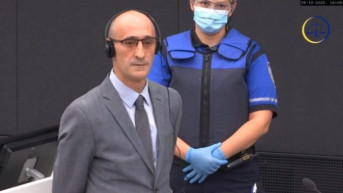
The Kosovo Specialist Chambers announced after the sentencing of Salih Mustafa, who had been sentenced to 26 years in prison, that the extreme cruelty of the torture and the fact that he had been a superior had been taken as aggravating circumstances. It was also pointed out that this had been the first verdict for war crimes handed down by that court.
Today, Mustafa was found guilty of the war crimes of arbitrary deprivation of liberty, torture, and murder, and as emphasized, the charges, in this case, concerned only the individual criminal responsibility of Mustafa and his participation in the deprivation of liberty, cruel treatment, torture and murder of victims as crimes against humanity.
The crimes for which Mustafa was found guilty were committed in April 1999 at a property in the village of Zlas, Kosovo, which was used as a base by the guerrilla unit of the Security Intelligence Agency of the KLA, and whose commander was Mustafa.
The judicial panel stated in its verdict that during the conflict between the KLA and Serbian forces, Mustafa had been the main and sole commander of the guerrilla unit of the Security Intelligence Agency of the KLA until its dissolution, that during the period in which the criminal acts from the indictment had taken place, he had been in command of the base in Zlas, as well as that he had been authorized to decide on appointments, within the guerilla unit of the Security Intelligence Agency, to issue orders to subordinates and to punish them.
With regard to the criminal offense of arbitrary deprivation of liberty, the Panel concluded that members of the Security Intelligence Agency or other members of the KLA had deprived at least six persons of their liberty and held them in a compound in Zlas without giving them a reason for this or allowing them to challenge the legality of their imprisonment. It is emphasized that the evidence confirmed that Mustafa had been present at the property in Zlas on several occasions and that he had ordered his subordinates to take the prisoners to the place where they would be kept. That is why the Panel concluded that Mustafa had known that these people had been deprived of their freedom and in what conditions they had been kept.
Regarding the crime of torture, the judges specified that the prisoners had been accused of being spies, collaborators, traitors, thieves, or liars and that they had been kept in inhumane, degrading conditions, without enough water, food, and medical assistance, that they had not been allowed to wash or change clothes, and that they had not had access to a toilet.
"Mustafa and his subordinates from the Security Intelligence Agency intentionally caused severe pain and suffering to the prisoners to obtain information or confession from them, to punish them, intimidate them, extort something from them or discriminate against them on political grounds. The trial panel stated that 'the abuse, together with the inhumane and degrading conditions in captivity, left lifelong physical and psychological consequences for the prisoners,'" the statement reads.
Regarding the crime of murder, the Trial Panel concluded that the victim of the murder had been left on the property on the verge of death when the guerrilla unit of the Security and Intelligence Agency had released several prisoners in April 1999 due to the upcoming offensive by Serbian forces, except for the two who were the most abused. The panel concluded that the cause of death of one victim had been severe abuse by members of the guerrilla unit of the Security Intelligence Agency that had lasted for almost three weeks; lack of medical assistance, and gunshot wounds - since there had been gunshot wounds on the body.
"Regarding Mustafa's criminal responsibility, the Trial Panel found that Mustafa had personally interrogated and abused two prisoners on several occasions, and subjected one of them to a mock shooting. Regarding the other facts about the underlying criminal acts, the Panel concluded that Mr. Mustafa was guilty due to personal contribution to the joint criminal enterprise," the announcement states.
As stated, when determining Mustafa's sentence, the Trial Panel had taken into account the seriousness of the criminal acts and Mustafa's personal contribution to their execution, and as aggravating circumstances, it had considered the extreme cruelty of the torture, the fact that Mustafa had been in a superior position and that he personally participated in this criminal act.
It is added that when pronouncing the verdict, the Trial Panel had acknowledged the enormous courage of the witnesses and victims, who had testified despite being called traitors and collaborators in Kosovo, and despite the threats and intimidation, they were exposed to because they cooperate with the Kosovo Specialist Chambers or the Specialist Prosecutor’s Office.
It was explained that because of that atmosphere of fear and intimidation, the judges had ordered protective measures for many witnesses and victims in this case.
During the trial, 28 witnesses were heard - 13 called by the Specialist Prosecutor, and 15 called by the defense, and written statements, documentary evidence, and expert testimony were also considered.
Eight victims who were granted protective measures also participated in the proceedings.
"At the end, the Trial Panel added that it would issue an order on reparations, in due time, and that it retained jurisdiction in that matter," the statement concludes, adding that for material and legal reasons, the panel acquitted Mustafa of the criminal offense of cruelty.
The announcement states that the victims, in this case, are Kosovo Albanians and that the backbone of this proceeding is "their efforts to satisfy justice and establish the truth."


comments