
“March” of officials from Tirana to Pristina, Rama–Kurti rivalry swept under the carpet
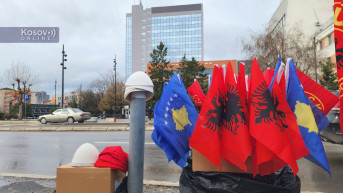
Within just 15 days, Pristina was visited by four of Albania’s highest-ranking officials—the prime minister, the president, the foreign minister, and the speaker of parliament. Despite the positive and energetic messages exchanged during these visits, according to analysts interviewed by Kosovo Online, relations between Kosovo and Albania have not reached the level that citizens of both sides would like and remain largely good only on the surface. They believe that the personal relationship between Prime Ministers Edi Rama and Albin Kurti remains strained, and that their rapprochement will not be helped by the fact that Pristina and Tirana are in the same trench when the issue of the trials of former KLA leaders in The Hague is raised.
Written by: Dusica Radeka Djordjevic
Albanian Prime Minister Edi Rama visited Pristina on February 16, and a day later, on the 18th anniversary of Kosovo’s unilateral declaration of independence, Albania’s President Bajram Begaj attended commemorative events in Pristina. This was followed by the visit of Foreign Minister Elisa Spiropali on February 25—who has since been replaced—and the visit of the Speaker of the Albanian Parliament, Nik Peleshi, on March 2.
Rama reaffirmed Albania’s unwavering support for Kosovo’s Euro-Atlantic future. Begaj stated that the relationship between Albania and Kosovo is “brotherly and sacred,” Peleshi stressed that Tirana remains the strongest voice of support for Kosovo on the international stage, while Spiropali said that strengthening Kosovo’s international subjectivity is a direct national interest of Albania.
Since 2022, Kosovo and Albania have had a joint alphabet primer for schools, and the two governments have concluded more than 180 agreements over the years, including those concerning 26 new border crossings, the Pristina–Durrës railway project, and the mutual recognition of pensions and diplomas.
Last year in Tirana, Albania, Kosovo, and Croatia also signed a defense cooperation agreement, from which emerged a plan for the “Sota” combat armored vehicle, designed in Albania, to be produced in Kosovo.
However, since Edi Rama canceled a previously announced joint session of the two governments in Djakovica in 2023, relations have cooled, and members of the two cabinets have not met in this format since.
Rhetoric and Reality
According to Tirana-based analyst Ben Andoni, there is a major gap between what politicians say and the reality on the ground.
“Relations between Albania and Kosovo do not promise to reach the level that people in both countries would like. There was a sign that could be described as encouraging—the visit of Mr. Rama to Kosovo, where he was received with official protocol, followed by the visit of Ms. Elisa Spiropali, then Albania’s foreign minister. She expressed great appreciation for relations between the two countries. However, from what we see, it is clear that there is a large difference between what politicians say and the reality on the ground,” Andoni told Kosovo Online.
He points out that Albania and Kosovo no longer hold the joint government meetings that were once held regularly.
“On the other hand, there is no transparency regarding the large number of agreements and memoranda between our two countries—about their progress, what has been achieved, and what problems may have led to delays,” he added.
Defense – the Exception
According to Andoni, relations are better in cultural and social spheres, but much colder politically. Albanian companies are interested in the Kosovo market, he notes, but neither side is currently strong enough to generate significant economic development.
He also states that the number of Kosovo citizens visiting Albania as tourists has declined.
“Without stability and genuine state functionality in Kosovo, the development of a stronger state-building mentality there, and greater seriousness on the part of Tirana, our relations will remain good on the surface but leave much to be desired. The only interesting element is cooperation in the field of defense. Because of the surprises occurring in the international order, and particularly due to the joint agreement between Kosovo, Albania, and Croatia, this is the only area in which our two countries have begun cooperating based on pragmatic interests—especially if Kosovo were to face problems in the future or if crises from other parts of the world were to approach the region,” Andoni said.
Agreement on the KLA
Concerns on both sides regarding the upcoming verdict against former KLA leaders will also not be a factor that helps overcome the long-standing disagreements between the two prime ministers, according to historian Stefan Radojkovic.
However, he stresses that there is broad consensus across the Albanian political sphere regarding the role of the KLA in the wars of 1998, 1999, and after June 1999.
“There is consensus on that issue, and it will not change regardless of the verdict delivered by the Special Chambers in The Hague,” Radojkovic told Kosovo Online.
Political analyst Artan Muhaxhiri says that Albanian Prime Minister Rama has actually been more vocal and energetic, investing more effort and holding more discussions with international leaders regarding those indicted in The Hague than Kurti has.
“Rama wants to demonstrate that his connection with Kosovo is fundamental and not based on day-to-day politics. What Prime Minister Rama is doing should be a lesson for all Kosovo politicians,” Muhaxhiri said.
He adds that there is a certain degree of competition between Kurti and Rama, that their political styles are incompatible, and that their relations are far from ideal.
“There was an impression that Prime Minister Rama supported President Osmani, particularly regarding the Peace Committee, and Prime Minister Kurti likely saw this as a form of internal competition directed against him,” Muhaxhiri assessed.
Priorities
Radojkovic notes that Rama and Kurti are quite similar in that both are ideologically rooted in socialism and have spent significant time in positions of power—especially Rama, who has been in office for 13 years.
“Kurti does not yet have that kind of tenure, but he aspires to it—to remain in power that long, if not longer. They will compete for primacy within the Albanian political space, and on a personal level there will be no real understanding between them. Strategically speaking, however, Albania will remain a guarantor of the existence of the Pristina administration and will strive to sustain it as much as possible,” Radojkovic said.
However, he adds that this is not Albania’s primary foreign-policy objective.
“Their main goal is EU membership and maintaining good relations with the U.S. administration. In that sense, friction also arises between Rama and Kurti, because Kurti seeks to be as independent as possible in decision-making—which simply is not feasible,” he noted.
Although he believes tensions between Kurti and Rama will persist, Radojkovic says disagreements will not extend to strategic issues.
“The Pristina administration is surrounded on all sides by other states and has no access to the sea. It critically needs an outlet through the highway via Tirana and Durrës to the Adriatic Sea. Because of that, relations between Pristina and Albania will never deteriorate to the point of complete rupture. But personal disagreements between Kurti and Rama will certainly remain,” Radojkovic concluded.


0 comments