
Gjokutaj: Immigration in Albania has reached the level of emigration, mostly from Asia and North Africa
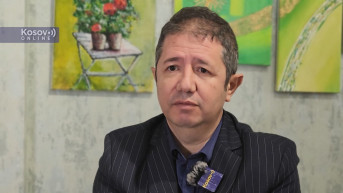
Immigration to Albania has been recording strong growth and can no longer be considered a negligible phenomenon, says Eduart Gjokutaj, an expert in economics and employment and president and fiscal analyst at the company Altax.
Gjokutaj notes that the number of foreign nationals who have applied for and obtained residence in Albania has doubled compared to the beginning of the decade.
“If in 2020 we had immigration at the level of 13,000 people who applied for and obtained the right of residence in Albania, that number reached 27,000 in 2025. If we compare this with the number of Albanians leaving the country, we can say it is almost at the same level, because according to official statistics, 28,000 Albanians emigrated in 2025,” he says.
He emphasizes that immigration is not managing to compensate for the losses the country suffers due to the departure of its own population, and that most newcomers arrive for economic reasons, predominantly from Asia and North Africa.
“Immigration is not managing to offset the country’s losses from the departure of Albanians, because for the most part, about 65 percent of them, they come here for work from Asian countries, such as the Philippines, India, or even from North Africa, where they work in agriculture. Another category of immigrants also comes to Albania, about 15 percent of them have other interests – family reasons, lower living costs in Albania, or because they want to try something different in life. A small number of them come here due to family reunification,” the expert from Tirana says.
According to him, immigrants today make up just over one percent of Albania’s total population and already have a noticeable impact on the economy.
“Immigrants are already a significant number that cannot be ignored. They make up 1.1 to 1.2 percent of the population in Albania. They undoubtedly have an impact on the economy because they live here, they are consumers and they pay taxes according to their status, the job they perform and the work they engage in,” he points out.
However, he stresses that their contribution cannot compensate for the departure of the domestic population.
“On the other hand, they do not manage to offset the loss in consumption caused by Albanians leaving the country, because it is known that 65 percent of them save in order to send money to their families or to collect money for life in another country that is supposed to be their final destination,” our interlocutor states.
A special group consists of so-called digital nomads, whose numbers are increasing thanks to lower living costs and tax incentives.
In his view, these trends carry long-term consequences for demographics and the pension system.
“All this should be viewed as a long-term and permanent risk to the pension system and as a problem within the demographic challenge, because the population is decreasing. The number of births has also declined. We must also think about finding long-term solutions for economic sustainability, although some immigrants come with business ideas and create their own ventures in Albania,” Gjokutaj says.
He also warns of possible negative effects on the labor market and security.
“We need a package of concrete measures, because they come as a replacement for Albanian workers and admit that they accept lower wages, they compete unfairly, and we must keep in mind that low wages are the main reason why Albanians leave the country, especially young people. On the other hand, immigration can also create problems for the country’s security. Although most of them arrive legally, they may bring various problems from the countries they come from,” he emphasizes.
As a positive circumstance, he mentions the fact that most immigrants see Albania as a temporary destination.
“Let us say that the good news is that many of these immigrants are not seeking long term residence permits. Only a minority do so. Most of them see Albania as an intermediate destination before moving to higher income countries, such as European Union member states,” the expert notes.
However, he believes it is necessary to regulate this area systematically.
“It is necessary to create a legal framework, to have a specific law on immigration, to standardize policies, to create a model for how they will be integrated into society and how the future trend of their impact on the economy will be managed. We must also manage their social impact and demographic issues,” he adds.
In conclusion, he emphasizes that immigration cannot be a permanent solution to demographic and economic challenges.
“In my opinion, immigration is not a long-term solution for Albania, although it seems to help us address the demographic crisis that already exists in Albania. Our country must also have policies to deal with immigration and its integration, which cannot be stopped, but it must also encourage the Albanian diaspora, not through short-term policies. The diaspora must be present here. Internal policies are needed to create conditions for a sustainable economy, rather than short-term solutions,” Gjokutaj concludes.



0 comments