
New quotas for working in Germany - will the "most modern immigration system in Europe" empty the Balkans?
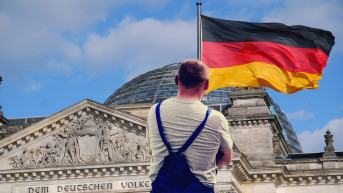
In order to enable a turnaround, the German government set itself the goal of creating the most modern immigration system in Europe," stated German Minister of Labor Hubertus Heil in November 2022, speaking about the law on skilled worker immigration. Exactly one week ago, the third phase of this law came into effect, doubling the quotas for people from the Western Balkans to 50,000. A new feature is that workers who gain employment can now more easily bring not only their immediate but also their extended families with them. Experts from the entire region warn Kosovo Online that this German employment strategy could soon empty the Balkans.
This is an extension of the 2016 law that allowed citizens of Albania, Bosnia and Herzegovina, Montenegro, Kosovo, North Macedonia, and Serbia easier access to the German labor market, somewhat independently of formal qualifications.
The law was extended and amended last year and is being implemented in phases. The changes do not apply to jobs that legally require diploma recognition, such as academic professions like medical or caregiving jobs.
A new feature is the so-called "opportunity card" for job seeking, based on awarding points according to various criteria, such as qualifications, knowledge of German or English, work experience, connections to Germany, and age, as well as potentially for family members accompanying the worker.
Interviewees from Kosovo Online in Belgrade, Pristina, Skopje, and Tirana warn that the entire Western Balkans is facing a worker shortage in all sectors due to the increasingly easier employment of foreigners in Germany. An additional problem is the growing departure of highly educated and experienced individuals.
Cedanka Andric, president of the United Branch Trade Unions Independence, believes this is a luxury that no country should afford. She explains to Kosovo Online that this phase offers the possibility to go to Germany without a prior contract with a company or institution and to search for a job for up to a year. She adds that people have been leaving for generations, so now many have someone who will welcome them there.
"Considering everything, I think the outflow of labor, especially to Germany, will continue," says Andric.
Regarding the types of jobs, she explains that no specific ones can be singled out as both doctors and engineers, plumbers, construction workers... are leaving.
"We now have a problem replacing the workforce in all sectors," she emphasizes.
According to her, it is no longer just about young people with only education; those with many years of experience are also leaving.
"It is not easy to replace a surgeon with 15 years of work experience. You can hire one of his colleagues in his place, but the quality of service provided to citizens is not the same. We also have an additional problem: who will teach these young people who are coming because to learn a job, practice is needed, and for practice, you need to have a mentor who will train you for at least a few years," our interlocutor points out, emphasizing that Serbia is practically educating a good part of its highly educated people for the Western European market, "which is a luxury no country should afford."
Regarding the reasons why people are leaving, Andric says that according to research, more than 80 percent of them cite earnings as the main motive.
"This supports our claim, which we have been stating for more than a decade, that low wages will drive people out of Serbia, and not just Serbia but the entire region," she stresses.
About 70 percent mention the quality of life, which is not exclusively tied to earnings, and a similar percentage cite the system in which they live, Andric adds. About half mention career advancement and the healthcare system, which, as she points out, is not surprising given that Serbia and Bulgaria spend the most on private healthcare in Europe.
She emphasizes that all countries in the Western Balkans are facing the same problem, and as a possible solution, Andric cites the example of Romania, which stopped the outflow of its workers by significantly increasing wages. However, she adds that it is not just about wages; it is also important that young people see opportunities for professional advancement.
Economist Mihailo Gajic explains that the German labor market is attractive to all types of workers, from those with lower and middle qualifications, to those with university degrees, to PhD holders. He explains to Kosovo Online that the conditions for obtaining a work permit have significantly eased compared to a few years ago, due to Germany's demographic trends leading to a shrinking workforce.
“The number of people entering the labor market is significantly smaller compared to the number of people retiring. The situation is such that there is a demand for all types of workers, from those performing more manual jobs like drivers and forklift operators, to those with higher qualifications such as programmers. It is not limited to one type of job, but there is a whole range of occupations that are in deficit in Germany,” Gajic said to Kosovo Online.
Regarding the profiles of those going to Germany, Gajic highlights that people of all education levels are going to work in Germany.
“It is not just a brain drain of people with university degrees; everyone is leaving, from those with the lowest qualifications to those with doctorates. Due to the structure of the population, most are those with secondary education. People with middle and lower incomes have a greater wage premium if they go to work in Germany compared to staying in their home country. So, it is more attractive for them than for people with university degrees,” Gajic explains.
He points out that Serbia has been an emigration country for decades, but it has been fortunate that this served as a relief valve to prevent social problems, given the high unemployment rate in the local labor market.
Serbia, he says, is trying to find the right way to address the issue of labor shortages and is currently turning to neighboring countries since a large number of people from Bosnia and Herzegovina and Montenegro traditionally migrate to Serbia.
He believes that the emigration of the workforce to other countries could be prevented by introducing new policies related to working conditions and wages.
"For this, we need several years of high economic growth rates that will allow wages to significantly increase and approach the levels of countries to which our workers traditionally migrate. If wages in Serbia were satisfactory, the attractiveness of the German labor market would diminish," Gajic concludes.
Sinisa Naumoski, an analyst and board member of Heidelberg University in Skopje, says that the new, increased quotas for employing workers from the Western Balkans in Germany are welcomed by all those who are disappointed or not sufficiently financially and socially integrated into the system. Unfortunately, as he tells Kosovo Online, there are many such people.
"Germany has significantly relaxed, if I can say so, its policy towards all Western Balkan countries in recent years. This relaxation is seen in the easing of criteria for the entry of workers from the Western Balkans, with a particular emphasis on tradespeople. In the global crisis with the war and economic crisis, the countries that invest in economic workers or soldiers (metaphorically) benefit the most," our interlocutor says.
He explains that the conditions have now been further eased, especially for tradespeople.
“The process has been simplified not only for tradespeople but also for their families. However, for highly qualified professionals such as doctors and medical workers, the same rules will apply. Your diploma must be recognized by the German government and ministry, and while the process is simplified for tradespeople, the conditions for medical professionals remain the same,” says the analyst from Skopje.
He observes that people from the region are leaving regardless of nationality, and this is something that should somehow unite the Western Balkans to find a common solution.
“My roots are in Western Macedonia, Ohrid, Kicevo, where I lived as a child. My friends and neighbors who are Albanians have all left. There are no rules, and this is something that should unite us as an economic cause, to see what we can do for the system. Even bankers are leaving. Here at the academy, we have a ten-year portfolio of well-established high-profile bankers. Today, even they are leaving because their salary is ten times higher than the normal average salary here. What I mean to say is that everyone is leaving, mostly from Kosovo, Macedonia, Albania, and Bosnia and Herzegovina. In short, mostly those who live in countries with poor systems are leaving. We must start changing the system ourselves, which is very difficult,” says Naumovski.
Erion Muça, a professor at the Faculty of Economics and an expert in labor and employment from Tirana, explains that Germany, through the new reform that came into effect on June 1, has not only increased employment opportunities for various professionals from each country but has also removed some of the bureaucratic and conservative barriers it previously had.
The biggest benefit from this reform now goes to those employees who previously faced uncertainty regarding the recognition of diplomas, documentation, and qualifications, he says to Kosovo Online.
“The German side mainly assesses the professional skills of the individual. Also, a normal level of German language proficiency is required. If the employee meets both criteria, they are offered the opportunity to work in Germany, with reduced time for work visa procedures, shortened time for completing documentation, and fewer required documents. This significantly facilitates the movement of employees, especially from non-European Union countries to Germany,” says our interlocutor.
He explains that they will be required to prove their skills only during the first probation period of three months in the occupation they intend to work in. However, he adds, Germany requires not only specialized workers but also unskilled workers.
“For these employees, only knowledge of the German language and documentation related to compliance with the law, such as proof of a clean criminal record, are needed to obtain a work visa. The other conditions are very favorable because Germany, like other EU countries, suffers from a labor shortage in certain professions that Germans do not prefer. These jobs will be done by foreigners to prevent the blockage of economic processes and services. That is why the procedures for employment in Germany have been simplified,” Muça notes.
When asked which profiles of workers most often go to Germany, he says they can be divided into three main categories.
“First, construction workers (high and middle specialists). Second, health specialists such as nurses, laboratory technicians, and physiotherapists, who find it much easier to get jobs after completing higher or secondary professional studies. Third, information technology specialists, mostly young people who have finished technical schools, who also find it much easier to go to Germany. Besides these, there are also ordinary employees, who make up the largest number of those who go to work in Germany. Since they are not specialized and have not emigrated under a prior agreement, they have the same possibility of finding a job or returning home,” assesses the professor from Tirana.
Former Director of the Kosovo Chamber of Commerce, Safet Grxhaliu believes that Germany's decision to double the quota for workers from the Balkans will further motivate young people to decide to leave. In an interview with Kosovo Online, he stated that it is necessary to open public debates to inform citizens about what they will gain if they go to work abroad versus what they will gain if they stay.
"Europe is no longer what it once was. Secondly, we must have various campaigns to motivate people. Thirdly, what our young people and citizens of Kosovo should know is that a 500-euro salary today in Kosovo and the Balkans has the equivalent value of nearly 2,000 euros in Germany when comparing living costs, housing, taxes, and other expenses," says Grxhaliu.
He emphasizes that it is very important to have a dialogue about this issue.
"I think we need to reestablish dialogue and restore trust that it is possible to live here," he says.



0 comments