
Muca: Construction workers, medical professionals, and IT specialists seek jobs in Germany the most
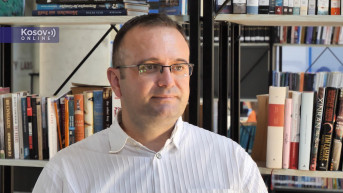
The conditions for employing foreigners in Germany have been significantly eased, and people from the Western Balkans, particularly construction workers, medical professionals, and IT specialists, have been most attracted, Erion Muca, a professor at the Faculty of Economics and an expert on labor and employment from Tirana, says to Kosovo Online.
He explains that Germany, through a new reform that came into effect on June 1st, has not only increased employment opportunities for various professionals from each country but also removed some of the bureaucratic and more conservative barriers that it previously had.
Those who benefit the most from this reform are employees who, until recently, faced uncertainty regarding the recognition of their diplomas, documentation, and qualifications.
“The German side primarily assesses the professional skills of the individual. Also, knowledge of the German language at a normal level of use is required. If the employee meets both criteria, they are given the opportunity to work in Germany, with reduced time for obtaining a work visa, shorter time for completing documentation, and fewer required documents. This significantly facilitates the movement of workers, especially from non-EU countries to Germany,” our interlocutor says.
He explains that they will be required to prove their skills only during the first three-month probationary period in the occupation for which they intend to be employed. However, he adds, Germany requires not only specialized workers but also unskilled workers.
“For these employees, only knowledge of the German language and documentation related to legal compliance, such as a criminal record check, are required to obtain a work visa. Other conditions are very favorable because Germany, like other EU countries, suffers from a labor shortage for some professions that Germans do not prefer. These jobs will be done by foreigners to avoid blocking economic and service processes. This is why the procedures for employment in Germany have been simplified,” Muca explains.
When asked who is most interested in working in Germany, he says they fall into three main categories.
“First, construction workers (high and medium specialists). Second, healthcare specialists such as nurses, laboratory technicians, and physiotherapists, who find it much easier to get jobs there after completing higher or secondary vocational studies. Third, IT specialists, mostly young people who have finished technical schools, find it much easier to move to Germany. Besides these, there are ordinary workers, who make up the largest number of those going to work in Germany. Since they are not specialized and did not emigrate under a prior agreement, they have the same chance to get employed or to return back,” the professor from Tirana assesses.
He notes that the number of those leaving differs from country to country, but the trend of leaving is almost the same in every country.
“There is no definitive preference, but professions differ from country to country. As for Albania, the largest number of requests come from ordinary workers (unskilled workers). Healthcare and IT workers mostly come from North Macedonia. From Serbia, it is mainly healthcare or social workers who go to Germany,” Muca says.


0 comments