
The North of Kosovo as a trump card for the government in the election campaign
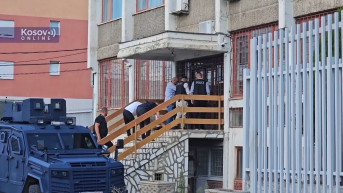
Ahead of the parliamentary elections on February 9, the ruling Self-Determination Movement has clearly placed all its bets on one field – the North of Kosovo. The announcement of the opening of the main bridge on the Ibar, the closure of Serbian Post offices, police raids on the Provisional Municipal Authorities and the premises of the Serbian Pension and Disability Insurance Fund... Some opposition parties label the current government's actions in the north as populist and propagandistic, while economic experts point out that by focusing on the north, Albin Kurti's government has neglected the needs of citizens and jeopardized economic development.
Written by: Dusica Radeka Djordjevic
What the next moves of the Kosovo government in the north will be until the elections remains a matter of speculation. One of our interlocutors believes there will not be overly radical measures, while another fears increased tensions.
Commenting on the situation in Kosovo, Serbian Prime Minister Miloš Vucevic said today that Albin Kurti has nothing to offer his voters for the February elections except for the actions he is taking in the north, where, as he noted, he has placed a target.
"The next Albanian goal is surely the abolition of the University of Pristina, which has been relocated to Mitrovica. They believe that the university fundamentally strengthens the Serbian people. They will not stop; they will go as far as kindergartens and nurseries. Kurti has nothing to offer his voters for the February elections, except for this," Vucevic stated.
According to the president of the Democratic Party of Kosovo, Memli Krasniqi, issues related to the north of Kosovo are "part of Prime Minister Albin Kurti's propaganda to avoid discussing much more important issues." Pal Lekaj, a member of the Alliance for the Future of Kosovo, called the announcement of opening the main bridge on the Ibar an "election stunt" by Albin Kurti, which will not happen.
From an economic perspective, the former president of the Kosovo Chamber of Commerce, Safet Grxhaliu, believes that Albin Kurti's government lacks both economic and diplomatic vision, and that unilateral decisions concerning the north are jeopardizing economic development and deterring foreign investors.
However, according to Aleksandar Sljuka, a collaborator with the NGO "New Social Initiative" from North Mitrovica, the latest moves by the Kosovo authorities in the north should not necessarily be viewed solely through the lens of an election campaign, as he points out that unilateral and harmful actions toward the Serbian community have been ongoing since the current government in Pristina was established.
"This has been going on for three years, ever since that first crisis with license plates in September 2021, and now it is September 2024. So, we have a continuous crisis in the north of Kosovo, and in that sense, we can say that Albin Kurti is in a state of permanent election campaigning when it comes to the north. Everything he does serves to promote Self-Determination and his personal promotion, and, so to speak, to gather political points, because he has seen that this resonates within the Albanian community, that they somehow like it, and that they approve of it. Based on that, he has a remarkably strong support," says Sljuka for Kosovo Online.
He adds that one of the reasons for Kurti's approach is that he has nothing else to offer.
"I'm not an economic expert, but according to the analyses of many, Kosovo is in one of its worst phases since declaring independence in terms of socio-economic parameters. However, what's also important is that people don't feel this as a direct consequence of this policy, so they continue to approve of the actions in the north. They haven't realized that EU measures or other sanctions directed at this government are affecting their lives, directly impacting their quality of life. Until they realize this, they will continue to support these measures, which are essentially populist and distract people from important life issues, while the ruling regime will continue to have support," Sljuka believes.
In the upcoming period, until the elections, he expects additional tensions.
"I'm not sure what will happen specifically. There's a lot of talk about how the only remaining institutions in the north within the Serbian system are those in the educational and healthcare sectors, but I don't think they will be shut down in the same way the Temporary Municipal Organs were. I think the government might try to make their operations so difficult that it will simply become impossible to keep these institutions running, and in that way, they will effectively be shut down," our interlocutor states.
The discussions around opening the main bridge on the Ibar River, he notes, have subsided somewhat, but it wouldn’t surprise him if they are reignited because, as he says, they "work" for Albin Kurti's voters, and Self-Determination has nothing else to offer.
As for the opposition, Sljuka believes that they, too, are trying to score some points using the situation in the north.
"I'm not sure that the opposition has a genuinely well-intentioned approach. They are more interested in criticizing the Kosovo government, saying that it is not doing things properly and that they supposedly could do it better. I believe they wouldn’t handle things as harshly as Self-Determination does, but I also don’t think they have particularly good intentions either, and I believe their goal is also to expand Kosovo's sovereignty. Even under previous governments, before Self-Determination, life for Serbs in Kosovo wasn’t great, so everyone is somehow looking to get the most out of the situation in the north," Sljuka concludes.
Stefan Surlic, an assistant professor at the Faculty of Political Sciences in Belgrade, does not expect overly radical moves by the Kosovo authorities in the north until the parliamentary elections, but he believes that their election campaign will focus on how the north is fully integrated and how Serbian institutions have been dismantled.
It is also possible, he says, that the implementation of the decision to open the main bridge over the Ibar will be postponed until after the elections.
"But there will certainly be continued announcements that even the small elements, so to speak, of the presence of the state of Serbia and Belgrade will be abolished, particularly regarding administration and some municipal structures. As for healthcare and education, for now, international actors are saying that these are red lines and that their existence depends on them. I think that Pristina will not act against these institutions in the near future, although, unfortunately, we are hearing more and more from police representatives and some officials in Pristina that the healthcare and education systems are a big problem for Kosovo's structures," Surlic told Kosovo Online.
What has been happening in the north in recent months, according to political scientist Arbnor Sadiku, should be viewed in the context of the Serbs leaving Kosovo's institutions, which, he says, gave Albin Kurti the opportunity to extend a layer of sovereignty over this part of Kosovo.
"They gained an advantage through the wrong move by President Vucic, who called on all Serbs in northern Kosovo to leave institutions such as the police, courts, and municipal offices. Kurti now has the opportunity to expand Kosovo's sovereignty in the north, in majority-Serb municipalities," Sadiku told our portal.


comments