
Brazilian Ambassador to Serbia: Our position on Kosovo and Metohija remains unchanged
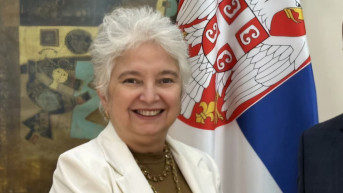
Brazilian Ambassador to Serbia Maria Clara de Abreu Rada said that Brazil does not recognize Kosovo’s unilaterally declared independence and supports a negotiated solution in accordance with international law and UN Security Council Resolution 1244.
Speaking about shared foreign-policy principles, Rada stressed that Brazil and Serbia were both committed to respect for international law and the peaceful settlement of disputes, emphasizing that Brazil’s position on Kosovo remained unchanged.
“At a time of growing geopolitical tensions and armed conflicts, Brazil believes that multilateralism is more important than ever. We remain firmly committed to the principles of the United Nations Charter, particularly respect for sovereignty, territorial integrity, international law and the peaceful settlement of disputes. Dialogue and negotiations, even among countries with differing positions, are essential to achieving lasting solutions. Brazil and Serbia share these fundamental principles. Our position on Kosovo and Metohija remains unchanged: Brazil does not recognize the unilaterally declared independence and supports a negotiated solution in accordance with international law and UN Security Council Resolution 1244,” the ambassador told Politika.
This shared understanding, Rada added, provides a strong foundation for cooperation within international organizations.
“We can translate our political alignment into concrete partnerships. In agriculture, there is significant potential to facilitate mutual market access, increase bilateral trade and strengthen cooperation in research and food production.
Brazil’s experience in biofuels, particularly ethanol and biodiesel, offers opportunities for technological cooperation and the development of sustainable energy. Brazil is ready to place its animal products on the Serbian market, contributing to their greater availability and quality for Serbian consumers. Science, innovation and education are also promising areas for more intensive exchanges between our institutions and businesses.
Our goal is to build on our shared values and strengthen relations that contribute to the prosperity of both countries and to building an international order based on cooperation,” Rada said.
Rada stressed that Brazil and Serbia had a shared interest in deepening their political and economic relations, noting that the two countries were united by their respect for the United Nations Charter, international law, sovereignty and the territorial integrity of states.
Speaking about opportunities to advance bilateral relations, the Brazilian Ambassador to Serbia said that the current political moment offered an opportunity to renew and deepen the longstanding friendship between the two countries.
“The results of the recent elections in Brazil and Serbia demonstrated the importance of democratic institutions and citizens’ participation in shaping the political future. In Brazil, the general elections included the renewal of two-thirds of the Senate, all 512 seats in the Chamber of Deputies and the election of 27 state governors. President Luiz Inacio Lula da Silva was re-elected in a two-round process conducted in accordance with the Constitution and electoral legislation, reflecting the freely expressed will of the majority of voters. The current political moment provides an excellent opportunity to renew and deepen the longstanding friendly relations between Brazil and Serbia,” Rada said.
She noted that recent political consultations had confirmed a shared interest in expanding cooperation in the economy, science, culture and technology.
“Brazil can offer significant expertise in biofuels, renewable energy, sustainable agriculture and agricultural research, while Serbia has important capacities in technology, innovation and industry. By building on our traditional friendship and recognizing concrete opportunities for cooperation, we can give fresh impetus to relations that have considerable, still untapped potential,” she said.
BRICS as a platform for a more balanced international order
Turning to the role of BRICS in international relations, the Brazilian ambassador said that the organization represented an important platform for strengthening the voice of developing countries and creating a more balanced international order.
“As a founding member of BRICS, Brazil sees the group as an important platform for promoting a more representative, inclusive and balanced international order. The growing participation of developing and emerging countries in the global economy must be accompanied by a stronger voice in international decision-making. The BRICS summits held in Rio de Janeiro in 2025 and New Delhi in September 2026 reaffirm this commitment. During Brazil’s presidency, the emphasis was placed on Global South cooperation, reform of global governance, climate finance, global health and artificial intelligence. The New Delhi summit continued this agenda, reaffirming the central role of the United Nations and highlighting cooperation in sustainable development and reform of the international financial architecture,” she said.
BRICS is an important forum for coordinating positions and developing practical initiatives, she stressed, including through the work of the New Development Bank to expand access to financing and support sustainable development.
“Brazil firmly defends the sovereign right of states to manage their natural resources and determine their development priorities, while respecting international obligations and environmental sustainability. Cooperation within BRICS can support these objectives through improved access to financing, technology, investment and knowledge. For Brazil, BRICS is not an instrument of confrontation, but a means of strengthening cooperation and contributing to an international order based on sovereign equality, mutual respect and shared prosperity,” Rada explained.
Independent foreign policy
Speaking about Brazil’s position in an increasingly multipolar world, Rada stressed that her country pursued an independent foreign policy and did not regard BRICS as an alliance directed against other states.
“Brazil has traditionally pursued an independent foreign policy guided by sovereignty, non-interference in the internal affairs of other states, the peaceful settlement of disputes and cooperation among nations. We maintain diverse partnerships with the United States, the European Union, China and countries across Latin America, Africa and Asia. Our participation in BRICS is fully compatible with these relationships. Strategic autonomy means preserving our ability to cooperate with all partners, guided by national interests and international law. BRICS can contribute by broadening dialogue, strengthening economic cooperation and promoting greater participation by developing countries in global decision-making,” she said.
She noted that BRICS was neither a military alliance nor a bloc directed against other countries.
“For Brazil, the objective is not to replace one concentration of power with another, but to build an international order in which cooperation takes precedence over confrontation and in which all countries have a meaningful voice. Our engagement in BRICS forms part of a broader commitment to regional and multilateral cooperation. Brazil actively participates in Mercosur, the G20 and the Community of Portuguese Language Countries, while also supporting renewed South American integration, including through UNASUR. These platforms have complementary objectives and enable Brazil to promote regional integration, strengthen economic cooperation, foster dialogue among nations and contribute to more inclusive and effective global governance,” Rada stressed.
Reform of the United Nations
Asked about expectations for the next United Nations Secretary-General and the reforms needed within the organization, Rada said that the next UN chief would need to demonstrate diplomatic experience, independence and the ability to build trust among Member States.
“The selection of the next Secretary-General comes at a particularly challenging time for the United Nations, marked by armed conflicts, geopolitical divisions and declining trust in multilateral institutions. Brazil expects the next Secretary-General to demonstrate independence, impartiality, diplomatic experience and the political courage to consistently defend the principles of the UN Charter. Above all, the Secretary-General must be capable of building bridges between countries with differing interests, encouraging dialogue and restoring confidence in diplomacy as the principal means of resolving disputes.
“Brazil attaches great importance to a transparent and inclusive selection process, with due consideration given to candidates’ qualifications, experience and ability to foster consensus among Member States. Reform of the United Nations is essential. The organization must become more representative, effective and better equipped to respond to contemporary challenges. This requires better coordination, greater accountability, more efficient use of resources and a stronger voice for developing countries in international decision-making.
The answer to the current crisis of multilateralism is not to weaken the United Nations, but to strengthen and modernize it so that it can fulfil its responsibilities in the fields of international peace, cooperation and development,” she said.
Regarding reform of the UN Security Council and Brazil’s call for an expansion of permanent membership, the ambassador said that the Council’s current composition did not reflect contemporary geopolitical realities and that greater representation must be ensured for regions that are currently underrepresented.
“Brazil has consistently advocated comprehensive reform of the United Nations Security Council, including an expansion of both permanent and non-permanent membership. The Council’s current composition largely reflects the geopolitical realities of 1945 rather than those of the 21st century. The absence of permanent representatives from entire regions undermines its legitimacy and credibility.
“As a founding member of the United Nations, with a longstanding commitment to multilateralism and the peaceful settlement of disputes, Brazil is ready to assume greater responsibility for international peace and security. Permanent membership would also help ensure more effective representation of Latin America and the Caribbean in the Council’s deliberations. Brazil maintains diplomatic relations with 192 United Nations Member States, reflecting the universal reach of our foreign policy and our commitment to dialogue across geographical and political divides.
“Our aspirations go beyond regional representation. We advocate a more inclusive Security Council that reflects the diversity of the international community, gives developing countries a stronger voice and enhances the participation of underrepresented regions in decisions concerning international peace and security,” the Brazilian Ambassador to Serbia concluded.

comments