
Notaries certified discrimination - rights of Kosovo Serbs lost in translation
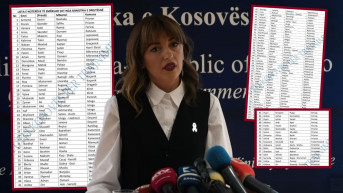
Justice may be "blind," but the Minister of Justice Albulena Haxhiu had to close her eyes quite a bit when selecting 101 notaries, among whom there is not a single Serb. Civil society activists from Belgrade, North Mitrovica, and Gracanica warn that this selection of notaries "certified" discrimination and caution that the rights of Serbs in Kosovo could henceforth be "lost in translation."
By: Petar Rosic
On July 15, the Ministry of Justice announced the decision to appoint 101 new notaries for various municipalities in Kosovo. Although from 2012 to the present only one Serb has been in this profession, and that in the municipality of Novo Brdo, among the newly appointed there is not a single one!
According to the Ministry of Justice, in the latest process, five candidates from the Serbian community applied, but none of them met the criteria.
It is interesting that the process of appointing new notaries began back in 2019, but it was annulled by the Minister of Justice Albulena Haxhiu, citing suspicion of abuse in the notary test.
Former Minister of Justice Abelard Tahiri from the Democratic Party of Kosovo dismissed the allegations, and the case went to court. In February 2022, the court ruled that the annulment of the competition was illegal, and the process was restarted from scratch in 2023.
Although there are no notaries of Serbian nationality among those selected, this time Minister Haxhiu did not suspect any abuse in the notary test. Nor did the OSCE mission.
In response to Kosovo Online’s question about the Ministry of Justice's decision, we received a reply that "the mission is actively working with judicial actors to promote the employment of members of non-majority communities." Where the issue lies remains unclear, as they emphasized to Kosovo Online that they were not directly involved in the notary hiring process nor in monitoring the notary exam procedures.
Last week in Brussels, Serbian Foreign Minister Marko Djuric also pointed out systemic discrimination against Serbs in Kosovo. He discussed the position of Serbs in Kosovo with the EU High Representative for Foreign Affairs and Security Policy Josep Borrell.
"Their situation is terrible. I pointed out that systemic discrimination against Serbs in our southern province continues. In Kosovo and Metohija, one hundred new public executors have been appointed, and not a single one of them is of Serbian nationality, even though many qualified and skilled candidates from the Serbian community applied. I mentioned this and mention it now as an example, as we discussed many specific aspects of the violation of the collective political and human rights of Serbs in Kosovo and Metohija," Djuric said.
Regarding the non-appointment of Serbian notaries, the editorial office of Kosovo Online reached out to the ombudsman institution in Kosovo, which called on all dissatisfied with the process to file a complaint.
"The Ombudsman has not received any complaints on this matter. However, the Ombudsman invites all those dissatisfied with the process to file a complaint," stated a brief response to our portal.
However, immediately after the Ministry of Justice's decision was announced on Facebook, the Deputy Ombudsman in Kosovo, Srđan Sentic, reacted, stating that it is "completely unacceptable that there is not a single Serb on the certification list for new notaries."
"Even if all Serbian candidates were appointed, there would still be a need for more notaries from the Serbian community. This decision only deepens distrust in institutions, which are declaratively open to the Serbian and other communities," Sentic stated in a Facebook post.
He added that this is a very concerning message from the Government of Kosovo to the Serbian and other communities and emphasized that this decision must be urgently revised.
The decision also provoked a sharp reaction from civil society organizations in Kosovo. In a joint statement, they highlighted that it sends a message that Serbs and members of other non-majority communities are not welcome in institutions and free professions in Kosovo.
The NGOs point out that there are currently ten Serbian lawyers in Kosovo who have passed the notary exam in Kosovo, while five of them applied for notary positions in multiple municipalities in Kosovo.
"It is extremely concerning that none of them were appointed to notary positions in any municipality in Kosovo. Particularly concerning is the fact that a candidate from the Serbian community who applied for positions in two municipalities in northern Kosovo, despite meeting all conditions and having considerable legal experience, was not appointed," said the NGOs in a statement sent to the media, calling on the Minister of Justice of Kosovo to reconsider their request to revise the decision on appointing notaries in municipalities with a Serbian majority.
The statement is signed by organizations including the Advocacy Center for Democratic Culture (ACDC), New Social Initiative (NSI), NGO Aktiv, Communications for Social Development (CSD), Institute for Territorial Economic Development (InTER), Youth Partesh Activity (OPA), Business Women’s Association "Avenija," and NGO Santa Maria.
Slobodan Stosic, program manager of the Advocacy Center for Democratic Culture (ACDC) for Kosovo Online, explains that one of the main problems is that if nothing changes, notaries will be certifying documents for Serbs in the Albanian language, which many of them do not understand.
"This is problematic not because they are all Albanians, but because by law, a notary can do their job in the language they speak, which means that in practice, all these notaries will be certifying documents in Albanian, which the non-majority community, i.e., the Serbian community, mostly does not understand," Stosic warns.
He notes that the Minister of Justice has not provided any explanations as to why at least one of the candidates from the Serbian community was not given a position, and now we will have a situation where notaries in Zubin Potok, and even in Gracanica, will be Albanians who will very likely conduct their work in the Albanian language.
"The message being sent is that there is no place for Serbs in these institutions," he says.
He explains that Serbs in the north previously had to seek services from notaries in South Mitrovica and that only one of them worked with the Serbian community and accepted documents in the Serbian language.
"When he retired, that practice was discontinued, which means I don't expect anything new in the north. It is very likely that documents in the Albanian language will be required, that documents that are certified or notarized will also be in Albanian, so this is just the beginning of many difficulties for the Serbian community both in the north and in other municipalities," says Stosic.
Milos Pavkovic from the Center for European Policy told Kosovo Online that the Pristina government is sending a clear message that it does not want to genuinely integrate the Serbian community.
"Serbian is an official language in Kosovo, and we have very few notaries who could verify documents in Serbian. With this move, i.e., the appointment of exclusively Albanian notaries who will work only in Albanian, a very negative message is being sent to the Serbian community - that the government in Pristina has no understanding for them and that their needs are simply not considered in this way," says Pavkovic.
He particularly highlights that there were a number of Serbs who applied for this competition and who met all the conditions.
"They were legal professionals, had verified diplomas, and passed the notary exam. They met all the conditions prescribed by the competition but were not selected. So, it is very clear, it sends a very clear message from the Pristina government that it does not want to genuinely integrate the Serbian community and work on improving conditions for the Serbian community," our interlocutor states.
Like Stosic, Pavkovic points out as a particular problem for Serbs in Kosovo the fact that according to Kosovo laws, an Albanian notary is not required to have a translator for the Serbian language.
"He can translate exclusively into Albanian, which further incurs translation costs for documents. So, citizens have to translate documents at their own expense with a court interpreter, which requires money, time, and so on. I emphasize, Serbian is an official language in Kosovo, and Serbian nationals should have a certain number of notaries who can perform tasks in the Serbian language," concludes Pavkovic.
Oliver Vujovic from the Forum for Development and Multiethnic Cooperation (FDMC) in Gracanica states that at least 10 percent of the selected notaries should be from minority communities and that the non-selection of Serbian notaries represents institutional discrimination.
"This is a form of institutional discrimination, not only in this regard but in many other matters. No justification is a sufficient reason for not having a single notary who should work normally with the Serbian community. And not only with the Serbian community but with all other minority communities as well," Vujovic told Kosovo Online.
He assesses that there must be political will for change.
"Without that political will, no matter how much the civil sector and all other interested parties protest and object, without political will, I think it will remain as it is," he concludes.
0 comments