
Brnabic: Serbia has provided more than €60 million in assistance to Ukraine since the start of the war
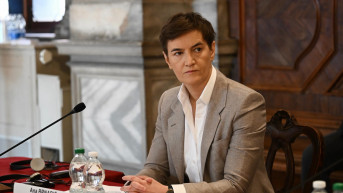
Serbian National Assembly Speaker Ana Brnabic stated that Belgrade has supported Ukraine since the outbreak of the war and has provided more than €60 million in assistance to Kyiv since February 2022, in the form of direct financial and humanitarian aid, but not military assistance.
"We were the only country in the Western Balkans that, during the most difficult winter months, delivered power sector equipment to Ukraine, because our electricity systems are similar, as well as generators and spare parts. Even when that equipment was unavailable on the market, we supplied it from our own reserves. In that way—and many people are unaware of this, particularly in the European Union—a very close relationship developed between Serbia and Ukraine," Brnabic told Euronews.
She said that communication between Serbian President Aleksandar Vucic and Ukrainian President Volodymyr Zelenskyy is regular and that the two leaders remain in constant contact.
"My communication with the Speaker of the Ukrainian Parliament, Ruslan Stefanchuk, is similarly regular," Brnabic added.
Asked about Serbia's frequent portrayal as "Russia's Trojan horse" and one of Moscow's closest allies in Europe, "almost like a Russian satellite," Brnabic said that such a perception is exaggerated.
"We Serbs are not 'little Russians.' Serbia is an autonomous, independent, and sovereign state with nearly a thousand years of history. Yes, we have traditionally maintained good relations with the Russian Federation, and those relations continue today. But this is not a relationship without disagreements—I must emphasize that the Russian Federation has repeatedly criticized Serbia, for example, for voting at the United Nations to condemn Russia's aggression against Ukraine, as well as for the assistance and support we provide to Ukraine," Brnabic said.
She added that people guided by stereotypes often overlook certain facts while exaggerating others.
"The truth matters, and perhaps we should present it more effectively. Unfortunately, stereotypes are so strong and deeply rooted that even when we speak about what we are doing, people often ignore it or simply do not believe it. However, as our foreign minister has said, when it comes to Serbia's relations with Ukraine and the extent of Serbia's support for Ukraine, the best people to ask are the Ukrainians themselves," Brnabic said.
Regarding Serbia's path toward European Union membership, Brnabic—who, together with three ministers, presented the results of Serbia's reform efforts in the European integration process in Brussels on Friday—pointed to the frustration of many Serbian citizens over what they perceive as stricter requirements being imposed on Serbia than on other candidate countries.
"Let me give the example of implementing the ODIHR recommendations to improve electoral conditions in Serbia. In order to open Cluster 3, for which we have been technically ready since 2021, we are required to implement all ODIHR recommendations. However, if you look at other candidate countries that also have ODIHR recommendations on improving electoral conditions, they are not required to implement any of those recommendations, yet they have already opened all of their clusters. That is a double standard that is difficult to explain to our citizens and one that undermines the credibility of the European Union," Brnabic said.
At the same time, she stressed that the authorities in Belgrade remain convinced that Serbia's future lies in the European Union.
"That is why we are not giving up. We will continue to fight and work even harder, but it is important that we present not only our plans but also our results. We understand that the EU is a club—a family of states—that is entitled to set whatever standards it wishes for those seeking membership, but it would be beneficial if those standards were applied more consistently," Brnabic concluded.

0 comments