
Qelaj: Failure to establish institutions undermines human rights
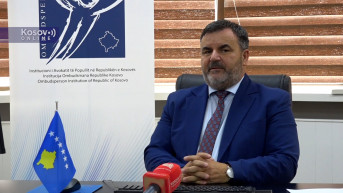
Ombudsman Naim Qelaj has stated that Kosovo has been functioning without fully constituted institutions for a second consecutive year as a result of repeated elections, a situation which, he said, undermines human rights and creates uncertainty among citizens regarding the country's future political development.
"This is the second year that Kosovo has continued to function without fully constituted institutions as a result of repeated elections. The failure to establish institutions undermines and has a highly detrimental impact on human rights, primarily because of the stagnation of legislative initiatives, amendments to existing laws, and the adoption of new legislation that directly affects the lives of citizens, their well-being, and improvements in their standard of living. Naturally, it also significantly affects the work of other institutions, which, in the absence of oversight authorities, operate at a very low level of activity in their day-to-day work. They are unable to complete ongoing projects or launch new ones. As a result, the citizens of Kosovo are now faced with uncertainty and unpredictability regarding what will happen next," Qelaj told KosovaPress.
Qelaj expressed hope that the election process would ultimately conclude with the formation of new institutions, warning that the continuation of the political and institutional crisis would further deepen the damage to Kosovo.
"I believe that the outcome of the most recent elections will ultimately be finalized through the establishment of institutions and that we will not face another political and institutional crisis, because we are already in a difficult situation in which many institutions continue to operate with extended mandates, including the Ombudsman's Office. I remain in office with an extended mandate until the appointment of a new Ombudsman, although my five-year term expired in October of last year. The damage being inflicted on Kosovo through the failure to establish institutions is enormous. I believe that those who bear the institutional and political responsibility for forming these institutions must demonstrate greater responsibility and should not focus solely on political calculations regarding the distribution of power," he added.
Qelaj further noted that the crisis has resulted in budgetary constraints, delays in legislative initiatives, infrastructure projects, and judicial reform, stressing that respect for the separation of powers is one of the fundamental principles of judicial reform.
"We are facing budgetary limitations, restrictions on legislative initiatives, and delays in launching new infrastructure projects. Judicial reform has stalled, as have many other ongoing processes. This is the consequence of the current institutional and political crisis, which is gradually losing any meaningful purpose. Above all, I believe that respect for the separation of powers is essential for judicial reform. Everyone living in Kosovo and holding institutional responsibility must understand that interference with the judiciary, or attempts by the legislative or executive branches to influence or capture the judicial branch, seriously jeopardize Kosovo's democracy," he emphasized.
He also argued that there are growing indications of interference in the judicial system, citing statements and actions by political leaders which, in his view, suggest attempts to exert influence over the judiciary and the prosecution service.
"It is my view that there have been actions indicating a tendency to interfere in the judiciary. These range from reactions by institutional leaders and the public targeting of specific individuals as undesirable candidates for senior positions within the prosecution and judicial system, to calls for launching recruitment procedures or taking specific measures. The judiciary, as well as the Kosovo Judicial Council and the Kosovo Prosecutorial Council, are independent institutions whose decisions must be based on the law and the needs of the justice system, rather than on political agendas," Qelaj said.


0 comments