
Old law on foreigners, new obligations for Serbs without Kosovo documents: What awaits them?
Kosovo’s Law on Foreigners was adopted back in 2013, but its provisions on entry, exit, and residence in Kosovo will soon begin to be enforced strictly. In practice, Serbs without Kosovo documents will be the first to feel the effects. Although the Kosovo Police assure that the aim is not to punish anyone but to “know where people are,” those familiar with the situation in Kosovo fear that the authorities’ latest intent in Pristina will further complicate life both for Serbs living in Kosovo and for those who come there to work or study.
Written by: Dusica Radeka Djordjevic
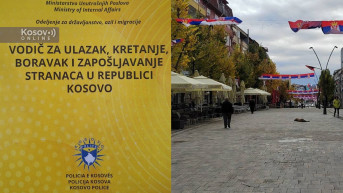
In recent days, residents in northern Kosovo have been receiving a Ministry of Internal Affairs brochure: “Guide for the Entry, Movement, Residence and Employment of Foreigners in the Republic of Kosovo.”
Both the brochure and the law define a foreigner as “any person who is not a citizen of the Republic of Kosovo.”
In practice, Serbs living in Kosovo who do not hold Kosovo citizenship will have to register with the police and, in administrative terms, “enter further procedure” in order to obtain a permit for a stay longer than three days. The same will apply to those coming from central Serbia for work or studies who remain longer than three days.
Deputy Commander of the Kosovo Police for the North, Veton Elshani, told Kosovo Online that the Law on Foreigners has always been in force, but that it will soon begin to be implemented in the part requiring registration at police stations within three days of entering Kosovo, so that the authorities know where people reside.
“We will speak with people and announce from which day registration becomes mandatory, and it will be possible to do it at any police station, where they will receive a form,” Elshani explained. If the police identify persons who have not complied with this obligation, he added, their data will be sent to the border police, which is obliged to issue fines.
“For us, issuing fines is not the point; what matters is that people come to the police station to register so we know where they live and where they are. After that, they can go to the Ministry of Internal Affairs to apply for work, for university, for schooling, so they can stay longer than three days. This is not a big problem to do,” the deputy commander for the North said.
He explained that Kosovo issues short-term, temporary, and permanent residence permits.
“A one-year stay can be granted, for example, for schooling or for work, and that is renewed annually; then the Ministry of Internal Affairs can also grant permanent residence in Kosovo,” Elshani noted.
Asked whether professors and doctors who come to work in institutions within the Serbian system will have their confirmations recognized for the issuance of residence permits, Elshani said that depends on the Ministry of Internal Affairs.
“Whether those people will receive a work permit or a temporary residence permit, I don’t know because that is not within my competence—it depends on the Ministry of Internal Affairs. But I can say that no one will have a problem if they perhaps overstay by a day or so. For us it is important that people enter the system and learn that they need to be in the system,” he said.
When someone arrives as a tourist by bus to visit churches or other sites, he added, the police receive information through the command in Pristina, and in that case it is not a problem to remain in Kosovo for a week. When someone arrives individually at a hotel, then, he said, the hotel owner is obliged to inform the police within two days.
What awaits Serbian citizens without Kosovo documents once the Law on Foreigners is in “full implementation,” in the view of Aleksandar Rapajic, Program Director of the NGO Center for the Advocacy of Democratic Culture in North Mitrovica, are not formalities but problems.
He even believes the decision made by the Kosovo authorities was designed to create as many problems as possible.
He says there are many people living in Kosovo with Serbian documents who, for various administrative reasons, have been unable to obtain Kosovo documents.
“Kosovo institutions will not accept their documents issued with addresses on the territory of Kosovo, while on the other hand they have no other documents with which to register. That is one problem. The second problem concerns the large number of people who come to work here. The university is particularly affected, because many professors, assistants, and even many students come from the territory of central Serbia. If students list their residence as a dormitory, those confirmations will not be valid, because we know that Kosovo institutions do not accept documents issued by the Republic of Serbia,” Rapajic told Kosovo Online, pointing to possible complications.
He also assumes it is no accident that the decision will begin to be applied now, after the summer.
“Imagine if all those Albanians who come from abroad during the summer were required to register with the police after three days and process documentation. The institutions waited for that wave of the Albanian diaspora to pass, and now, when Serbian students and people from Serbia are due to arrive, they are enforcing this measure. I think the target is precisely students and the university, to reduce the number of people who will come,” he said.
Many people, he added, have been trying for years to resolve their documentation issues.
“It’s not that they don’t want to obtain Kosovo documents. Because of certain administrative snags and problems created by the institutions, they cannot get them; so now they have nothing else to do but what they have already been attempting. As for people coming from outside, we only know that they should report to a police station and will then be directed into further procedure, but we still do not know what that further procedure entails,” Rapajic said.
The Law on Foreigners stipulates that there are three types of residence in Kosovo—short-term, temporary, and permanent. Temporary residence is granted to a foreigner who has a place of residence or intends to reside in Kosovo for the purpose of family reunification, secondary or higher education, conducting scientific research, humanitarian reasons, employment, or the posting of workers.
A temporary residence permit is granted for up to one year, and an application for its extension must be submitted no later than thirty days before the current permit expires.
One condition for issuing a temporary residence permit is that the foreigner “does not pose a threat to national security, public order, or public health.”
According to Stefan Surlic, Assistant Professor at the Faculty of Political Sciences in Belgrade, the announcements by the Kosovo Police will affect people who live “between two different environments.”
“We have people who live in central Serbia and work, for example, at the University of Pristina with temporary seat in Mitrovica, and many other institutions that simply have people living between two different environments. I think they are affected, as are the wider family, relatives, and friends who have not lived in Kosovo since the war but visit their loved ones. One can hypothetically imagine holiday periods when, if they stay longer than three days, they have to go through the procedure of registration, record-keeping, and possibly paying a fine if they fail to do so,” Surlic told Kosovo Online.
Although he believes no one is opposed to such registration per se, he notes that raising the issue of “foreigner status” carries a negative connotation at a moment when “questions around education and health care” are also being opened.
He believes everything has been prepared with the idea of framing it as a security issue.
“What we have heard from police representatives is that they do not have insight into who is entering and exiting northern Kosovo, that this is a major security problem for them—and in line with what Sveçla and others have been saying in recent months, this seems to be the idea of having a completely clean and clear registry of who enters, exits, and lives in the four Serb-majority municipalities in northern Kosovo,” Surlic emphasized.
In a paradoxical situation, he added, Serbs in Kosovo who do not want Kosovo documents will be treated as foreigners.
Although a significant percentage of the population obtained Kosovo documents earlier—and although the share of Serbs who do not have them is smaller—it is still, he said, a relevant number.
“There are people who do not want Kosovo documents, who live in Kosovo and have lived there all along, and naturally they are now in a paradoxical situation—treated as foreigners and possibly fined if they do not wish to comply with this latest decision by Pristina,” he said.
Surlic believes this entire issue should actually be the subject of dialogue and agreement.
“Looking at the genesis of all agreements to date related to normalization, the idea has always been that Serbs can live ‘in two worlds,’ and that regardless of the status dispute between Belgrade and Pristina, they be guaranteed freedom of movement and that those Serbs living in Kosovo not be required to have every aspect of their status absolutely defined, given that Kosovo’s status at the international level has not been fully resolved,” he noted.
From the viewpoint of political analyst Nexhmedin Spahiu, the announcements from the Kosovo Police are standard procedure for any foreigner coming to Kosovo, but at the same time he says this will be a means to force Serbs who do not yet have a Kosovo ID card either to obtain one or be considered foreigners.
He believes this issue needs to be resolved legally.
“All those who are the legitimate representatives of Serbs in Kosovo must raise this issue—Minister Rasic, members of parliament… Why are the representatives of Serbs in Kosovo institutions? To resolve such matters. A citizen cannot be the victim of an administrative misunderstanding or a gap that exists in laws or regulations,” Spahiu concluded.
Until any administrative gaps are closed, the law in force provides that a person is considered to be “illegally residing in the territory of Kosovo” if they do not possess the required visa, if they entered Kosovo illegally, or if they do not have a residence permit…



0 comments