
Elshani: Citizens without Kosovo documents will soon have to register with the police upon entering Kosovo
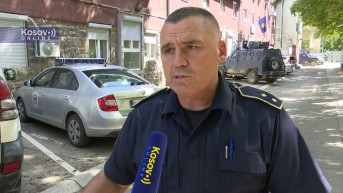
Deputy Commander of the Kosovo Police for the northern region, Veton Elshani, told Kosovo Online that the Law on Foreigners has always been in force in Kosovo, but that soon it will begin to be applied in the part concerning the obligation to register at police stations within three days of entering Kosovo, so that the authorities know where such individuals reside. In this case, “foreigners” also include Serbs without Kosovo documents who live and work in Kosovo, as well as those who periodically come to Kosovo for work or studies.
“The police will inform citizens as of when registration will become mandatory,” Elshani stressed.
To inform people, he added, brochures have started to be distributed, specifically, the “Guide for Entry, Movement, Residence and Employment of Foreigners in the Republic of Kosovo.”
“We will talk to people and announce from which date they need to register, and this can be done in any police station, where they will receive the appropriate form,” Elshani explained.
If the police register persons who have not complied with this obligation, he continued, their data will be forwarded to the border police, which is responsible for issuing fines.
“For us, it is not important to issue fines, but for people to come to the police station, register, and for us to know where they live and where they are. After that, they can go to the Ministry of Internal Affairs to apply for work, for university, schooling, and to be allowed to stay for more than three days,” Elshani said.
In the case of people arriving by bus to Kosovo for visits to churches or other sites, he added, the police receive information through the command in Pristina, and then it is not a problem to stay in Kosovo even for a week. However, if someone comes individually and stays at a hotel, then, according to him, the hotel owner is obliged to notify the police within two days.
“But people who live and work here must report to the police, where they will receive a form. This is not a big problem to do,” said the Deputy Commander of the Kosovo Police for the northern region.
He explained that short-term, temporary, and permanent residence permits are issued for stays in Kosovo.
“A one-year stay can be granted, for example, for schooling or work, and this can be renewed each year. Then the Ministry of Internal Affairs can also grant permanent residence in Kosovo,” Elshani noted.
Asked whether certificates from Serbian institutions would be recognized for professors and doctors coming to work in institutions that operate within the Serbian system, so that they could be granted residence permits, Elshani said that this depends on the Ministry of Internal Affairs.
“Whether those people will be given work permits or temporary residence permits, I don’t know because that is not within my authority, it depends on the Ministry of Internal Affairs. But what I can say is that no one will have problems if they happen to overstay by a day or so. For us, it is important that people enter the system and learn that they need to be in the system,” he said.
In cases where married couples include one spouse with Kosovo documents, registered as living in Kosovo, while the other holds Serbian citizenship, Elshani said that the spouse without Kosovo documents must register with the police if residing in Kosovo for more than three days and begin the process of family reunification.
“I think there will be no problem there. If, in some cases, it is necessary for us to verify someone, then we will go to the house, check, and verify to confirm the situation,” Elshani said.



0 comments