
Orban instead of Michel at the helm of the European Council, what would that mean for Serbia and Kosovo?
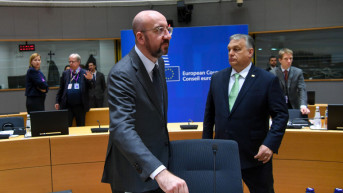
The announcement by the current President of the European Council, Charles Michel, that he would run in the European Parliament elections in June has opened the possibility for Hungarian Prime Minister Viktor Orban to take over the helm of this highest Brussels body, as Budapest will assume the presidency of the European Union in the second half of the year. This immediately sparked a debate on how this personnel combination would affect the Belgrade-Pristina dialogue, the European integration of Serbia and Kosovo, the Western Balkans, and the already challenging functioning of European institutions.
Michel's decision to shorten his term, which, according to Kosovo Online interlocutors, is an unprecedented event regarding this high EU position, should not have significant implications for our region, as there are small chances that Orban will take over that position. Even if it happens, the Hungarian Prime Minister will not be able to impose his policies.
They point out that the role of the President of the European Council is somewhat ceremonial, involving chairing meetings and mediating agreements between member states, including sensitive decisions on budgets and foreign policy. Decisions are made by the presidents and prime ministers of member states sitting in the Council.
Michel's move has been criticized by many, even by some MEPs from the same political family as the current President of the European Council. Dutch liberal Sophie in 't Veld wrote on the X platform that the "captain is leaving the ship in the middle of the storm".
Charles Michel is a former Belgian Prime Minister who has chaired the European Council since 2019. Given that he has announced his candidacy for the European Parliament, as a well-recognized figure, he is likely to be elected as an EP member, and he will step down from the helm of the Council.
The selection of the top three positions in the EU, including the President of the European Council, is done by a qualified majority vote, meaning 55% of EU member states representing 65% of the total Union population. This means that Orban cannot use a veto in this process, as he recently did to block EU financial aid to Ukraine. He also opposed Ursula von der Leyen getting a job in the Commission five years ago, but unsuccessfully.
Typically, the new President of the Council takes over the role at the end of the year – Michel's mandate is supposed to last until November 30. However, if Michel resigns, the new president can start his mandate in the summer if there is a change in the regulations (which can be changed by a simple majority, without the possibility of a veto) and if an agreement is reached on the successor within the EU leadership.
Hungary's Foreign Minister, Peter Szijjarto, announced that Hungary would use its EU presidency to accelerate the enlargement process in the Western Balkans. He stated that the Western Balkan countries were more needed by the European Union than EU membership was important to those countries.
"Therefore, we believe that the EU enlargement process should be accelerated. We want to use the EU presidency to ensure that a large number of Western Balkan countries open as many chapters as possible in the accession negotiation process", Szijjarto said.
Aleksandar Ivkovic from the Center for Contemporary Politics tells Kosovo Online that Michel's decision to run for the European Parliament shortens his own mandate, which, he points out, is an unprecedented decision since this position exists. Ivkovic believes that this personnel combination will not have a significant impact on the dialogue between Belgrade and Pristina, and there are slim chances of Orban replacing Michel.
"The point is that the European Council is a body in which the presidents and prime ministers of EU member states sit, and it makes political decisions and conclusions about the directions the EU should take in the coming period on all important issues of foreign and economic policy... The role of the President of the European Council is to preside over these sessions and try to reach some consensus and common conclusions on all these issues through mediation. What is important in the context of this decision is that the President of the European Council does not have any kind of legal authority to impose his will on the presidents and prime ministers of the EU. His role is to mediate in meetings," Ivkovic notes.
As he explains, this means that even if Viktor Orban becomes the President of the European Council, he will not be able to implement some of his policies in that way.
"His role should be just to preside over those meetings. If he tried to implement some of his policies that would be unpopular for the political center of the EU, the leaders would reject them. And that would only increase the dysfunctionality of that body. But, I repeat, he would not be able to implement some of his policies that would not have consensus at the EU level. That function would primarily mean prestige for Hungary and him personally, and I don't think he will be allowed to do that for that reason. Because his policies in many areas deviate from what the political center of the EU represents. I think there will be no consensus among the leaders to allow him to take on that role for that reason," Ivkovic says.
He points out that there are ways to elect a new President of the European Council after Charles Michel resigns – either to immediately elect a new president with a full mandate or to change the rules and then elect a temporary president until a permanent president of the European Council is elected at the end of the year.
Regarding the possible effects of Michel's resignation on events in the Western Balkans, especially the Belgrade-Pristina dialogue, as well as the European path of Serbia and Kosovo, Ivkovic recalls that this is an election year for the EU when all processes are slowed down.
"Usually, in an election year, we shouldn't expect much regarding the enlargement policy or the Belgrade-Pristina dialogue. Because the EU will be occupied with elections and the formation of institutions. Elections are held in June, the new President of the European Commission is usually elected in July, and then the formation of the European Commission lasts until November or December. When we go back, for example, to 2019, when it last happened, there were no specific decisions regarding the Balkans, Serbia, or the Belgrade-Pristina dialogue. Because that period was marked by 100% tariffs on goods from Serbia imposed by Kosovo. Even pressure from the EU on the government in Pristina to repeal that decision was not possible during that period; it happened only in 2020," he emphasizes.
Based on that experience, Ivkovic does not expect, whoever becomes the President of the European Council, whether it's Viktor Orban or someone else, that the EU will make any significant decisions regarding Kosovo after spring, when the campaign for the European Parliament starts, until the end of the year.
"Especially since this year, in November, presidential elections are held in the United States. The EU is trying to coordinate with the US on its policy toward Kosovo, and considering that the outcome of the US presidential elections will be awaited, I think probably no significant decisions will be made, especially regarding the Belgrade-Pristina dialogue," he is convinced.
What is expected from Belgrade and Pristina is clear – the implementation of the Ohrid Agreement from March of last year, Ivkovic believes.
"How much will be implemented by, let's say, March, when the European Parliament dissolves – we will see. Probably not much is expected from Belgrade, given that the decision on license plates has now been implemented, buying some time in a way, so I assume that further concessions in the dialogue are not expected from the Belgrade side. The Pristina side will still feel pressure about establishing the Community of Serb-majority Municipalities, but again, so far, European institutions have not had much success in implementing that step. Mr. Borrell and Mr. Lajcak will remain in their positions at least until the end of this year, but they will be in a technical mandate from spring, and therefore no further progress in that regard is expected," Ivkovic concludes.
Strahinja Subotic from the Center for European Policy also shares the opinion that personnel changes will not have much impact on the dialogue between Belgrade and Pristina and, in general, on the Western Balkans. He also points out to Kosovo Online that this is the first time the President of the European Council has announced stepping down from the position before completing the mandate, which, he adds, is a significant problem because the position was created to last longer than others.
"He was supposed to lead that institution until December, until the formation of the European Parliament and the new European Commission. His resignation changes that dynamic. It is true that, according to the rules of the procedure, Viktor Orban will take over the European Council, i.e., he will come to its helm, considering that Hungary will take over the presidency of the EU in the summer. However, Council members, i.e., member states, can prevent this with a majority. Unanimity is not required, and they can simply choose a new President of the European Council instead of Michel by December," Subotic says, emphasizing that it is still too early to conclude whether Orban will take over the position of President of the European Council.
Our interlocutor believes that the announced personnel changes in the EU will not have much, if any, impact on Serbia's path to the EU, the Western Balkans in general, and the Belgrade-Pristina dialogue.
"Charles Michel was the President of the European Council; have we heard about him in the context of the Belgrade-Pristina dialogue? No. Simply put, he is at the helm of the most important EU institution, and Orban could be that, but they have so many other issues to deal with, not the Belgrade-Pristina dialogue. We have the High Representative for Foreign Affairs and Security Policy of the EU, Borrell, who deals with that issue, and the Special Envoy Miroslav Lajcak. That is the duo that matters when it comes to the dialogue. They communicate directly with Belgrade and Pristina, and, of course, with all EU institutions and member states. Whoever is at the helm of the European Council, I don't think in any way neither Belgrade nor Pristina should be encouraged or relaxed, but they should know that they are expected to implement everything they agreed upon in the previous period, from the Brussels Agreement to the Ohrid Agreement," Subotic emphasizes.
According to him, if Orban were to take over the position of President of the European Council, Belgrade would welcome it, given that strengthened relations have been built with Budapest lately.
"However, Orban currently does not have strong political capital in the EU. He is currently 'haggling' when it comes to Ukraine, wants to consider whether to unfreeze funds for Ukraine so that funds frozen due to democratic backsliding would be unfrozen for Hungary. Regardless of whether Orban takes over the presidency of the European Council or not, during the Hungarian presidency, there will certainly be no discussion about the application of the so-called Kosovo for EU membership. Second, when it comes to visa liberalization, that will remain in force. Hungary, whether it likes it or not, will not be able to change that. Third, we see that there are still restrictive measures towards Pristina. Again, a unanimous decision is made, and I believe Hungary would continue to insist that, as long as Pristina does not implement the Community of Serb Municipalities, these measures should not be lifted," Subotic says.
He adds that this is not something specific to Orban but a general sentiment in the EU that Pristina has a significant portion of its obligations to fulfill to gain additional benefits on its path to the EU.
When it came to the personnel policy for key positions within the EU, there was a lot of political trading, mainly between Berlin and Paris, and it will probably be the case in the selection of Charl Michel's successor, who announced that he would shorten his mandate as the President of the European Council due to his candidacy in the European Parliament elections in June, political scientist Dimitrije Milic from the New Third Way says for Kosovo Online.
"During the selection of personnel for both the European Council and the European Commission, French President Emmanuel Macron had a significant influence. The European liberals obtained the position of President of the European Council through this personnel policy. Charles Michel, the current President of the European Council, comes from a Belgian liberal party. Therefore, based on inertia, Michel will probably be succeeded by someone from the group of European liberals, likely from a party currently in power," Milic believes.
In the case of selecting Michel's successor, our interlocutor adds that respect for a smaller state would likely be shown to avoid Germany, France, and Italy monopolizing important functions in the EU.
"We could expect someone from a smaller state, where liberals have political weight, to assume this function. Perhaps it will be someone like Mark Rutte, the former Dutch Prime Minister, who comes from a country where liberals have been in power until recently. Rutte has shown great interest in the Kosovo issue when he last visited President Vucic and the so-called Kosovo institutions. So, someone along those lines could probably be elected," Milic notes.
Regarding suggestions that Hungarian Prime Minister Viktor Orban might take Michel's place because Budapest is slated to hold the EU presidency in the second half of the year, Milic points out that whatever personnel combinations occur, they will not significantly change matters concerning important issues for Serbia.
"There are elections for the European Parliament, where new bodies are formed, and we have a new snapshot of the situation both in the EP and in the national states, as we will have elections there too. In that sense, this year should not bring about significant political changes regarding Kosovo, except, of course, that the pressure might decrease due to the elections and the process of selecting new personnel," Milic concludes.

0 comments