
Pahor on hold: Would a "new Lajcak" revive the dialogue between Belgrade and Pristina?
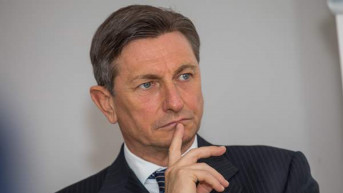
Just a few weeks ago, it seemed that no one had any objections to former Slovenian President Borut Pahor taking the hot seat left by Lajcak and attempting to revive the dialogue between Belgrade and Pristina. Moreover, Lajcak himself, according to Pahor, invited his potential successor to check if he was ready to pick up where he left off, which would hardly be seen as a move made without consulting EU leaders, given Lajcak's reputation and diplomatic experience. Everything was agreed upon, but nothing happened.
Written by: Dragana Savic
Pahor was already halfway to Brussels, Lajcak started a new job in Switzerland, and then the latter's mandate was extended until the end of the year.
The decision was undoubtedly partly motivated by bureaucratic reasons: waiting for Kaja Kalas to replace Borrell as the EU's High Representative for Foreign Affairs and Security Policy, and then she would propose a new envoy herself.
Considering that experts assess her as someone very close to Kosovo and an advocate of a tougher approach in politics, it is clear that even "bureaucratic reasons" are not without political undertones.
"I could have made a difference and changed the rules of the game," lamented Pahor to the media, regretting this turn of events.
A change in the way the dialogue is conducted is urgently needed, agreed by those mediating in the dialogue, as well as Belgrade and Pristina. But consensus in politics doesn't mean much. Pahor knows that best.
Finally, without firm support from the European Union and the United States and their diplomatic skill to exert pressure on the parties in the dialogue in the right measure and manner, each subsequent envoy will go the same way as the previous one—sent off with undisguised dissatisfaction and dashed hopes.
"The problem lies in the diplomatic method used by Borrell and Lajcak, which 'has not yielded sufficient results,' assesses Srecko Djukic, a member of the Forum for International Relations and former ambassador.
Commenting on Pahor being "sidelined" while Lajcak's mandate was extended, Djukic believes that "there is obviously some politics involved," but it is difficult to assess what and to what extent.
"What is clear is that the European government has not yet been formed, the European Commission has not yet been formed, although three or four top positions are clear, so I personally think that Borut Pahor would have stood out with his appointment. On the other hand, he would have been appointed by the old Commission, as part of the new administration in Brussels," Djukic tells Kosovo Online.
He reminds that Pahor has a high rating in Europe and the region.
"He does not have any negative traces behind him, quite the opposite. He was well received everywhere, pursued a reasonable, balanced policy, and clearly fulfilled his role as President of Slovenia. He is not a politician from any extreme, so I think he is a person of dignity who can handle this very challenging position. And we have seen how challenging it is because it has been a breaking point for years for Lajcak and Borrell, and they have achieved certain results but have not finished the job," says Djukic.
According to his words, Pahor or anyone else, if they become the EU envoy for the Belgrade-Pristina dialogue, should change the negotiation methodology because, he adds, Lajcak and Borrell have long used a diplomatic method that has not yielded sufficient results.
"It's a mixed method. It's neither shuttle diplomacy nor single-location negotiation diplomacy. It's diplomacy where negotiations are conducted on two tracks, maybe once a month, then the next month, then two months later, three months later, and then Belgrade and Pristina have the opportunity to deny everything, evolve, give up, etc. We saw that when negotiations were intensive between Belgrade and Pristina, with the Quint group mediating, plus Borrell, then Lajcak, leading to Brussels Agreement 2 and the Ohrid Agenda, excellent results were achieved in a relatively short period of about two or three months, two major documents, and I think that method should have continued," assesses Djukic.
Political analyst from Pristina, Afrim Hoti, tells Kosovo Online that Borut Pahor cannot change much in the Belgrade-Pristina dialogue, but neither can the European Union without the influence of the United States.
He notes that some more can be expected considering that Pahor comes from the Balkans, from Slovenia, and is familiar with Kosovo-Serbia relations.
"In that sense, he is more familiar than others and may personally contribute a bit more compared to Lajcak. But on the other hand, I don't think that either Pahor or Lajcak, together with the EU, can push the process forward without the influence of the US," emphasizes Hoti.
According to him, "it is in everyone's interest to change the rules of the game," especially for the Balkans, Serbia, and Kosovo, but also beneficial for the EU.
"It's now obvious that the EU's plan to support Balkan countries primarily foresees resolving Serbia-Kosovo relations. Without solving this issue, there will be no investments or EU support for the Balkans," our interlocutor states.
He believes that Pahor's statements about bringing changes to the dialogue are part of his promotion and notes that the postponement of Pahor's appointment was due to the "sensitivity of the moment."
"The EU is in the phase of consolidating new institutions. Until they have a new body to lead this process, they have realistically assessed to postpone Lajcak's departure for a few more months, but definitely a new mediator is coming soon," Hoti concludes.
Milos Pavkovic from the Center for European Policy tells Kosovo Online that both Belgrade and Pristina expect changes in the mediator in the dialogue, as well as in the way the dialogue will be conducted, but that the two sides have "diametrically opposite views."
Although Borut Pahor said he was promised Lajcak's position and doesn't know what has changed in the meantime, Pavkovic emphasizes that in politics, there are no promised positions.
He believes that Pahor's statements that he can bring changes to the dialogue are part of his promotion and notes that the postponement of Pahor's appointment occurred due to the "sensitivity of the moment."
"The EU is in the phase of consolidating new institutions. Until they have a new body to lead this process, they have realistically assessed to postpone Lajcak's departure for a few more months, but definitely a new mediator is coming soon," Hoti concludes.
Milos Pavkovic from the Center for European Policy tells Kosovo Online that both Belgrade and Pristina expect changes in the mediator in the dialogue, as well as in the way the dialogue will be conducted, but that the two sides have "diametrically opposite views."
Although Borut Pahor said he was promised Lajcak's position and doesn't know what
has changed in the meantime, Pavkovic emphasizes that in politics, there are no promised positions and appointments.
He believes that a certain individual in the mediator position can have an impact on initiating dialogue, but at this moment, geopolitical changes have the decisive influence on progress in the dialogue.
"Therefore, regardless of who holds that position, they can be successful or not, depending on geopolitical changes, but also depending on the readiness of the European Union and its individual member states, as well as the United States, to support the agreement and exert pressure on both sides to move forward concretely regarding the agreements. Because we've seen that Lajcak, despite his extensive experience, has been in the region, in Bosnia and Herzegovina, in Serbia, as an ambassador, meaning he knows the region well and has theoretically good methods for conducting dialogue, but essentially this has not resulted in significant progress. Although we had the agreement on the path to normalization, technically it has not yet been implemented and remains a big question mark on that agreement," the interviewee assesses. He adds that the lack of results during Lajcak's mandate was also influenced by the relatively passive role of the United States.
He believes that a specific individual in the mediator position can influence the initiation of dialogue, but at this moment, geopolitical changes have the decisive impact on progress in the dialogue.
"So, regardless of who holds that position, they can be successful or not, depending on geopolitical changes, but also depending on the readiness of the European Union and its member states individually, as well as the United States, to support the agreement and exert pressure on both sides to move forward concretely regarding the agreements. Because we've seen that Lajcak, despite his extensive experience, has been in the region, in Bosnia and Herzegovina, in Serbia, as an ambassador, meaning he knows the region well and theoretically has good methods for conducting dialogue, but fundamentally this has not resulted in significant progress. Although we had the agreement on the path to normalization, technically it has not yet been implemented and remains a big question mark on that agreement," the interviewee evaluates. He adds that the absence of results during Lajcak's mandate was also influenced by the relatively passive role of the United States.

0 comments