
Parliamentary “Rashomon”: Kurti’s powerlessness or campaign for new elections?
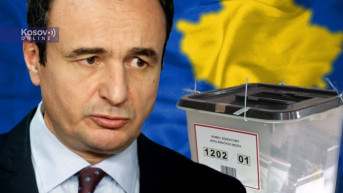
"Rashomon"—this is how the now double-digit attempts to constitute Kosovo’s ninth parliamentary convocation can be summed up. From the outset, new elections have been one of the possible—and increasingly likely—scenarios. While political analyst Shenoll Muharremi offers evidence that the leader of the Self-Determination Movement, Albin Kurti, is already deeply engaged in pre-election campaigning, commentators for Kosovo Online question how much Kurti would actually stand to gain from such elections.
Written by: Djordje Barovic
“Albin Kurti has already begun his pre-election campaign. Cutting ribbons in Leposavic (North), wearing the traditional hat in Boljetin (patriotism), displaying the red-and-black flag in Parliament (nationalism), laying foundation stones in Istok (government achievements), and continued confrontation with other parties (polarization)—there are clear indicators, aren’t there?” Muharremi noted.
To this list, one might add the latest shutdowns of Serbian institutions in the north, such as the recent raid on the premises of the forestry management company "Ibar" in Leposavic, which operates under the Serbian state company “Srbijasume.” The event was attended by acting ministers Xhelal Sveçla and Faton Peci.
“The latest in a series of violent and unilateral moves by Pristina, continuing the illegal seizure of Serbian property in Kosovo and Metohija, is clearly aimed at escalating political tensions and providing Albin Kurti with an alibi for his daily political failures,” said the Office for Kosovo and Metohija.
Momentum Builds
Marko Milenkovic, a collaborator with the NGO “New Social Initiative” in North Mitrovica, is convinced that Self-Determination and Kurti have entered a campaign mode.
“It looks to me like we are already in the campaign for the next elections—especially in the case of Self-Determination and Albin Kurti. Their recent moves point in that direction. The actions and positioning suggest we’re in a sort of political campaign, because we’re lacking clear stances. I think this campaign will intensify further in the coming period,” Milenkovic said.
He noted that the new elections might be called alongside local elections planned for autumn.
“However, we still don’t have firm dates for the local elections. That should come through consultations with Vjosa Osmani, but we don’t have that information yet,” he added.
Another possible date, he said, could be the beginning of next year when Kosovo is expected to elect a new president.
“We’re facing a very politically active period, where actors will try to achieve better results than in the last elections, as we are in a political crisis that won’t be easily resolved,” Milenkovic argued.
He believes Self-Determination and Kurti will lead the way due to dissatisfaction with February’s results and the current political landscape.
“I believe they will try in every possible way to use their position in government to run a campaign from that advantage point to secure better results,” he said.
Milenkovic argues that the ruling party must change its current approach to achieve better results.
“What we’ve seen so far is a lack of concrete outcomes in economic and institutional development. Instead, the focus has been on nationalism and the rhetoric Kurti is known for,” he said, warning that the same campaign is still ongoing.
“We see that visits to the north are back. It’s likely the north will continue to be used as a platform to build Albin Kurti’s voter base,” he stressed.
He also said that Kosovo society wants to see a different approach to politics, which, in his view, is currently absent.
“All we have are attacks on the opposition and vice versa. There are no concrete promises, programs, or plans. Everything boils down to rhetoric that’s momentarily popular, but that won’t improve electoral performance,” Milenkovic stated.
He warned that Self-Determination also faces internal party problems, which could be a “potential danger.”
“There’s no consensus even within Self-Determination about candidates for Assembly Speaker. That could cause serious problems. If they want better results, they’ll have to shift their approach not just toward the opposition and other political actors, but also regarding the real political and everyday issues people face,” Milenkovic concluded.
Compromises
On the other hand, Pristina-based analyst Artan Muhaxhiri believes that Kurti has no clear plan for exiting the institutional crisis and that new elections would be the worst-case scenario for him—at best, he could gain 42% of the vote.
“To be honest, I’m not even sure Kurti is fully aware of his plan. It’s all become extremely complicated, and I don’t think there’s a simple solution. He needs at least four to five, maybe six more votes—but even getting 61 votes to elect a speaker or form a government is proving very difficult,” Muhaxhiri told Kosovo Online.
He explained that the crux of the issue lies in the deep gap between Self-Determination and opposition parties in parliament—PDK, LDK, and AAK.
“The gap is massive—extremely wide—and I don’t think it can be bridged,” Muhaxhiri said.
He sees “major compromises” as the only way for Kurti to form a new government.
“But that’s a very, very complicated situation because you have two opposing worlds,” he noted.
Asked whether snap elections would increase Self-Determination’s support, Muhaxhiri expressed skepticism.
He said it would be a “miracle” if the party outperformed its February results.
“I believe 42% in the last election was Kurti’s ceiling, especially given Kosovo’s economic issues and diplomatic isolation, particularly from the U.S. and EU. I don’t think anything he does will reproduce or exceed those results. In fact, he’s more likely to receive even fewer votes, which would completely change the situation. That’s why I think his best chance is to make compromises now if he wants another mandate—because I don’t expect big changes from February’s outcome,” Muhaxhiri concluded.
Elections as a Backup Option
Milos Pavkovic from the European Policy Centre in Belgrade, however, doubts that Kurti is actively preparing for snap elections, describing them more as a “backup option.”
“I don’t believe Kurti’s goal is to launch a campaign or head into snap elections, especially considering that Self-Determination entered a negative trend in the last election, winning ten fewer seats than before. I think he sees elections as a fallback,” Pavkovic told Kosovo Online.
He argued that Kurti is sending “nationalist messages” both inside and outside parliament in an attempt to avoid early elections.
“Through nationalist messaging and highlighting the government’s achievements, he’s trying to keep public opinion engaged and potentially mitigate further decline if elections do happen,” Pavkovic said.
Yet he doubts that Kurti’s rhetoric can reverse the negative trend.
“I don’t think Kurti can do anything to reverse this decline. He relied heavily on nationalism in past elections, and that used to win him votes. But this time it wasn’t enough. He won ten fewer seats than before and doesn’t have economic successes to showcase. Clearly, other issues—economic hardship, failed diplomacy, domestic politics—have become more prominent and cost him votes. These are burdens he can’t easily overcome,” Pavkovic asserted.
He said only an “extreme scenario” could produce a turnaround.
“I don’t think elections would work in Kurti’s favor, nor do I believe he could win more votes—except maybe in some extreme, totally unexpected scenario. As things stand now, Self-Determination has entered a downward trend, and I don’t see a way out,” Pavkovic concluded.
0 comments