
Prices and purchasing power in the region: What measures are being taken?
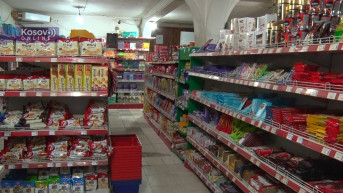
Prices of many products in stores are unrealistically high, citizens across the region agree, while consumer advocates often argue that price increases are sometimes abusive. Each country, in its own way, is taking measures to improve living standards—by raising minimum wages, providing social benefits, or limiting retail margins. Is there a formula that works in the long run?
Written by: Dusica Radeka Djordjevic
In the fight against unjustified price hikes, the Hungarian government in May introduced measures targeting non-food household products, requiring retailers to limit margins for 30 categories of goods to 15 percent. Before that, in March, a program was launched to reduce prices of 30 basic food categories.
The Serbian government has adopted a similar approach, capping retail margins for 23 groups of products at no more than 20 percent for the next six months.
Authorities in Skopje are supporting citizens’ purchasing power through social transfers, while Albania, according to Granit Sokolaj, executive director of the Tirana-based consumer protection center “Alert,” has not taken any initiatives to curb price increases.
At the same time, experts in Kosovo warn that a “tsunami” of price hikes is on its way, triggered by the government’s decision to liberalize the electricity market.
Pristina-based economics professor Shkumbin Misini believes electricity market liberalization is in principle a good thing, but that Kosovo’s institutions should have postponed it for at least a year, as it has brought significantly higher costs. He noted that for some companies, electricity prices have risen by as much as 300 percent.
“The latest case involves a company whose owner stated that with the increase in electricity prices, business costs are also rising, which in turn pushes up prices. When consumers see cheaper products elsewhere, it automatically makes Kosovo’s companies uncompetitive. This leads to a shrinking workforce, because when revenues drop, companies reduce staff, which directly affects macroeconomic indicators. With lower revenues, taxes are also lower, which directly impacts Kosovo’s budget,” Misini explained.
According to Serbia’s new government decree in effect from September 1, measures aim to prevent excessive price growth of goods.
Bojan Stanić, Assistant Director of the Sector for Strategic Analyses, Services, and Internationalization at the Serbian Chamber of Commerce, says the measures should yield short-term results and some savings, but will not lead to a general drop in prices.
“The measures target 23 groups of products linked to everyday consumption—food, personal hygiene, cleaning… Prices in those groups have already visibly fallen. However, if we look at inflation, which is now outside the Serbian National Bank’s target of up to 4.5 percent—it currently stands at 4.9 percent and is not drastically high—it’s clear this cannot cause deflation, meaning a general decline in prices,” Stanić told Kosovo Online.
While savings will be achieved, they will not have a significant impact on GDP, he added. Consumers will not use the money saved to buy luxury goods or “gold bars,” but will recycle it into regular consumption, which does not affect GDP.
He stressed that long-term solutions to improve living standards depend on boosting economic activity and real wage growth, which is currently constrained by the slowdown of the European economy—Serbia’s main foreign trade partner—and uncertainties tied to trade wars and the energy market. Many are now looking toward 2027 as the year when a European recovery is expected.
Stanić emphasized that Serbia’s economy is driven largely by infrastructure projects and that there has been real wage growth, but also warned that a decade of rapid economic growth has caused stratification. A smaller group of people drives the average upward, while the majority lags behind.
“This is not unique to Serbia—it’s the same across the wider region. The measures implemented here are also based on practices from certain EU countries such as Hungary and Romania,” he said.
He also explained that the pricing chain—from primary agricultural production to retail shelves—is very complex, meaning responsibility for rising prices cannot be attributed to a single factor. If retail margin caps were extended beyond six months, he warned, it would cause stronger negative effects across the retail market, with impacts eventually spilling over into processing, distribution, and even primary production, which is already under heavy pressure.
Price hikes in Albania are “artificial and abusive,” argues Granit Sokolaj. He notes that Albania is likely one of the few countries in Europe without state-controlled prices for basic food categories.
Sokolaj told Kosovo Online that citizens complain of sharp price increases. Data from Albania’s Statistical Office for July 2025 (August figures are not yet published) show alarming rises compared to July of the previous year.
“According to official data, only the entertainment and culture sector rose by 7.7 percent. Some may ask why worry about that? Because it’s part of life, and for those struggling financially it deprives them of life’s pleasures. Everyday goods have also become more expensive—food and non-alcoholic beverages by 3.2 percent, and phone services by 7.5 percent compared to July 2024, due to a duopoly where two telecom providers coordinate pricing. This is a very unpleasant situation for Albanians,” he said.
He criticized the lack of state policies to subsidize sectors that influence market prices, unlike in neighboring countries such as Serbia, Kosovo, and North Macedonia. Albania also maintains a 20 percent VAT on essential goods, compared to Kosovo’s 6 percent and North Macedonia’s 5–6 percent.
Economic analyst Abil Baush from Skopje noted that inflation in North Macedonia stood at 4.8 percent last month, with projections to lower it to 2 percent. But without structural reforms, tax cuts, and protection of vulnerable groups, the effect will not be quick.
He pointed out that although measures such as increasing the minimum wage and providing social transfers improve standards, they also put pressure on inflation.
“Prices have risen by 38 percent compared to wage growth, which this year reached only 7.7 percent. Inflation eats up wage increases if the economy does not grow fast enough,” Baush said.
He added that while commercial banks are very liquid, enterprises lack liquidity, which hinders investment capacity. Without measures to strengthen company investments—through support for startups, modernization of food production, and agricultural subsidies—economic achievements will stall.
Baush concluded that the country is too dependent on food imports. “It may sound old-fashioned, but if we begin to produce food ourselves using modern methods, we could build new industries and become competitive in certain sectors. The only way forward is to invest in smart capital projects,” he said.



comments