
Principles of the Non-Aligned Movement and the new international order: What messages were sent from Belgrade?
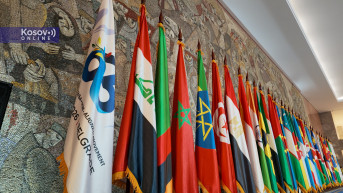
Despite the profound geopolitical changes of recent decades, the principles that brought together the members of the Non-Aligned Movement 65 years ago remain relevant today—one of the key messages delivered yesterday in Belgrade by representatives of the Movement’s member states. Non-alignment must never be understood as neutrality in the face of injustice, conflicts, or the erosion of international law, they stressed, emphasizing that respect for sovereignty, territorial integrity, and the equality of states remained essential to preserving a peaceful international order. According to Kosovo Online’s interlocutors, the Non-Aligned countries’ reaffirmation of their commitment to the fundamental principles of the UN Charter and international law is particularly significant for Serbia.
Written by: Dusica Radeka Djordjevic
Representatives of Non-Aligned Movement member states attending yesterday’s commemorative meeting marking the 65th anniversary of the Movement’s First Conference, held in Belgrade, largely emphasized the importance of respecting the United Nations Charter and international law.
They stressed that all international principles must be applied without double standards and that other states must not be allowed to interfere in the internal affairs of member countries. Several officials from different continents emphasized that the strength of the countries within the Movement lay in their pursuit of common interests while respecting their differences.
Although Non-Aligned Movement member states are at different stages of development, Somali President Hassan Sheikh Mohamud said they nevertheless share a common goal—to develop their countries and peoples sustainably through partnership, solidarity, and mutual respect.
Edouard Bizimana, Foreign Minister of Burundi, a country that withdrew its recognition of Kosovo in 2018, said yesterday that 65 years after the first meeting of the Non-Aligned Movement in Belgrade, its members once again had an opportunity to return to the principles of respect for the United Nations, the defense of state sovereignty, and independence.
Mozambican Prime Minister Maria Benvinda Levi recalled that the members of the Non-Aligned Movement together represented more than half of the world’s population and an absolute majority within the United Nations.
Retired diplomat and former Ambassador to the UN Branko Brankovic told Kosovo Online that it was extremely important that yesterday’s gathering in Belgrade, marking the 65th anniversary of the First Conference of the Non-Aligned Movement, had reaffirmed commitment to the fundamental principles of the United Nations Charter and international law. He considered this particularly significant for Serbia given what he described as the threat to its territorial integrity.
Brankovic assessed that both the meeting itself and the fact that it was organized in Belgrade were important, not only from the perspective of Serbia’s international position but also in light of everything currently taking place in the world.
“We are witnessing the fact that the old international order is practically over and that we are moving toward formulating the fundamental principles of a new international order. Throughout this process, it is extremely important for the voice of the Non-Aligned countries to be heard, particularly given that there are more than 120 of them in the United Nations, which has 193 member states,” Brankovic noted.
Recognition of Kosovo contrary to Non-Aligned principles
Given that the Non-Aligned Movement includes countries that do not recognize Kosovo, countries that do, and countries that have withdrawn their recognition, Brankovic said that everything stated at yesterday’s gathering would encourage countries that had recognized Kosovo to reconsider the issue.
“The Non-Aligned countries advocate the implementation of the United Nations Charter, which affirms the inviolability of the territorial integrity and sovereignty of UN member states. This will certainly prompt and encourage fundamental reflection among those Non-Aligned countries that have recognized the so-called independence of Kosovo: what did we do, why did we do it, and how did we come to recognize Kosovo and Metohija when we know that this runs counter to the fundamental principles for which we all advocate?” he said.
In his assessment, the meeting in Belgrade was far more than symbolic, while everything stated by individual member states concerned the fundamental principles that the Non-Aligned countries had advocated for years and upon which they had based their conduct within the UN.
He also pointed out that the timing of the meeting in Serbia was important because a trilateral meeting of three major powers—Putin, Trump, and Xi Jinping—was expected in November.
“They certainly want to make it clear to the entire world once and for all that the use of force, any possible conflicts, and nuclear war are unquestionably off the table. The world is moving toward the creation of a new global order based on multipolarity. And those three great powers, by the very fact that there are three of them, demonstrate and confirm their support for multipolarity. I am convinced that the Non-Aligned countries will support that trilateral meeting, which should, in one way or another, reinforce the fundamental principles of international relations—avoiding war, moving as far as possible toward disarmament and, of course, ensuring that nuclear or other weapons are not used under any circumstances, because there can be no winner in such a conflict,” the diplomat said.
Taken together, he added, the world was living through an exceptionally important moment for its future, in which the Non-Aligned countries would once again play an important role, as they had in the past, by virtue of their numbers and their advocacy of the fundamental principles of the UN Charter.
The Non-Aligned Movement currently has 120 member states: 53 from Africa, 26 from Latin America and the Caribbean, 39 from Asia and the Pacific region, and two European countries. The Movement also has 18 observer states, including Serbia.
Research Fellow at the Institute of International Politics and Economics in Belgrade Mitko Arnaudov assessed that holding the commemorative meeting marking 65 years since the First Summit of the Non-Aligned Movement in Belgrade was a practical demonstration of Serbia’s smart power.
According to Arnaudov, Serbia’s soft power was reflected in the good relations it had already cultivated with Non-Aligned Movement member states, while through the application of smart power—that is, effective diplomacy—it had now demonstrated that Belgrade remained actively involved in international political developments, despite Serbia lacking the capacity and size once possessed by Yugoslavia and despite the fact that the world had previously functioned differently and had been divided along different lines.
“This is precisely where Serbia’s advantage lies in the current era of multilateralism, when there are many more centers of power than those we traditionally recognize or understand in the classical sense. It is precisely in such circumstances that small states such as Serbia, with an effective and robust foreign policy and diplomacy, can advance their foreign policy objectives, position themselves successfully internationally, and thereby secure, preserve, and ensure the sustainability of their national interests. From that perspective, the messages being sent from Belgrade following the commemorative meeting of the Non-Aligned Movement are significant because the great powers themselves are redefining their foreign policy positioning in accordance with their national interests,” Arnaudov told Kosovo Online.
He stressed that national interests were a permanent category because they ensured the sustainability of a state and its society, while foreign policy objectives could be highly variable and could be redefined in accordance with the circumstances of a particular period.
Speaking about how the messages delivered at the gathering in Belgrade would affect the positions of Non-Aligned Movement members regarding Kosovo, Arnaudov said that the Kosovo and Metohija issue was not an inherent problem of Serbia.
“Under the Constitution of the Republic of Serbia, Kosovo and Metohija forms part of Serbia’s territorial integrity. But it is a problem for the international community, particularly for that part of it which agreed to accept Pristina’s aspirations toward statehood. In that context, the messages heard in Belgrade are significant because the states that recognize Kosovo are being confronted with an increasing number of messages—both before this commemorative gathering and after it—warning that unilateral principles that violate international law undermine the entire international architecture,” Arnaudov said.
In the current multilateral environment, he added, solutions contrary to the rules and principles of international law could not ensure long-term stability and sustainability.
“When circumstances in one part of the world are neither stable nor sustainable, that is not in the interest of the great powers or their foreign policy objectives. In the context of our province of Kosovo and Metohija, an open and unresolved issue of this kind, contrary to international principles and standards, projects long-term instability throughout the region, which I believe is in the interest of neither side nor of any of the centers of power in international relations,” he assessed.
Diminished influence does not mean giving up
Regarding the influence of the Non-Aligned Movement in the world today, Arnaudov said that it had been significantly diminished because the influence of the United Nations itself had also been substantially diminished.
“The order as conceived when the UN was established has lost its original meaning. The states that founded it at the time, and which remain members of the UN Security Council as the organization’s most powerful executive body, frequently violate in their foreign policy actions the very principles they themselves established. In that context, we must emphasize that, in formal and legal terms, the role and influence of the Non-Aligned Movement have been diminished, but that does not mean it is something that should be abandoned. On the contrary, strengthening the bodies and organizations within the overall UN framework will also contribute to strengthening the Non-Aligned Movement and, at a later stage, to restoring the entire UN institutional architecture, whose power, influence, and ability to implement decisions have been diminished precisely because of misguided foreign policy decisions driven by the self-interest of the UN’s founding states,” Arnaudov concluded.
The Non-Aligned Movement was formally established at its First Summit, held in Belgrade from September 1 to 6, 1961. The 25 countries that attended the First Summit were Afghanistan, Algeria, Burma (Myanmar), Cambodia, Ceylon (Sri Lanka), Congo-Leopoldville (DR Congo), Cuba, Cyprus, Egypt, Ethiopia, Ghana, Guinea, India, Indonesia, Iraq, Lebanon, Mali, Morocco, Nepal, Saudi Arabia, Somalia, Sudan, Tunisia, Yemen, and Yugoslavia.
Unlike other regional and international organizations, the Non-Aligned Movement has no formal founding charter or treaty and no permanent secretariat. Uganda will chair the Non-Aligned Movement until 2027, when it will be succeeded by Uzbekistan, which will hold the chairmanship from 2027 to 2029.
First Deputy Chairperson of the Senate of Uzbekistan Sodiq Safoyev said yesterday in Belgrade that Uzbekistan was ready to cooperate with all member states, observers, and partners to strengthen the Movement as a respected voice of the Global South and as a practical force capable of contributing to peace, justice, and sustainable development.



0 comments