
A Quarter Century of the Battle of Kosare: A Symbol of Heroic Struggle
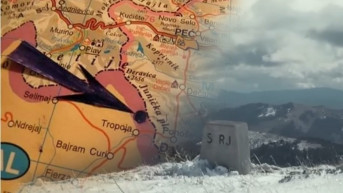
On this day 25 years ago, April 9, 1999, the Battle of Kosare began. As part of the NATO intervention, several thousand members of the KLA with the support of the Armed Forces of Albania and NATO air support attacked the outpost on the Yugoslav-Albanian border located on the edge of the Prokletije mountains, on the peaks of the Junik mountain.
The fights on the Yugoslav-Albanian border lasted 67 days, and on the side of the then Yugoslav Army (VJ), it took 108 lives. Participants in these events, speaking to Kosovo Online, highlight that this battle was one of the hardest but also the greatest examples of courage and patriotism in the recent history of Serbia. The long-time head of the School of National Defence, retired admiral Bosko Antic, says that the Battle of Kosare was the first phase of NATO's air-ground attack on the FR Yugoslavia in 1999, known as Operation “Arrow”, and that this battle is an example of “well-planned defense and good unity of command”.
“It's an example of how high morale and a good relationship of the command staff towards their soldiers contribute to success in battle. When I was in Vrbnica in 1999, while the commander of the 55th battalion was Major Jovic, I walked up to a soldier who was in a trench, in the snow, only his head sticking out. Behind him was a machine gun. I approached and asked how he was, and he said, 'Excellent', laughing. He says: ‘No problem, Laza and Pavke constantly visit us’. When a soldier calls his commander by such nicknames, know that morale is high,” Antic stated.
According to him, the Battle of Kosare was a classic example of an air-ground battle from the doctrine of the United States Armed Forces.
“It was a classic air-ground battle according to the U.S. Army doctrine, a doctrine that usually begins with strikes from a distance, and when certain conditions are met, the use of ground forces comes into play and penetration in suitable directions into the territory they wish to conquer,” says Antic.
He adds that intelligence data indicated that NATO had initially planned to intervene in the then FR Yugoslavia in the fall of 1998.
"Probably because the aggressor was not sufficiently prepared at the time, the action was postponed to spring, and the Pristina Corps was fully prepared for the aggression that essentially started over Kosovo," Antic said.
He explains that the Battle of Kosare marked the beginning of Operation "Arrow," envisioned to be executed in two phases.
"In the first phase, it was supposed to break through the Morina direction into Metohija towards Đakovica and from there in suitable directions towards Pec, through the Troja pass, then towards Pristina and right towards Prizren. We all expected the aggression to proceed through the Morina direction, the so-called Bakali's path leading from the Morina outpost towards Đakovica because it was a quite suitable direction. However, the enemy only carried out a demonstrative attack there, while the main direction was through Kosare. They assessed there would be less resistance there, leading to the Junik and Đakovica route," Antic states.
He claims that the then General Staff of the VJ had developed scenarios of a NATO ground attack back in 1997, and an analysis made after the war found that these assessments were 85% accurate regarding the attack targets.
"I was the head of the School of National Defense and led the command-staff war exercise Training '97, which through exercises and elaborates fully anticipated events a year and a half later. That elaborate was taken somewhere, I didn't know where. Only when Momir Bulatovic made a statement in 2019 that 85% of NATO's targets were anticipated and that our trained officers were most deserving, I understood where that document ended up. I am proud that 90% of the command staff of the Pristina Corps of the Third Army were listeners to the SNO which I headed: from generals Lazarevic, Delic, Živanovic... There were about 20 officers," says Antic.
He notes that according to VJ intelligence data, the attack on Kosare on April 9 was carried out by three brigades of KLA members totaling 6,000 soldiers.
"In the first phase of action, there were between 1,500 and 3,000 participants with about 300 mujahideen. An equal number of people joined them in the second phase. These were huge forces that had to be waited for," says Antic.
He emphasizes that in the first few days, from April 9 to 11, a total of 120 border guards and seniors from the 53rd border battalion and eight soldiers on mortars from the 125th mechanized brigade opposed them at Kosare.
"At the same time, the 53rd border battalion was also the forward detachment of the 125th mechanized brigade. Many are mistaken to think that someone else was supposed to be on that first line. In every combat deployment, there is that forward detachment which is supposed to face the first strike on the enemy, to allow forces from the background to prepare and act. This time those forces were in combat actions, they fought in the background of the border strip which was five kilometers long," states Antic.
He says that after a few days, members of the 125th mechanized brigade, parts of the 72nd brigade for special operations, and the 63rd parachute brigade, as well as parts of the 5th and 52nd police battalions, joined the border guards.
"Bloody battles were fought in Kosare during those sixty-something days, often hand to hand. There were many heroic deeds that need to be highlighted. An example is Ivan Vasojevic, the Jaguar, who with 12 fighters drove away 300 KLA members. Unfortunately, two days later, he was killed by a masked KLA member because he thought he was our soldier," says Antic.
As a particular curiosity of the Battle of Kosare, he reveals that two tanks were brought to the mountain during the fights.
"The altitude for their transport and use is unimaginable. An Italian expert who participated in the preparation and action of enemy forces later said that when they heard the rumble of tanks from the mountain, panic struck them, and they thought they would be chased all the way to the Adriatic Sea. That tank is today a symbol of the 125th mechanized brigade," says Antic.
Admiral Antic, along with the then commander of the Third Army, General Nebojsa Pavkovic, published a book a few years ago titled "Kosare and Pastrik - Serbian Thermopylae."
Asked why such a title was chosen and whether the comparison is presumptuous, Antic says that both events, in a military sense, have significant similarities.
"It is well known that Leonidas with his Spartans prevented the Persian army's penetration towards Athens and enabled Sparta and Athens to prepare for defense. Similarly, the fighters at Kosare, and later at Pastrik, which should not be separated, it's a unified operation, managed to stop the enemy, enabling the forces behind them to combat terrorist forces because there were several strong brigades
He was wounded about ten days before the end of the war, on June 3, 1999.
He explains that morning, he and two comrades were ordered to scout the right edge of a forest on the very border with Albania.
“They saw us before we saw them. I saw a soldier lying in a black uniform and another standing over him. The last thing I remember was seeing the gunpowder flash from his barrel and how I fell from the force of the hit, looking at my boots. I got a bullet in the head. It completely penetrated my helmet and made a cut on my head,” he recounts.
He says his comrades initially thought he had died. Only after the confrontation with the enemy was over did they come for him and realized he was still alive.
“I firmly believe that the helmet from the soldier who died saved my life. The shield around the helmet was much narrower, so my helmet was positioned above the area it was supposed to cover. That saved me,” Stoiljkovic concludes peacefully.
After the war, he worked as a salesperson in Belgrade for a few years, then he and his wife ventured to Canada. There, since 2016, he has been a sheriff in Alberta.
“Being a law enforcement officer in Canada is a privilege and at the same time a very hard and responsible job. This job here carries a great responsibility and danger on the street, but it's a bit different than in Serbia. Here, things happen just like in the movies. Of course, there are privileges, especially status in society, in the Serbian community, in the church. I am very glad that I can help our people who are here,” says Stoiljkovic.
When asked how much Canadians know about the events in Kosovo, especially at Kosare, he explains that they mostly think Serbia is Siberia, so they are surprised when they find out it is not.
He adds that it turned out his superior in the police had previously, in 1993, been with UNPROFOR forces in Croatia and was among the members of the Canadian contingent that prevented the crime against Serbs in the Medak Pocket.
“When we met, he told me something that pleases me today: 'Serbs were the only ones who respected the agreement of all three warring sides in the Medak Pocket.' But, many Canadians do not know what happened. They didn't even know about Canada's biggest battle after the Korean War, which was precisely the battle in the Medak Pocket. A movie, ‘The Canadian Secret War,’ has been made about it. The unit that stopped the Croatians from committing war crimes was awarded the War Merit Cross and the Medal of Bravery directly by the queen about ten years ago,” explains Stoiljkovic, who decided to return to Serbia with his family last year.
“Canada is a good country, but Serbia is definitely better. I returned to Serbia simply because of my wife and child. We want to raise our child according to Serbian standards, to grow up where his grandparents, uncle, and aunt are..., and we are alone here. In the last 10-12 years, we see progress and advancement in the country, and we want to build up this Serbia. The other day my son called me from school and said: ‘Dad, can I share my snack?’. This is forbidden in Canada, as well as hugging, giving a ‘high five’," he says. He adds that they are currently preoccupied with those ordinary, life issues, however, he is convinced that everything will end well.
“My wife has a degree in Political Sciences, and it’s been somewhat difficult with her employment; we've applied to several places, unsuccessfully so far. But we'll see, we hope everything will be alright. Serbia is still our country, I fought for this country. We definitely are not going anywhere from Serbia,” concludes Stoiljkovic.

0 comments