
Admiral Antic: The Battle of Kosare as an Example of Heroism and Good Command
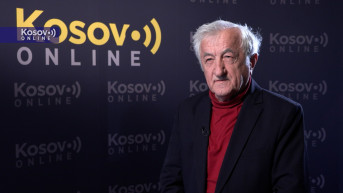
The long-time head of the School of National Defence, retired admiral Bosko Antic, says that the Battle of Kosare was the first phase of NATO's air-ground attack on the FR Yugoslavia in 1999, known as Operation "Arrow", and that this battle is an example of well-planned defense and good unity of command.
"It's an example of how high morale and a good relationship between the command staff and their soldiers contribute to success in battle. When I was in Vrbnica in 1999, while the commander of the 55th battalion was Major Jovic, I walked up to a soldier who was in a trench, in the snow, only his head sticking out. Behind him was a machine gunner. I approached and asked how he was, and he said, 'Excellent, laughing. He says: 'No problem, Laza and Pavke visit us all the time'. When a soldier calls his commander by such nicknames, know that morale is high," Antic pointed out.
According to him, the Battle of Kosare was a classic example of an air-ground battle from the doctrine of the United States Armed Forces.
"It was a classic air-ground battle according to the U.S. Army doctrine, a doctrine that usually begins with strikes from a distance, and when certain conditions are met, ground forces are used and breakthroughs are made in suitable directions into the territory they wish to conquer," says Antic.
He adds that intelligence data indicated that NATO had initially planned to intervene in the then FR Yugoslavia in the fall of 1998.
"Probably because the aggressor was not sufficiently prepared, the action was postponed to spring, and the Pristina Corps was fully prepared for the aggression that essentially started over Kosovo," Antic stated.
He explains that the Battle of Kosare marked the beginning of Operation "Arrow", which was envisioned to be carried out in two phases.
"In the first phase, the plan was to break through the Morina direction into Metohija towards Đakovica and from there via suitable routes towards Pec, the Troja pass, then towards Pristina and right towards Prizren. We all expected the aggression to go through the Morina direction, the so-called Bakali's path that leads from the Morina outpost towards Đakovica because it is a quite suitable direction. However, the enemy only carried out a demonstrative attack there, and the main direction was over Kosare. They assessed that there would be less resistance there, that they would reach the direction of Junik and Đakovica," Antic notes.
He claims that the then General Staff of the Yugoslav Army (VJ) had developed scenarios of a NATO ground attack back in 1997, and an analysis made after the war determined that these assessments were 85 percent accurate regarding the targets of the attack.
"I was the head of the School of National Defence and led the command-staff war exercise Training '97, which through exercises and reports fully predicted the events a year and a half later. That report was taken somewhere, I didn't know where. Only when Momir Bulatovic made a statement in 2019 that 85 percent of NATO's targets were predicted and that our trained officers were largely to thank, it became clear to me where that document ended up. I'm proud that 90 percent of the command staff of the Pristina Corps of the Third Army were attendees of the SNO (School of National Defence) which I headed: from generals Lazarevic, Delic, Zivanovic... There were about twenty officers," says Antic.
He notes that, according to VJ intelligence data, the attack on Kosare on April 9th was carried out by three brigades of KLA members with a total of 6,000 soldiers.
"In the first phase of action, there were between 1,500 and 3,000 members with about 300 mujahideen. An equal number of people joined them in the second phase. These were massive forces that needed to be confronted," says Antic.
He emphasizes that in the first few days, from April 9th to 11th, at Kosare, a total of 120 border guards and officers from the 53rd Border Battalion and eight soldiers on mortars from the 125th Motorized Brigade opposed them.
"At the same time, the 53rd Border Battalion was also the vanguard of the 125th Motorized Brigade. Many make a mistake thinking that someone else should have been on that front line. In every combat arrangement, there is a vanguard that is supposed to meet the first strike from the enemy, allowing the forces in the rear to prepare and act. This time those forces were in combat actions, leading battles behind the border zone which was five kilometers wide," Antic states.
He says that after a few days, members of the 125th Motorized Brigade, parts of the 72nd Special Operations Brigade, and the 63rd Parachute Brigade, as well as parts of the 5th and 52nd Police Battalion, joined the border guards.
"At Kosare, in those sixty-something days, bloody battles were fought, often hand to hand. There were many heroic feats that need to be highlighted. The example of Ivan Vasojevic Jaguar, who with 12 fighters drove away 300 KLA members. Unfortunately, after two days, he was killed by a camouflaged KLA member because he thought he was our soldier," says Antic.
As a curiosity of the Battle of Kosare, he reveals that during the battles, two tanks were brought to the mountain.
"The altitude for their transport and use was unimaginable. An Italian expert who participated in the preparation and action of enemy forces later said that when they heard the rumble of tanks from the mountain, they were seized by panic and thought they would be chased all the way to the Adriatic Sea. That tank is today a symbol of the 125th Motorized Brigade," says Antic.
Admiral Antic, along with the then commander of the Third Army, General Nebojsa Pavkovic, published a book a few years ago titled "Kosare and Pastrik - Serbian Thermopylae".
Asked why such a title was chosen and whether the comparison is pretentious, Antic says that both events, in a military sense, have significant similarities.
"It's well known that Leonidas with his Spartans prevented the Persian army's advance towards Athens, allowing Sparta and Athens to prepare for defense. Similarly, the fighters at Kosare, and later at Pastrik, which should not be separated, it's a unified operation, managed to stop the enemy, enabling the forces behind them to conduct anti-terrorist operations because there were several strong brigades, and to introduce available forces into defense at Kosare and crossing the border," Antic stated.
He dismissed claims that former commanders of the Third Army of VJ, Generals Nebojsa Pavkovic and Vladim Lazarevic, were in poor relations.
"It's interesting that the two of them spent the entire war time in Kosovo together, practically socializing. Unfortunately, today some try to pit them against each other, emphasizing one at times, then the other. They are an inseparable duo. I know them well. Pavkovic was my chief of the Operative Tactics chair, and I was Lazarevic's head and professor at the School of National Defence," Antic stated.



0 comments