
Radical Islam in the Balkans – region a stronghold for recruiting extremists
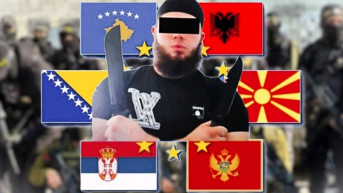
After the failed terrorist attacks in Vienna and Munich, linked to extremists from the Balkans, the radicalization of Islam in these areas has alarmed all of Europe. Experts from the region, in an interview with Kosovo Online, assess that the Balkans itself is not a "popular" target for extremists, but for years has been a stronghold of recruitment centers that are tearing society apart. They point out that entire families often fall victim to radical Islam and warn of a new trend – increasing indoctrination of prominent and wealthy individuals.
Written by: Petar Rosic
The most recent attack involving a terrorist from these areas occurred in Munich at the beginning of this month. An Austrian citizen, an 18-year-old originally from Bosnia and Herzegovina, fired several shots near the Israeli consulate in Munich, after which he was killed by the police.
A month earlier, a terrorist attack at a Taylor Swift concert in Vienna was prevented. An Albanian from North Macedonia had planned a suicide attack, and the CIA discovered that the plan was to kill "tens of thousands of people."
This summer, Serbia was not immune to attacks either. In July, a convert from Mladenovac attacked a gendarme in front of the Israeli embassy in Belgrade. He wounded a police officer with a crossbow, who managed to retaliate and neutralize him.
In a clash with the police in August, the leader of the Wahhabi group, Senad Ramovic Becan, was killed in Serbia. The Minister of Internal Affairs of Serbia, Ivica Dacic, stated afterward that "up to 100" members of the Wahhabi movement in Serbia are being monitored due to suspicions of possible involvement in terrorism.
The situation was also deemed concerning by the "Organization of Albanians" in an open letter on September 1st. In the letter, they drew attention to the "evident pressure on youth to be recruited into terrorist groups." They called on their compatriots in the region, but also around the world, to avoid sending their children "to suspicious Islamic mosques and clubs."
Vlade Radulovic from the Center for Geostrategic Research and Terrorism states that the Balkans have been facing a problem of accelerated radicalization for several years now. In an interview with Kosovo Online, he mentions that the turning point in this regard in the Balkans was in late 1991 and early 1992 with the arrival of the El Mujahideen unit in Bosnia and Herzegovina. However, the issue started to seriously worry the public with the emergence of the Islamic State and its peak in 2014 and 2015.
He also points out that research conducted by the Center for Geostrategic Research and Terrorism indicated that while Serbia might not be as "popular" a target for potential terrorist attacks as Germany, France, Belgium, or the United Kingdom, we certainly cannot be complacent because the danger still exists.
"There's also the issue of Kosovo and Metohija after 1999, following the withdrawal of Serbian police and the Yugoslav army. At that time, there was a significant influx of radical imams, and mosques were built, funded directly by questionable Gulf countries. They started establishing their network. I'm talking about more than 800 mosques built to date. Between 2012 and 2015, at least two operations by the Kosovo Police confirmed that certain individuals from Kosovo were heavily involved in the Islamic State network," says Radulovic.
He further explains that these operations revealed that certain imams were recruiting and providing logistical transport, i.e., organizing travel for Kosovo Albanians to the Syrian-Iraqi battlefields.
"When you have such a situation, and considering that some of those individuals who were taken or formed there have returned to the area of Kosovo, and Pristina has done almost nothing or handed down minimal punishments to the returnees, despite evidence that they were part of the Islamic State, then the situation is clear. It’s no surprise when weapons are found in a car near the Visoki Decani Monastery, or when individuals are arrested with confirmed plans to poison water supplies, bomb attacks in North Mitrovica, or planning attacks in central Serbia, specifically in Belgrade," he says.
Radulovic points out that the accelerated radicalization of predominantly Roma and Ashkali communities in central Serbia, specifically in Belgrade, Nis, Smederevo, and some other cities, is also a concern.
Regarding the main strongholds for recruitment, he explains that the area where Kosovo, Albania, and North Macedonia meet is the most problematic.
"That notorious Kacanik and that region – Kosovska Kamenica, Djakovica, Gnjilane... The strength of these groups or factions varies across the entire territory of Kosovo and Metohija. Srbica is also an issue, while, as expected, to a somewhat lesser extent in the north of Kosovo and Metohija," he states.
He points out that Islamic communities themselves must take action against radical Islamism because no one else can fight this battle for them.
However, he doubts that there is a genuine desire in Kosovo to tackle radical Islamism, as there have been no penalties for returning Islamic State fighters. Additionally, the head of the Islamic Community of Kosovo is still a man who was arrested in one of the Kosovo Police operations and is reasonably suspected of leading a network of radical imams.
Radulovic also notes that it is difficult to create a clear profile of those being recruited.
He says that a few years ago they managed to identify certain characteristics, but there still isn’t a clear pattern.
"It used to be commonly believed that these were mostly individuals with lower education levels, people from closed circles, primarily from rural areas, and in poor economic conditions... However, we later saw that the recruits were younger individuals who were doing well in school or had finished with excellent results. They also came from relatively well-off or wealthy families, from urban environments. So, it's very difficult to create a single profile because people have different motives and beliefs that lead them to take certain actions," he says.
On the other hand, security expert from Pristina, Nuredin Ibishi, believes that the risk of Islamic radicalization in Kosovo and the entire Balkans is decreasing.
He assesses that after the wars in the former Yugoslavia, the countries have consolidated their security structures, and as he says, the possibilities for Islamic radicalization in these areas have been reduced.
"Radicalization is much smaller, with less risk and fewer threats, but a lot of work is needed to reduce it to a minimum. This also requires reconciliation in the Balkans and for relations between states to be at a much better level. So, all of this has an impact. One of the factors that reduces risk is for states to reconcile, have good relations, and establish a common platform," Ibishi told Kosovo Online.
The analyst from Pristina claims that during the Kosovo war, Wahhabis were not allowed to join the KLA (Kosovo Liberation Army), but they participated in other battlefields.
"However, the influence of our Wahhabis, and later other radical groups, especially Al-Qaeda and ISIS, led to many young people from such small countries participating in the battlefields in Iraq and especially Syria, where many of them lost their lives," says Ibishi.
He points out that Islamic religious communities need to play a larger role in the fight against radicalization, but that security agencies still have a lot of work to do in reducing this risk.
He mentions that young people are mostly the target of radical Islam, being indoctrinated with various teachings of Wahhabism, or non-traditional Islam.
“Poverty has a significant influence, but even the wealthy get involved, seeking some form of justice. However, I believe that traditional Islam has a strong influence and has taken steps to reduce the risk of the influx of new, radical ideas—not just from Wahhabism but also from other Islamic teachings that promote a militant approach or a simplistic understanding of Islam,” says Ibishi.
Aleksandar Cipa, president of the Journalists' Association from Tirana, believes that Albania is unique compared to many other countries because of its religious pluralism, which facilitates the spread of extremism, as well as other organizations or individuals aiming to divide society.
"These dangers stem from religious extremism, from specific categories and known structures of extremism. In our country, there has been some recruitment of people and their indoctrination, especially during the period of the Islamic State war in Syria. There has even been recruitment of entire families, mostly in marginalized parts of society. This alarm should always remain active because the authorities dealing with these issues periodically warn about the influence of these structures that are in contact with various individuals in Albania," he says to Kosovo Online.
Cipa also states that religious communities and institutions must show responsibility, first in cooperation with each other, and second, by excluding extremist structures.
"The fact remains that in Albania, there are still local religious institutions that are outside the control and administration of the religious communities. This means that these institutions are being used or abused by extremist individuals. It is not normal for religious communities not to be concerned about this and not to have strengthened partnerships with each other," he says.
On the other hand, he believes that political parties in Albanian regions often try to exploit the religious element for electoral gain, but that there is also a strong influence from other countries.
"It often seems as if certain parties favor one religion or another. Additionally, we see influences from various states, which have resources directed at specific groups and individuals. This is evident among some of our neighbors, we must say. For example, in Greece, investments are made in Orthodoxy, seeing it as closely tied to Hellenism. Of course, this must be rejected. We also have a more proven tradition from Turkey, which claims a Muslim identity. There are also different currents coming from Iran or other Arab countries," says Cipa.
Cane Mojanoski, a university professor from Skopje, says that the radicalization of Islam in the Balkans has been present for many years and is predominantly linked to marginalized and social groups dissatisfied with the political system, though individuals from higher or wealthier strata also fall victim to the process of radicalization.
When asked where the strongest strongholds in the region are, he tells Kosovo Online that there are analyses indicating that Albania was a "Mecca" for a significant number of Islamic radicals during certain periods, and then Kosovo in the early 21st century.
"Some analyses mention Sandzak, especially Bosnia and Herzegovina. Publicly broadcast programs mention specific centers like Gornja Maoca, where a significant number of the population practices this," says the professor from Skopje.
Speaking about North Macedonia, Cane Mojanoski points out that in 2015, a group of ten Islamic fighters was suppressed in the country, and over the past ten or more years, about 140 Macedonian citizens have participated in various forms of conflicts in the Middle East.
"Of those, 68 returned to Macedonia, 38 were killed. In 2020, seven citizens who had been detained in Syria were returned and faced the judicial authorities. One member of these radicalized groups was returned from Turkey in 2021, and a trial was initiated. That same year, a three-member terrorist group operating from an Islamic radicalism perspective was suppressed. Also in 2021, 23 people were returned, including four men, five women, and 14 children who had been in Syria and Iraq," he says.
He notes that literature and general practice often suggest that poorer, uneducated people are more prone to radicalization, but some of the actions carried out by "martyrs of faith" indicate that they do not necessarily belong to impoverished groups.
"We will mention Blerim Heta, who carried out a suicide attack in Baghdad on March 24, 2014, killing 52 people. He was from Kosovo, from Urosevac, and did not come from poverty. If we follow the media, some radicalized young men of Macedonian origin are mentioned, and they are prominent people in Macedonia. Radicalization is often associated with social groups dissatisfied with the political system, who have poor education and face discrimination. However, individuals from higher or wealthier strata also fall victim to the process of radicalization, often committing violent acts as a result of a need for personal affirmation, and so on," says the professor.
He expresses hope that both in the EU and in this region, efforts will be made to promote the experiences of Islam and Islamic life in the Balkans, where, as he says, the so-called European Islam is known.
"In it, there is a higher level of tolerance between Muslims, Christians, and Jews, and I hope that this cultural model or coexistence, which is manifested or practiced in the Balkans, will become a behavioral model for all Muslims in the Balkans," he says.


0 comments