
What is the risk of the awakening of radical Islam in Kosovo after the Hamas attack on Israel?
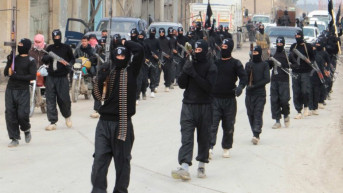
Hamas's attack on Israel has brought the question of the "awakening" of radical Islamic groups in the region, especially in Kosovo, to the forefront. This is a danger that experts in this field have been warning about for years. Recent reports from the State Department also recognized Kosovo as a recruitment base for fighters of terrorist organizations in conflict zones worldwide. According to some data, around 400 people from Kosovo were in the ranks of ISIS in Syria in previous years.
The interlocutors of Kosovo Online from Belgrade, North Mitrovica, and Pristina state that the activities of extreme Islamic groups in Kosovo have been thwarted in recent years, but whenever conflict flares up in the Middle East, the possibility of incidents cannot be ruled out.
Another significant factor that can contribute to the strengthening of Islamic extremism is the rising poverty and unemployment, along with the constant security crises faced by Kosovo.
Even German media recently warned that conservative Islam was spreading in Kosovo.
The recent announcement by Kosovo's Mufti Naim Ternava, reported by Albanian media, also stands out, that another 1,000 mosques will be built in Kosovo, which is also a matter of concern because in the past, religious institutions have often been places where extremist organizations recruited and indoctrinated especially young people. The Kosovo Police arrested several imams between 2014 and 2018 on charges of inciting war or jihad. One of the most prominent imams arrested at that time was Imam Shefqet Krasniqi.
Authorities in Pristina have reported that a total of 253 people have returned to Kosovo from Syria. Returnees are facing prison sentences, given that Kosovo, as a part of the International Coalition to Combat Terrorism, had to adopt strict laws related to participating in foreign conflicts. Without a doubt, Lavdrim Muhaxheri, known as the "Butcher of Kacanik," who was killed in 2018, was the most famous Albanian commander of ISIS.
Geopolitical analyst Predrag Rajic says that any escalation of conflict in the Middle East increases the chances of awakening radical groups worldwide, including in the Western Balkans and Kosovo.
"The danger of awakening these cells of radical Islam that use unquestionably terrorist methods has existed in recent decades. In this region, as well as throughout Europe and the world, we have witnessed such actions in the EU, the Russian Federation, and the United States in 2001. So, this danger exists in general. Any escalation of conflict in the Middle East, with a higher number of casualties, further radicalizes these cells that already exist and increases the likelihood of their awakening and renewed activity," Rajic says.
He warns that it is necessary to be very cautious and wise to preempt and neutralize these situations.
"So far, our authorities have been doing this in an extraordinary way, and I hope they continue to do so in the future. I think that Europe, in general, will continue to face this possibility for a long time. There is a danger of activating certain cells connected to some radical Islamic schools. In essence, these cells don't have much to do with true and prevailing Islam," Rajic notes.
Military analyst Vlade Radulovic says that at this moment, it cannot be said with certainty whether the events in Gaza will impact the awakening of radical Islamists and jihadists in the Balkans, including Kosovo. However, considering the experience of previous years and the fact that a significant number of Kosovo Albanians joined ISIS and fought in their ranks, it should be cautious.
Radulovic reminds for Kosovo Online that Kosovo was at the top of the list in terms of the number of fighters who joined ISIS relative to its population.
"In line with this, there is a fear that such a scenario might occur. Another critical aspect to consider when discussing the possibility of radical Islamism awakening in Kosovo is that Hamas members have called on all Muslims to fight not only against Israel but also against the Western world. If we look back a few years to 2015-16-17 and analyze some events that took place in Kosovo and Metohija and information that came from NATO and even the Kosovo Police regarding the Islamic State and jihadists in Kosovo and Metohija, we will see that there were plans for attacks on KFOR members and international missions in Kosovo and Metohija. It seems that such a connection exists, meaning there's a possibility that this line might 'activate'," Radulovic notes.
He points out that there is no intelligence or security data on which he could base a claim of whether something may or may not happen. Still, he highlights recent attacks in France and statements by officials in that country that suggest a connection between the violence and the events in Israel and Palestine.
"It seems to me that there is a justified fear, not only in Kosovo and Metohija but also more widely across Europe, that there could be a wave of violence and terrorist attacks. Of course, we all hope and wish that such things do not happen again. However, we should not forget all those scenes from the streets of Nice, Madrid, London, Berlin, Paris, Brussels, and even what happened in Bosnia and Herzegovina in the '90s. Radical Islamists, among them Palestinians, participated in the horrifying beheadings of Serbian soldiers. All of this, in addition to the significant number of Kosovo Albanians who joined ISIS and fought in their ranks, is cause for concern," Radulovic says, who believes that at this moment, aside from vigilance, there's no need to introduce additional fear.
If the conflict in the Gaza Strip escalates following the Hamas attack on Israel, the danger of radical Islam in Kosovo cannot be ruled out, according to Srdjan Simonovic from the NGO "Human Center" in North Mitrovica.
He points out that Kosovo's security system is controlled by Western intelligence agencies, which, in his opinion, prevents the emergence of Islamic radical groups in significant numbers. However, he also adds that no one can guarantee the absence of threats.
"The Albanian community in Kosovo adheres to Sunni Islam, specifically the Hanafi school, which is not as radical. In fact, this group is identical in Palestine. Radical Islam has been quite effectively suppressed in Kosovo and Metohija in recent years. This is partly because Kosovo's security system is under the control of Western agencies, which, I would say, keeps them under a 'security umbrella', and thus prevents the emergence of Islamic radical groups in significant numbers. Nevertheless, no one can dare to guarantee that there won't be sporadic incidents," he believes.
He reminds that Kosovo is the region with the highest percentage of ISIS fighters, with more than 400 militants.
"There have been quite a few people who returned. I think the Kosovo Government has worked quite well with these individuals, and many of them have received long prison sentences. There was also a reintegration process overseen by Western actors. What I think exists is the risk that if the conflict in Gaza spreads and encompasses Iran, Syria, Lebanon, and a more extensive region, there might be a risk of it surfacing here," Simonovic says.
Speaking about extreme organizations operating in Kosovo and recruiting individuals, Simonovic emphasizes that they have existed earlier. However, in the past two years, data on this has been quite scarce because, as he says, the operation in Syria has concluded, and ISIS is no longer at the forefront, having been pushed back.
"We still have Salafists, who, like Hanafis and Wahhabis, belong to a Sunni branch. They are mostly concentrated in Pristina, and we can see an aggressive policy by Saudi Arabia, whose dominant religion is Wahhabism. They are insisting on building many mosques in Kosovo. As far as I know, there are more than 600 mosques in Kosovo, half of which are financed with money from Saudi Arabia, promoting the Wahhabi movement, which advocates original radical Islam but is quite aggressive in its appearances and recruitment," Simonovic notes.
Commenting on the announcement by Kosovo's Mufti Naim Ternava that another 1,000 mosques will be built in Kosovo, he is uncertain if this will happen because Kosovo is yearning for an identity it still lacks.
"I am not sure if they will build a religious identity and something that goes against secularity, even though they had the famous Imam Krasniqi, who was even convicted and was one of the biggest recruiters. We also have Lavdrim Muhaxheri, the 'Butcher from Kacanik,' who was killed directly in battles in the Middle East and led a unit composed of people from Kosovo and also others from Europe. I am not sure that it will be of significant volume, but attempts will, of course, be made. Perhaps a few more mosques will be built, but not 1,000; that is more than clear," Simonovic said.
Security expert Nuredin Ibishi believes that the risk of radical Islamic groups awakening in Kosovo is not high because, as he points out, both the Government and citizens have condemned terrorist attacks on Israel.
He reminds us that Kosovo is a part of the Coalition for Combating Terrorism and that the Kosovo Assembly adopted the Law on Prohibiting Participation in Foreign Conflicts in 2015.
"Is radicalization among extremists ongoing? I don't think so because the accurate information is that Hamas carried out a terrorist act on settlements and kidnapped children. In this sense, it no longer makes sense for Islamists to support particular terrorist organizations. Thus, there is no support or announcement in that regard because the terrorist act itself has been condemned by the Government of Kosovo and the coalition to which we belong, the anti-terrorist coalition. At the same time, the citizens have accepted such an act and support the Government of Israel in its efforts to stabilize the situation," Ibishi says.
According to data from the Kosovo Police, about 200 people suspected of terrorism-related crimes have been arrested in Kosovo since 2013, mainly due to their involvement in conflict zones. It is now believed that there are no individuals leaving Kosovo to fight in foreign conflicts. Ibishi claims that those who have returned have been convicted by the Kosovo justice institutions and are going through a process of deradicalization and reintegration.
"The Government of Kosovo has taken measures and initiated the process of deradicalization and reintegration. It is ongoing, following specific programs that adhere to the standards of all countries with developed democracies, in line with European and US models. Accordingly, they are taking all necessary measures for deradicalization and reintegration of all participants. Those who were directly involved are held accountable under the law, while families, women, and children go through deradicalization and reintegration programs," Ibishi said.
When asked about the profile of individuals most commonly recruited by extremist organizations, Ibishi emphasized that it involved indoctrinating young people.
"These are usually young people susceptible to indoctrination, which began immediately after the liberation of Kosovo. Mainly, Iraqi organizations began approaching young people to recruit them into terrorist organizations like ISIS and others. I believe that measures were lacking at that time regarding engagement and entry into such organizations. However, only after the adoption and enforcement of the very strict law did such involvement reduce to a minimum, with perhaps only one or two cases. Therefore, the adoption of the law and other repressive measures have yielded results," Ibishi concluded.


0 comments