
Regional leaders with representatives from the EU and the US in Skopje: A package of six billion euros and the dialogue between Belgrade and Pristina on the table
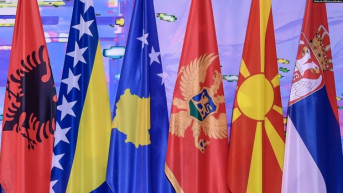
After two months since the launch of the ambitious European Union Plan for the growth of the Western Balkans, worth six billion euros, regional leaders will gather tomorrow in Skopje with representatives from Brussels and Washington to make the first assessment of what has been accomplished so far from the lengthy list of requirements that are a precondition for access to this financial package. For Belgrade and Pristina, as pointed out by interlocutors of Kosovo Online, the meetings in North Macedonia, attended by European officials and, as announced, by the Assistant Secretary of State for Europe and Eurasia James O'Brien, would carefully evaluate what each side had done in the previous period to unlock the dialogue and make progress in normalization.
Analysts from Belgrade, Pristina, Skopje, and Tirana also point out that it is certain that the joint message from EU and US officials will be that all agreements reached must be implemented, and a clear stance will be reiterated that the issue of normalization will be among the key criteria when deciding how much money they will receive from the EU development package. However, they are not optimistic that the pressure they expect the EU and the US to increase on Belgrade and Pristina will yield results, but rather, in their view, the continuation of the status quo in the dialogue is more likely.
The host of the meeting in Skopje is the Macedonian Prime Minister Dimitar Kovacevski, and invitations have been extended to the President of Serbia Aleksandar Vucic, and the Prime Minister of Kosovo Albin Kurti. The meeting will be attended by the Director-General of the European Commission Gert Jan Koopman and James O'Brien, as well as the Prime Ministers of Albania and Montenegro, Edi Rama and Milojko Spajic, and the Minister of Finance and Treasury in the Council of Ministers of Bosnia and Herzegovina Srdjan Amidzic. Representatives of regional organizations, the Regional Cooperation Council, CEFTA, the Chamber Investment Forum of the Western Balkans 6, USAID, and other international financial institutions are also invited to Skopje.
The meetings in Skopje are taking place in an atmosphere of heightened concern among the Serbs in Kosovo and in official Belgrade due to announcements from Pristina that payment transactions with Serbia will be terminated from February 1. The intention to remove the dinar from Kosovo is seen as another attempt to further complicate the already difficult lives of the Serbs and to reduce their presence in Kosovo.
President of Serbia Aleksandar Vucic discussed these issues with numerous world leaders on the sidelines of the World Economic Forum in Davos, and discussions will continue in Skopje.
Political scientist Vuk Velebit says that understanding the context in which the meeting of regional leaders with representatives of the US and EU in Skopje is taking place regarding the Brussels Growth Plan for the Western Balkans, worth six billion euros, is crucial because he points out that there is an urgency in both the European and American administrations to make some progress in the dialogue.
"This year, we have elections in both America and Europe, and the list of things that need to be done is increasing. I think there will be greater pressure on our region to conclude certain matters. I don't believe we will witness any changes; I think the status quo will be maintained more. First, I'm not sure if the envisioned solution is possible. Second, in Pristina, there is a fundamental misunderstanding and unwillingness to compromise or respect and understand the Serbian position", Velebit says for Kosovo Online.
He continues that when you look at how the Serbs live in Kosovo, the status of their human and religious rights prevents the creation of any atmosphere of normalcy.
"I think the EU has shown an absence of capacity to deal with this issue, and that's why we have an increasing involvement of the American side, which still has slightly more understanding of the Serbian position compared to the EU", he notes.
Velebit, who is also the executive director of the "Pupin Initiative", does not expect anything crucial to happen at the meeting in Skopje, where the presence of Assistant Secretary of State for European and Eurasian Affairs James O'Brien has been announced.
"I think it will be just another meeting. We had a meeting in Davos where the President of Serbia met with James O'Brien and Miroslav Lajcak, and they also held meetings with the Pristina side. For the West, it is crucial that there are no tensions here that could lead to conflicts. At this moment, it seems more like both sides prefer the status quo and a kind of stability, albeit some, just to avoid the conflicts and situations we witnessed in the past year", Velebit emphasizes.
Regarding the atmosphere before the meeting in Skopje, considering that Pristina is announcing the discontinuation of payment transactions in dinars, Velebit says he would like to see more pressure on Kosovo Prime Minister Albin Kurti for all the things he does, or rather, doesn't do.
"The Pristina administration is still under EU sanctions imposed last year, and I'm not sure they will be lifted until the Community of Serb-majority of Municipalities is formed. What I expect is more pressure on Kurti regarding the formation of the CSM, and the US administration has reiterated this several times in the past", Velebit believes.
Speaking about the European package of six billion euros in aid for the Western Balkans, Velebit believes that it is important for the EU to send signals that this region is still important to them and that they want it as a part of the Union, although he does not believe there will be significant progress.
"The package, not only financial aid but also the strategic positioning of this region in relation to the EU and the US, is important because if the Western Balkans region develops if it connects if we cooperate more, it means greater stability. In this way, some problems of escalation and potential conflicts are addressed. I think Serbia has the opportunity to position itself as a country of innovation, where the IT sector is developing, as the main partner of the US in these areas", the political scientist emphasizes.
At the meeting in Skopje, a message will be sent that serious reform processes are needed to use the funds from the six-billion-euro EU package, and Belgrade and Pristina will be further emphasized that the key criterion for them will be the implementation of the agreements reached, according to Milos Pavkovic from the Center for European Policy.
"Probably, a message will be conveyed that the Growth Plan for the Western Balkans is alive, and being operationalized, and leaders will be reminded of the need to approach reforms more seriously, to understand them more seriously in the areas outlined by this plan so that the funds can be accessible. I would like to remind you that what is crucial with this plan is that the funds are conditioned on progress in reforms, so if there is no reform process, there will be no access to funds for a country that does not adhere to the reform agenda", Pavkovic emphasizes for Kosovo Online.
He adds that a clear message will be sent to Belgrade and Pristina that progress in the dialogue and the normalization process is also necessary for these funds to be available to both governments.
"When we talk about the dialogue between Belgrade and Pristina, 2023 was a year of great ups and downs. We had the Normalization Agreement reached in February, followed by a multitude of tensions and critical situations, from barricades, protests, and arrests all the way to Banjska. So, the EU, as the mediator in the dialogue, Miroslav Lajcak, primarily acted as a firefighter extinguishing fires, and there was not much room for progress in the dialogue and normalization process. Now the focus is on implementing the agreed-upon, and since tensions have subsided, or at least it seems so, to move towards implementation and progress in the dialogue. I expect that to be the EU's message, to move towards the implementation of the Normalization Agreement", Pavkovic says.
An analyst from Pristina, Artan Muhaxhiri, says for Kosovo Online that the meeting of regional leaders in Skopje is very important as it comes at a very specific moment when the dialogue is blocked. Muhaxhiri expects stronger pressures on Serbian President Aleksandar Vucic and Kosovo Prime Minister Albin Kurti to be more constructive.
"I think this meeting is welcome to exert stronger pressure on Kurti and Vucic to be more constructive, as we have seen in the last year that the leaders of Kosovo and Serbia were much more politically destructive than constructive. Now, with the presence of James O'Brien, this pressure will be very significant, especially considering the mentioned six billion euros in aid. This will intensify the pressure both internally, in Kosovo and Serbia, for the leaders to continue with a more qualitative approach," Muhaxhiri says.
He emphasizes that the most important thing for the EU and the US is for Kosovo and Serbia to be on the same geopolitical and geostrategic path.
"There is a clear idea in the West, the EU and the US, to reach a final, historic agreement between Kosovo and Serbia because it is the best thing for Kosovo and Serbia. Without this agreement, tensions and problems will only escalate in the future. So, the most important thing is to achieve that agreement. Now, both Kurti and Vucic are populist politicians, and for them, it is better for this state of stagnation to continue. But, unfortunately, that is not good for the people of Kosovo and Serbia", Muhaxhiri says.
He believes that the most important message will be that there is no alternative to reaching a final agreement between Kosovo and Serbia.
"Anything else will be a terrible thing for the Balkans, for the people, for everyone. So, the problem is that we need more pressure, we need a firmer position. This is an election year, both in Europe and in the United States. So, there are many problems, and the dialogue should not be one of them", Muhaxhiri points out.
An analyst from Tirana, Mentor Nazarko, hopes that the meetings in Skopje could influence the acceleration of the implementation of agreements from the Serbia-Kosovo dialogue because, he points out, especially the United States are interested in tangible results in the normalization process.
Nazarko, speaking to Kosovo Online, expects a broad spectrum of important messages regarding the dialogue between Kosovo and Serbia to be heard in Skopje.
"Now concrete results are needed. The Ohrid Annex of the agreement envisages several steps and obligations for each party, starting from recognizing the symbols of both countries, opening offices, etc. On the other hand, Kosovo is required to form the Community of Serb-majority Municipalities. The place chosen for the meeting also sends an important message, namely the significance given to the host, in this case, Macedonian Prime Minister Kovacevski. It seems that the US interest is to maintain a pro-Western course in North Macedonia, where elections are expected, and where the continuation of this course is in question, especially if it is confirmed that VMRO-DPMNE, which opposes reforms, will win the majority. These will be the two main messages of the meetings, but cooperation in the region will also be encouraged, where there is potential Russian influence," Nazarko says.
He adds that for this reason, the US and the EU are not delaying but are making political efforts to achieve visible results in the region, especially when it comes to the normalization of relations between Belgrade and Pristina.
"I believe that this meeting and the US presence will influence the implementation of the agreement. Vucic can no longer make excuses as he did before the elections. The US and the West, in general, have legitimized his election victory. On the other hand, Kosovo is under EU sanctions, which are public, and the US may have even imposed sanctions on Kosovo, which are not disclosed. This climate of sanctions and individual pressures, changes in the political situation in both countries, and the approaching European and American elections are circumstances that can influence the progress of the dialogue," Nazarko says.
Regarding the format of the meeting and US engagement, Nazarko says that it resembles the Open Balkan initiative under the attention and supervision of the US during Trump's presidency.
"Open Balkan is even included in the agreement in Washington, signed by Hoti and Vucic. In this case, we don't have the commitment of the president, but O'Brien's, who is an important diplomat and has known the Balkans since the late '80s; he was involved in Dayton, Rambouillet, and other important processes. This US engagement formally preserves the dignity of the European Union and the EU program for the region's growth. This is the approach of the Biden administration, that the dialogue should be conducted through the EU, with the US assisting, but it seems that the Americans have decided to achieve visible results in the Kosovo-Serbia dialogue, which is the main problem in the region, especially with the upcoming presidential elections in the US If the meeting in Skopje were only about the European growth plan, then we would have a different level of EU representation, not just with the Director for Enlargement. This is good news for the region. I hope that this meeting will bring concrete results," our interlocutor points out.
He also emphasizes that it is significant that the date and location of the meeting were determined by the countries of the region themselves and their leaders.
"This meeting has the classic format of Open Balkan meetings, with the presence of presidents, prime ministers, civil society, and finance ministers. An agreement will be signed that substantially increases regional cooperation. Only the 'Open Balkan' label is missing. Ultimately, Open Balkan did not aim to become a lifelong initiative; it was simply a formula to encourage the EU to pay more attention to the countries in the region regarding European integrations. In that sense, this initiative has achieved its goal," Nazarko points out.
The gathering of regional leaders in Skopje is a good opportunity to show that the Western Balkans can collaborate independently of the European Union, believes university professor and political analyst Vasko Naumovski. He emphasizes that any initiative involving enhanced communication and cooperation between regional countries is welcome.
Naumovski, a former Deputy Prime Minister for European Integration and Ambassador to the United States of North Macedonia states that considering our shared future lies in the full membership of all countries in the EU, it is essential to welcome anything that can contribute to achieving that goal, especially initiatives requiring increased economic cooperation among Balkan countries, such as the Open Balkan initiative.
”I believe that the regional leaders will understand that the future of our citizens lies in the EU, and we need to leave behind all divisions, hatred, and negative energy—everything that, unfortunately, characterizes the Balkans and has marked the past decades. The path to European integration is, in fact, a path to increased cooperation, better infrastructure, and increased exchange of ideas, population, and workforce, which is one of the initiatives of these meetings to be held in North Macedonia. I am confident that with the support of the EU and our friends from the US, we will be able to demonstrate concrete results in these fields in the foreseeable future", Naumovski emphasizes.
Regarding the meeting dedicated to the Growth Plan for the Western Balkans, Naumovski highlights that all the ideas of the Balkan leaders for the ultimate stabilization of the region are compatible with EU ideas.
"Unfortunately, the EU enlargement is not currently high on the agenda, but we need to complete a part of the work ourselves. To show that we are capable of cooperating even without the EU, and that we can fulfill all these essential membership criteria ourselves so that when the time comes to negotiate, we can formally meet those negotiations, shorten the negotiation period, and become a part of the EU as soon as possible," Naumovski concludes.

comments