
Repercussions of the Djuric–Rubio meeting: Strategic dialogue as a new chapter in U.S.–Serbia relations
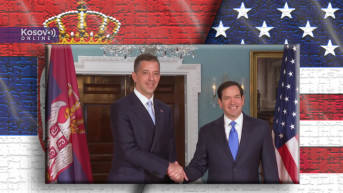
Clear messages and an even clearer future for Serbia and the U.S. This is how the outcome of a series of bilateral meetings held by Serbia’s Foreign Minister Marko Djuric in Washington can be summed up. The key moment—his meeting with U.S. Secretary of State Marco Rubio—marked the beginning of a new chapter in bilateral relations between the two countries, especially through the launch of a strategic dialogue, according to analysts interviewed by Kosovo Online.
Written by: Djordje Barovic
“We discussed launching the strategic dialogue very soon, elevating our relations to a level we haven't seen in generations. There is a high level of awareness on both sides that this is a great opportunity to raise relations, which have seen many ups and downs, to a higher level,” Djuric stated shortly after the meeting with Rubio.
He explained that they addressed current issues—particularly those affecting the Serbian community in Kosovo.
“Regarding Kosovo and Metohija, we managed to convey at least part of what the Serbs are facing—pressures, problems, institutional takeovers, pressures faced by the Serbian Patriarch and the Serbian Orthodox Church. This is a situation that requires the engagement of the international community to preserve stability,” Djuric said.
As one of the first visits by a Western Balkans official to Washington, the meeting resonated in the region, especially in Kosovo.
“The Serbian Foreign Minister met with U.S. Secretary of State Rubio. Our President met with the U.S. Deputy Secretary of State some time ago during her visit to the U.S. And let’s not even mention our Foreign Minister—she got lost in diplomacy,” remarked former chief negotiator for Pristina in the dialogue with Belgrade, Edita Tahiri, in frustration.
Political analyst Petrit Zogaj took it further:
“Kosovo is currently busy building two bridges, and once we’re done—which usually doesn’t take long for such ‘capital’ projects—we might find time to meet with Rubio,” he wrote sarcastically on his Facebook page.
Strategic Dialogue
For Vuk Velebit, president of the Pupin Initiative, the key message from Djuric’s meetings with top U.S. officials is that Serbia now has a “reserved seat” at the table in Washington.
“This means that when Serbia faces a problem or challenge—whether concerning our people in Kosovo and Metohija or another issue—we now have a direct line to Washington to discuss it. Strategic dialogue enables that kind of connection, and I believe that is extremely important,” Velebit told Kosovo Online.
He reminded that this was the first bilateral meeting of this kind in Washington in 18 years.
“We haven't had such a high-level meeting since Donald Trump became president in either of his terms, not even with the State Department as the lead U.S. foreign policy institution,” he said.
He emphasized that this visit is significant in the broader context of improving U.S.–Serbia relations over the years—from strengthening ties during Trump’s first term, to continued cooperation under the Biden administration, when strategic dialogue was first mentioned, and finally in January, when Deputy Secretary of State Richard Verma visited Belgrade and the first bilateral strategic dialogue meeting was officially announced.
“There is a clear continuity in Washington’s approach to Serbia, and a shift in how the region is viewed—specifically, how Belgrade is perceived in relation to other regional actors,” Velebit pointed out.
He added that the appointment of Mark Brnovich as the new U.S. Ambassador to Serbia—and the fact that the new U.S. administration hasn’t appointed other diplomats to the region yet—signals Washington’s intent to reset relations with Serbia and give them new momentum.
It’s no surprise, then, that strategic dialogue was the central topic in the Djuric–Rubio meeting.
“There is a real opportunity for Serbia to be positioned as America’s main partner in the region, and I think there is a strong foundation for that. Serbia is the most important country in the region economically, and in terms of defense—it allocates more to defense than some NATO members,” Velebit emphasized.
He is confident that the U.S. wants Serbia “on its side.”
“But it’s also in Serbia’s interest to build the best possible relations with the U.S., as the world’s leading power and one of the most influential actors in our region. If we want to strengthen our country’s position internationally—not only economically but also politically and in terms of security—we must cooperate with the U.S., which is why this meeting is crucial at this moment for positioning Serbia within the region,” he said.
Strengthening U.S.–Serbia Relations
For diplomat Zoran Milivojevic, the Djuric–Rubio meeting and the entire series of meetings between the Serbian Foreign Minister and leaders of the new U.S. administration mark “the beginning of the strengthening of U.S.–Serbia relations.”
“This is the beginning of a process to deepen U.S.–Serbia relations. The message about strategic partnership is the core element of the process we’re now entering, and a follow-up meeting on the topic has already been announced,” Milivojevic told Kosovo Online.
He stressed that the key message from the Djuric–Rubio meeting is the American interest in developing a strategic partnership with Serbia.
At the same time, he noted that Serbia has a particular interest in seeing the Trump administration engage constructively on the issue of Kosovo and return to the region.
“The previous term showed that the Trump-led administration took a constructive approach to the Kosovo issue. The methodology they applied delivered good political results. Unfortunately, there was no continuity in that policy,” Milivojevic stated.
He added that this also reflects the key difference between the current and the previous U.S. administrations.
“This gives us a chance to return to dialogue and seek compromise-based solutions, initiating a new political dialogue with mechanisms and tools that this administration is applying—tools based primarily on economic cooperation and fostering a favorable political environment,” Milivojevic explained.
He said that developments in Bosnia and Herzegovina, especially after the decision to dismiss the Republic of Srpska President Milorad Dodik, were also a logical topic of discussion.
“There is a clear U.S. interest in maintaining peace and stability here. In that sense, interests are aligned. The Serbian side approaches this from a position that prioritizes peace, but also seeks realistic solutions rooted in the Dayton Agreement and the reality of Bosnia and Herzegovina as a country with two entities and three constituent peoples. That was clearly addressed during the meetings,” Milivojevic said.
Assessing the outcomes of Djuric’s visit to Washington, this seasoned diplomat believes it was an excellent opportunity to engage with the new U.S. administration and a sign of both Serbia’s and America’s determination to improve their bilateral ties.
He is convinced that, politically, diplomatically, and strategically, Serbia has “capitalized” on Serbian support for Donald Trump during his election campaign.
“It is evident that the American side recognizes this and sees Serbia as a key partner in the region. They understand what Serbia’s influence means—and what Serbia’s interests are,” Milivojevic concluded.
A New Chapter
Mijat Kostic, a fellow at New Third Way, also believes that Djuric’s visit to Washington was a “significant moment” that “opens a new chapter” and could improve relations between the two countries while also strengthening Serbia’s position in the Belgrade–Pristina dialogue.
Kostic places the Serbia–U.S. strategic dialogue at the forefront, as it will bring the economy and security into focus—along with new U.S. investments.
“What is perhaps most important is cooperation in the field of security. Djuric and Rubio emphasized the importance of maintaining peace in the region, and this may relate to both Kosovo and the Republic of Srpska—but primarily to bilateral cooperation between the two countries in the areas of defense and police, and more broadly in the security sector,” Kostic told Kosovo Online.
He explained that the Djuric–Rubio meeting should be seen as an introductory but highly symbolic encounter.
“It opens the door for Serbia to rebuild relations with the U.S. from scratch—especially given that the Trump administration is open to non-traditional forms of cooperation. In previous years, U.S. foreign policy fully aligned with the EU’s, which might not be the case in the near future. If Europe and the U.S. become separate spheres of influence, this could be a positive development for Serbia, as it would be able to rely on the U.S. as an ally regardless of its relationship with the EU and the European integration process,” Kostic said.
When it comes to the Kosovo issue, this analyst believes no “tectonic shifts” or changes in the U.S. position should be expected.
He reminded that even before being elected, Trump had floated the idea of withdrawing from NATO and even closing the Bondsteel base in Kosovo—but none of that materialized.
“What may be important, however, is that U.S. officials will now hear firsthand Serbia’s position on the Serbian minority in Kosovo and on the CSM, which still hasn’t been established. This improvement in relations could enhance Serbia’s negotiating position in the Belgrade–Pristina dialogue and improve conditions on the ground—provided there is greater openness to potentially non-traditional economic and political deals that could benefit Serbia,” Kostic emphasized.

comments