
Security Council session on Kosovo: Who was deceiving who?
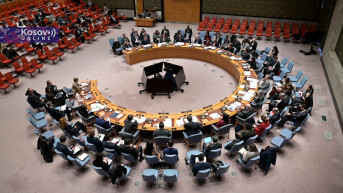
The French regret that the life of Kosovo Serbs has been made more difficult by the unilateral actions of Kosovo's authorities, Russia's stance that Pristina pursues a "chauvinistic policy" with the aim of expelling Serbs, and the American representative's call for a gradual closure of the UNMIK mission—these were some of the messages heard at last night's UN Security Council session, which discussed the UN Secretary-General's report on the operation of UNMIK. The call from Washington did not resonate significantly, and more diplomats emphasized the negative consequences of shutting down Serbian institutions in Kosovo.
Written by: Dusica Radeka Djordjevic
In addition to the well-known stance of London, as conveyed by the UK representative—that the time has come for the Security Council to reconsider the role and responsibility of UNMIK, since "the conditions on the ground are unrecognizable compared to 1999"—there were also different viewpoints regarding the proposal by the American diplomat for members of the Security Council to analyze the mandate of the UN mission in Kosovo, "since it no longer has a governance role and has an oversized budget."
Chinese Ambassador Geng Zhanguang emphasized that UNMIK plays an important role in promoting inter-ethnic reconciliation and that all parties must support it in fulfilling its mandate. The Greek representative stated that their country supports the UNMIK mandate in Kosovo, and support for the mission’s work was also expressed by Korea and France.
Serbia's representative at the session, Foreign Minister Marko Djuric, stated that Serbia strongly supports the continuous presence and full engagement of UNMIK, as the mission's mandate has still not been fulfilled even after more than 25 years, while challenges on the ground are becoming increasingly complex.
On the other hand, Donika Gervalla, who represented Pristina, directed particularly harsh words at UNMIK, even accusing the mission of "deceiving the Security Council" with its report and calling for its dissolution.
Former Ambassador and member of the Forum for International Relations Branka Latinovic commented for Kosovo online that this kind of stance from Gervalla was likely the result of an agreement with the American side.
"I think this was an attempt to reopen this issue in order to close the mission because its presence weakens their efforts to affirm Kosovo’s statehood. If you have a UNMIK mission with its mandate, it means that the authorities are not capable of governing on their own, and it is the United Nations that exercises control and provides assistance," says Latinovic.
According to her, the UNMIK report was balanced and correct, and she sees no reason for Gervalla's anger towards UNMIK Chief Caroline Ziadeh.
"She focused solely on presenting the facts and strongly emphasized the need for rebuilding trust and dialogue. She highlighted projects that UNMIK is working on to bring young people together, foster understanding, and overcome differences and mutual distrust," says Latinovic.
Lawyer Milan Antonijevic also believes that Ziadeh presented an objective report on the situation in Kosovo, and he is not surprised by the stance of the Pristina authorities regarding UNMIK.
Interestingly, he notes, the initiative from the U.S. to shut down UNMIK was not supported by Security Council members who had backed it in previous sessions.
"Perhaps the pressure on UNMIK is being reduced, and there is a shift towards establishing the elements of dialogue that have been repeatedly emphasized by Karolina Ziadeh during her speech. Considering Ziadeh’s balanced report and the entire discussion, it seems that UNMIK will continue to function. They have a purpose, and the Serbian community in Kosovo sees that. All those working on the issues of the Serbian community are welcome if you look at it from the perspective of Serbia and all those who want peace in the region," Antonijevic said for Kosovo online.
Political analyst Blerim Burjani thinks that UNMIK mission has long lost its role.
"Reactions in Kosovo to the U.S. stance on the need to close the UNMIK mission are positive, as well as to the statement from the United Kingdom urging all countries that have not recognized Kosovo to do so as soon as possible. I think that UNMIK has long lost its role in a political sense, it is more formal than real on the ground," said Burjani for Kosovo Online.
Although the positions of the Security Council members did not deviate from the usual when discussing the situation in Kosovo, Latinovic describes last night's session as "notably calmer in tone" than had been the case before. She points out that diplomats emphasized the obligation to respect the agreements from Brussels, primarily the obligation of Pristina to form the Community of Serbian Municipalities.
"It was also reminded that there is a need to clarify the cases of Banjska, the Lepenac canal, and the post office buildings in Zvečan. This was an attempt to establish a small balance in terms of criticism not being solely directed at Pristina, although the issue of the Community of Serbian Municipalities dominated. This is something that both the current government of Kurti and the future government in Pristina cannot avoid," Latinovic noted.
A curiosity, she highlights, was the extremely brief appearance of the American representative, focused solely on the issue of closing the UNMIK mission.
"They have mentioned this before, but this time it was practically the main theme of the brief statement — that work should be done on closing it. It was pointed out that UNMIK has very few staff and that over 80 percent of its income is spent on salaries. The American representative defined closure as it is done in international organizations, through the establishment of a transitional period, which means that phases of UNMIK’s closure should be determined. However, this met with less support, specifically from the permanent members of the Security Council. France, Russia, and China were against it and in favor of continuing UNMIK’s work," said Latinovic.
She also notes that the speech of the head of the European Union delegation to the UN was very direct regarding Pristina’s obligations to establish the Community of Serbian Municipalities.
"He emphasized, which is very important, that representatives of the Serbs in Kosovo should return to all the institutions they left in 2022, without additional conditions and delays, that there should be no new procrastination, opening new procedures or conditions, but that a multi-ethnic character of institutions should be established, which is actually the project of the international community. They have worked a lot on this, invested, and of course, they do not want it to fail," concluded Latinovic.
On the other hand, Burjani assesses that the UN Security Council is not the place to discuss the relationship between Pristina and Belgrade.
"The Security Council has no role in the normalization of relations between Kosovo and Serbia; that is the role of the European Union. The EU is where the push for normalization should take place," said Burjani.
Serbia’s foreign minister, Marko Djuric, during the session, presented data indicating that since the establishment of international presence in Kosovo, there have been 9,530 ethnically motivated incidents, and in the last six months alone, 63 such incidents occurred, with 25 of them directly involving members of the Kosovo Police.
In her speech, Donika Gervalla stated that despite strong opposition from Serbia, Russia, and their allies, "Kosovo has become a democratic country and a respected international partner," having built institutions, the rule of law, and human rights protection, while also emphasizing that Pristina remains committed to supporting Ukraine in its war against Russia.
Reacting to Gervalla’s speech, Russia's ambassador to the UN, Vasily Nebenzia, stated that "lies and accusations were presented" and called on the chair to remind the council of the rules of conduct for future sessions.



0 comments