
Latinovic: U.S. position that UNMIK should be shut down lacks broad support in the UN Security Council
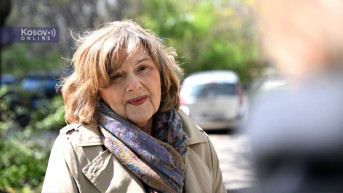
Former ambassador and member of the Forum for International Relations, Branka Latinovic, told Kosovo Online that last night's regular session of the Security Council on the situation in Kosovo over the past six months was noticeably calmer in tone compared to previous meetings. She emphasized that the obligation to respect the Brussels Agreement was highlighted, particularly Pristina's obligation regarding the formation of the Community of Serb Municipalities (CSM).
"There was also a reminder of the need to clarify the cases of Banjska, the Lepenac canal, and the post office building in Zvecan. It was an attempt to establish a small balance, meaning that criticism was not directed only at Pristina, although the issue of the Community of Serb Municipalities dominated. This is something that neither the current Kurti government nor any future government in Pristina can avoid," Latinovic stated.
She pointed out that the U.S. representative's appearance at the UN was extremely brief and focused solely on the issue of closing the UNMIK mission.
"They have mentioned this before, but this time it was practically the main topic of their brief statement — that work should begin on shutting it down. It was pointed out that UNMIK has very few staff and that over 80% of its income is spent on salaries. The American representative described the closure the way it is usually handled in international organizations — by establishing a transitional period with defined phases for winding down UNMIK. However, this received little support, only from the United Kingdom among the permanent members of the Security Council, while France, Russia, and China opposed it and supported UNMIK's continued presence," said Latinovic.
Given that the American representative also requested that future sessions on Kosovo be closed to the public, Latinovic remarked that this would have to be a matter of agreement.
Commenting on the criticisms voiced by Pristina’s representative, Donika Gërvalla, at the session regarding UNMIK and the report presented by Caroline Ziadeh, the UN Secretary-General’s Special Representative, Latinovic said this only harms Pristina’s position.
"The head of UNMIK is also the personal representative of the Secretary-General, meaning someone he trusts, and she bases her reports on UNMIK's findings. At the Security Council session, she speaks on his behalf. I believe the criticisms were the result of an agreement with the American side and were an attempt to reopen the issue of closing the mission, because UNMIK’s presence undermines efforts to affirm Kosovo's statehood. If you have a UN mission with such a mandate, it suggests that the local authorities are not capable of governing on their own, and that the United Nations are still needed to exercise oversight and assistance," Latinovic explained.
She assessed the UNMIK report as balanced and fair.
"I don’t see what the anger is about. The report simply stuck to presenting facts and strongly emphasized the need to rebuild trust, engage in dialogue, and highlighted UNMIK’s projects aimed at bringing young people together, fostering understanding, and overcoming differences and mutual distrust. I think most of the statements at the session particularly stressed the importance of trust as a key foundation for any kind of progress, both in interpersonal and political relations, and that this will continue to be a focus going forward," Latinovic said.
She also noted that the statement made by the head of the EU delegation to the UN was very direct regarding Pristina's obligations to establish the Community of Serb Municipalities.
"He emphasized — and this is very important — that Serbian representatives in Kosovo must return to all the institutions they left in 2022 without additional conditions or delays. There should be no new prolongations, new procedures, or new conditions. The goal is to restore the multiethnic character of institutions, which is a project of the international community. They have invested a lot of work and resources into it and naturally do not want to see it fail," Latinovic concluded.
0 comments