
Self-Determination buying time—December elections increasingly likely in Kosovo
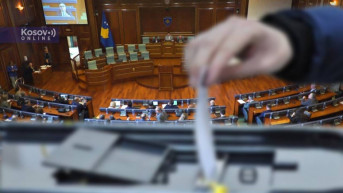
As the deadline for electing the President of Kosovo runs and two cases concerning the new composition of parliament remain pending before the Constitutional Court, an open question is whether the constitution of the Assembly and election of the Government represent yet another maneuver by Self-Determination aimed at ensuring that possible elections are held during the New Year holiday period, when the diaspora returns. Coincidentally or not, Self-Determination MP Arbereshe Kryeziu-Hyseni has suggested that December 27 would be an excellent date to go to the polls. Some Kosovo Online interlocutors say elections are likely, given that Self-Determination has no solution for electing the President.
Written by: Katarina Saicic
Kryeziu-Hyseni stirred controversy when she said that, if asked to choose a date for new elections, she would select December 27. Analysts interpreted the statement as a trial balloon to gauge public sentiment, and it prompted numerous, predominantly negative reactions.
LDK MP Ermal Sadiku said it was clear that Self-Determination would once again take citizens to the polls on December 27 in order to benefit from the large presence of diaspora voters returning to Kosovo for the holidays. According to him, the party was prepared to violate the Constitution three times in order to achieve that objective.
Alliance leader Ardian Gjini said that the “farce” in the Kosovo Assembly had been staged to buy time before calling elections for December 27.
Their calculation is clear—the objective of Self-Determination is for 60 days, the period available for electing the President of Kosovo, to elapse from the constitution of the Assembly on September 13. Since the ruling majority has no solution for electing a President, which requires 80 votes in parliament, elections could be called in mid-November. The campaign period would then follow, making it entirely possible for voting to take place in late December, during the New Year and Christmas holidays.
One potential problem for Kurti’s electoral prospects is the judgment delivered by the Specialist Chambers against the KLA leaders. Hashim Thaci has traditionally enjoyed considerable support among the diaspora, while Albin Kurti has been accused of not doing enough for Thaci and the others during their time in detention.
Buying time
Milos Pavkovic, Strategy Director at the European Policy Centre in Belgrade, agrees that the constitution of the Assembly and formation of the Kosovo Government are part of a tactic by Prime Minister and Self-Determination leader Albin Kurti to buy time ahead of new elections that he will seek to organize in late December.
“Kurti is buying time because he has no solution for electing the President. This is one element of that strategy of buying time. A Government has been elected, but we are waiting for the Constitutional Court. That buys time because the election of the President cannot be placed on the agenda until then,” Pavkovic told Kosovo Online.
Kurti’s objective at this point, he explained, is to buy as much time as possible in order to “make it” to December and the winter holidays, when he could once again call early elections and seek the votes of the diaspora.
Pavkovic noted that operating in a caretaker capacity was nothing unusual for Kurti, including having the Government he leads function under a caretaker mandate.
He recalled that the Kosovo Government had operated in this manner for much of this year and the previous year. He also noted that Kurti’s first Government, formed in 2020, had fallen after less than three months and subsequently remained in a caretaker capacity for several months.
“A caretaker mandate is something Kurti has become accustomed to and which actually suits him, because it reduces his responsibility and makes it easier to conceal violations of the law and the Constitution. Throughout the caretaker period, he is effectively campaigning,” Pavkovic concluded.
Delaying the election of the President
Security studies researcher Nikola Vujinovic told Kosovo Online that Self-Determination would use a series of maneuvers to try to delay the election of the President in order to “buy time” until possible elections in December. He said Albin Kurti’s party’s next step would be to find a way for Albulena Haxhiu to remain Acting President after October 4 so that someone from their ranks could call elections at a time that suited them.
Vujinovic explained that the constitution of the Assembly and formation of the Kosovo Government on September 13 had not brought the issue of elections to a close.
“This is merely an interim phase. Self-Determination’s next step is to find a way for Albulena Haxhiu to remain Acting President after October 4, because her temporary mandate expires then and, from what I have seen in the constitution of so-called Kosovo, it is unclear what happens the following day. Self-Determination’s position is that, on October 5, the current Speaker of Parliament becomes Acting President of Kosovo. All of Self-Determination’s steps and maneuvers aimed at bringing about elections in late December are geared toward delaying the election of the President until they reach the 45-day period before the elections, allowing them to call them. In addition, the objective is for the Acting President to be someone from their ranks who will call elections when they want them,” Vujinovic said.
He added that the judgment against Thaci and the other KLA leaders presented a problem, given the considerable support Thaci enjoyed among the diaspora following the judgment.
“The main reason why elections are being sought in December is the arrival of the diaspora, nearly 80 percent of whom voted for Albin Kurti. Whether that will still be the case is a question for Self-Determination and its supporters abroad, and we will see how much depends on it. If it is confirmed that there has been a decline in support, they will reach an agreement on the President. If it turns out that things stand as expected and that they can seek absolute power at all levels, which is Kurti’s goal, then they will go to elections. But we will only see that once the Constitutional Court decides what actually happened over the past month,” Vujinovic explained.
Asked whether he expected Kurti’s victory to be equally certain this time, Vujinovic assessed that Kurti would win, but not as convincingly.
“Yes, he would win, but not in the way he wants—not absolutely. I think he would win with a smaller percentage than in June, and certainly with a smaller percentage than in December last year,” Vujinovic said.
He also explained that, because of the Hague judgment, Self-Determination and Kurti were under considerable pressure from other political actors in Kosovo, who accused them, among other things, of having contributed to the outcome through their actions.
“It is being emphasized that Kurti never visited those who were then defendants and are now convicted persons. Since we cannot be certain that the Appeals Panel will act by the end of the year, while everyone expects them to be acquitted, I believe Kurti will receive considerably fewer votes in the next elections, and we will once again have what we have had for the past two years—negotiations over the institutions and an inability to reach an agreement,” Vujinovic concluded.
What is Albin Kurti thinking?
Political analyst Nexhmedin Spahiu believes it remains uncertain whether new elections will be held in December, but says that, if they are, Self-Determination would probably receive fewer votes than in the previous elections.
“It is still uncertain because we cannot determine what is going on in Albin Kurti’s mind. Second, it is unclear what the PDK prefers. That party now needs elections following the decision of the Specialist Court in The Hague. When I say the PDK, I mean the Constitutional Court, which is still under the PDK’s control. For that reason, the Constitutional Court would decide whatever suited the PDK in this case,” Spahiu told Kosovo Online.
While some analysts assess that the Hague judgment against the KLA leaders could complicate Kurti’s plans, Spahiu takes the opposite view, arguing that the Self-Determination leader is in a more favorable position following the Specialist Chambers’ decision.
“Albin Kurti is now in a much more favorable position because of the proceedings before the Specialist Court, while the PDK will face problems, and many of its activists are expected to find a way to move over to Kurti. All of this creates uncertainty as to whether there will be new elections,” Spahiu said.
Asked whether Kurti’s victory would now be as certain as it was in the previous elections, he replied that this was also difficult to determine.
“That is also difficult to say, but it is important to point out that there is considerable disappointment because nothing is being done. The story about the north is gradually being forgotten, so it no longer ‘works,’ while, on the other hand, he has achieved nothing in any area during this period. He will probably have fewer voters than in the previous elections, although it is uncertain how much that will affect his percentage of the vote. At the same time, the PDK has been weakened by the Hague convictions, while the LDK is divided, and it remains unclear whether that division will result in more or fewer voters. All of this remains uncertain. There are therefore too many unknowns for me to make a proper political forecast for the next elections,” Spahiu concluded.


0 comments