
Radakovic: A government led by the PDK or the LDK would have better cooperation with the Serbian community
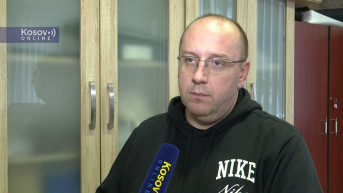
Dusan Radakovic, Executive Director of the Center for Advocacy of Democratic Culture in North Mitrovica, assessed that the next government, if led by the Democratic Party of Kosovo or the Democratic League of Kosovo, would take a different approach toward the Serbian community than Self-Determination and would lead to better cooperation between that community and the Ministry of Local Government.
Radakovic emphasized that cooperation between the Serbian community and Pristina would also improve if Self-Determination is not in power after December 28.
“Some ministry will certainly be allocated to a Serbian political entity that enters the government, as well as some deputy positions, the Ministry for Returns, as stipulated by the Constitution. Perhaps another ministry as well. In the past, we had experience that this included the Ministry for Communities and Returns, a deputy minister of agriculture, the minister of local government, so there were cases where two or three ministries belonged to the Serbian community,” he said.
He added that it is natural for the 10 Serbian municipalities to have cooperation with the Ministry of Local Government, and that the current situation with Minister Krasniqi should not be repeated.
“We will see what the voters bring, but it is natural to have some cooperation. Ten municipalities must cooperate with the Ministry of Local Government, and that ministry, as well as the Ministry of Finance, must provide support. Therefore, I expect it will be easier if the PDK or the LDK or some other political structure wins votes to form the new government compared to Self-Determination, because over the past five years they have had no cooperation whatsoever with the Serb List,” Radakovic said.
He believes that these parties would show greater trust and understanding, as well as provide solutions to the concrete problems of the Serbian community, which should also be part of a potential coalition agreement if a government is formed that includes Serbian political entities, including the Serb List.
He also pointed to the difference between a coalition in which the Serbian community can gain something and Self-Determination, which refuses cooperation primarily with the Serb List.
“If the government that we expect is formed, which we hope will be formed by the PDK, LDK, AAK and other entities, a coalition with the Serb List is possible. Then, of course, all 10 municipalities with a Serbian majority will be able to breathe more easily and have better cooperation with the future minister of local government than with Mr. Krasniqi,” Radakovic concluded.
According to his assessment, Self-Determination will not form a coalition, but will instead call for new parliamentary elections in April, during the presidential elections. The only exception for cooperation, he notes, could be the Party for Freedom, Justice and Survival, if it wins a mandate.
“What I think could happen, as it has in the past, is such a coalition if the PDK and the LDK have a majority. I expect that it is perhaps natural for the Serb List to be part of it in order to reach the famous 61 MPs. That coalition is possible if they lack a certain number of votes from the Serbian community, whether eight, nine, or 10 when it comes to the Serb List. That is the only solution,” Radakovic stated.


0 comments