
Self-Determination-PDK deal: Compromise, outmaneuvering, or Kurti as the absolute winner?
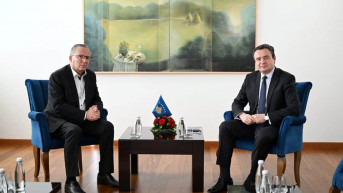
The agreement on the election of the President of Kosovo and the adoption of amendments to the Law on the Specialist Chambers has once again exposed the political maneuvering in Pristina. While some analysts believe that the Self-Determination Movement emerged from the process as the absolute winner, securing stable rule, others argue that Prime Minister Albin Kurti was forced into a compromise under pressure from the protests. Kosovo Online’s interlocutors are also divided over the PDK’s move: some believe the party was outmaneuvered over the law amendments, while others view the amendments as a “plus” for the PDK. They see the LDK as the biggest loser.
Written by: Milena Miladinovic
The President of Kosovo was elected in the final moments of the constitutional deadline, although Justina Shiroka Pula was formally elected President in the minutes after midnight.
Shiroka Pula, a former Energy Minister in a PDK-led government, was Self-Determination’s nominee. PDK support for her election came on the condition that, before the election of the President, the amendments to the Law on the Specialist Chambers be adopted by the Kosovo Assembly in the second reading, which ultimately happened.
Before Shiroka Pula, Self-Determination had proposed Bekim Sejdiu, Glauk Konjufca and Feride Rushiti, all of whom were rejected by the PDK.
While Kurti, from the Kosovo Government, was putting forward candidates and Bedri Hamza, from the Kosovo Assembly, was rejecting them, tensions and protests by KLA supporters continued outside those institutions in Pristina.
The Democratic League of Kosovo, which had initially reached an agreement with Self-Determination on the election of the President, played no role at that point.
Could an agreement on the election of the President have been reached without the guilty verdict in The Hague and the PDK’s demand for amendments to the law, and who emerged as the “winner” and who as the “loser” from the political maneuvering in Pristina?
Kosovo Online’s interlocutors say that Kurti, faced with protests that in recent days escalated into attacks on the Assembly building, police officers and MPs, agreed to a compromise that ultimately benefited him the most, as he secured a President who would not make his job more difficult during the next four years of a secure mandate.
Their views on the PDK are divided. While some believe that the adoption of the law amendments is a “plus” for the party, others, citing criticism from the EU, believe that the party will gain little from the amendments.
On one point, however, they agree: the biggest “loser” in the process is the LDK, which gained nothing.
PDK outmaneuvered
Aleksandar Sljuka, an associate of the NGO New Social Initiative, believes that Self-Determination outmaneuvered the Democratic Party of Kosovo.
Sljuka told Kosovo Online that only after the September 16 judgment against the former KLA leaders in The Hague did a situation arise in which the PDK was able to “bargain.”
“They wanted to push through amendments to the Law on the Specialist Chambers, and Kurti saw an opportunity there to bargain with the PDK in the context of the vote for the President, which is ultimately what happened,” Sljuka said.
According to him, Albin Kurti’s Self-Determination emerged as the winner from the entire situation.
“It was believed that there would be new elections. However, it seems to me that with a President who, I would say, is aligned with Self-Determination, there will not be many problems. This situation suits them better, and now they finally have all institutions in place and can govern without obstruction for the next four years if they wish, provided that no unforeseen circumstances arise,” he said.
Sljuka added that the PDK had been outmaneuvered in this situation, despite claims that it had forced Kurti “to back down.”
“I do not share that view. We saw the European Union respond, and common sense also tells us that the law amendments they bargained for are essentially unconstitutional. The European Union said that they were contrary to Kosovo’s European path, and I do not see how they can be implemented in practice. So I think they bargained for something that essentially cannot be implemented, while Kurti gained the opportunity to form all the institutions, and with a candidate who suits him,” Sljuka said.
He also believes that the LDK was the biggest loser.
“A few months ago, they were in a situation—not exactly the same as the PDK, perhaps even better—in the sense that they were directly involved in the election of the President. They could even have bargained their way into becoming part of the government; there was talk of certain ministerial posts. At the time, because of divisions within the LDK, that did not happen. Later, they were not involved in these political calculations at all. They completely undermined their own position because, a few months ago, they had been in a situation where the opposition viewed them as someone undermining opposition unity,” Sljuka said.
He added that during the October 6 session, close relations could be seen among the leaders of Self-Determination, the PDK and the Alliance, while the LDK leaders remained on the sidelines.
“So I believe that Self-Determination is the winner of this entire situation, while all the opposition parties are losers, because Kurti is now in a position to govern for four years without new elections, and the question is what the opposition will look like four years from now,” Sljuka said.
Kurti the “savior”
Milos Pavkovic, Strategy Director at the Belgrade-based European Policy Centre, believes that the Self-Determination-PDK agreement on the election of the President was reached at the last moment because Kurti, amid tensions and protests by KLA supporters, was forced to compromise.
“I think this really was a last-minute agreement which, amid the tensions and protests, forced Kurti to weigh his options and, in a sense, concede defeat by accepting a compromise solution for President, but also because he assessed that new parliamentary elections would not work in his favor. The question is whether he would be able to repeat his previous success,” Pavkovic told Kosovo Online.
On the other hand, Pavkovic said, new parliamentary elections did not suit the opposition parties either.
“So, although negotiations had been taking place throughout September, the final agreement on the President probably came only in the last moments,” he said.
According to Pavkovic, although adopted as part of the same package as the election of the President, the amendments to the Law on the Kosovo Specialist Chambers are a “plus” for the PDK.
“What was achieved through the agreement was the amendment of the Law on the Kosovo Specialist Chambers. That was one of the conditions; it came as part of the package for electing the President. What Hamza and his party gained was that they were presented as the ones who proposed the law, as the ones who received credit for its adoption, even though it came as part of a package with the presidential election and in cooperation with Self-Determination. That is potentially a plus for them among Kosovo voters, while future political dynamics will show how it affects their ratings,” he said.
According to Pavkovic, Kurti emerged from the negotiations as a “savior” who led Kosovo out of a political crisis, although he ultimately failed to impose his own candidate for President.
“He waited until the final moments and tried to impose his candidate. It should also be added that the political dynamics in Kosovo changed with the protests. We had 10 to 15 days of continuous protests, which had a very negative impact on Kurti and his ratings. That forced him either to risk new elections and enter a period of great uncertainty, or to compromise, elect a President and adopt the law amendments,” Pavkovic said.
A willingness to compromise?
Constitutional law professor Mazlum Baraliu said that the election of President Justina Shiroka Pula was good news after, as he put it, political parties had spent almost three years failing to demonstrate maturity in taking the interests of Kosovo’s citizens into account.
Baraliu told Kosovo Online that during that period the parties had focused solely on their own party interests.
“That happened because there was a lack of communication between them. But then came the decision of the Specialist Court in The Hague, and the PDK became interested in amending the law, placed that issue at the forefront and, it appears, was even prepared to go to elections over it. Then everyone maneuvered in their own way, communicating almost as if one side were on one continent and the other on another,” Baraliu said.
He said that such an approach was inappropriate and that politicians should be willing to compromise.
“Above all, they should listen to the interests of the citizens who voted for them. That was lacking, but in the end I believe the election of the President is good news for everyone—not only for the citizens of Kosovo, but also for stability in the Balkans—because this odyssey lasted two and a half to three years, and another cycle of elections would merely have repeated what we had before,” he said.
Baraliu believes that political parties must take the interests of citizens into account and reach agreements accordingly, because, he said, this had proven necessary.


0 comments