
Milivojevic: Vergori's appointment as KFOR commander is a more favorable development for Serbs

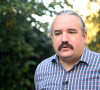
Career diplomat Zoran Milivojevic said today that the appointment of Italian Major General Roberto Vergori as KFOR commander represents a more favorable situation for Serbs in Kosovo, because, according to him, the previous commander, a Turkish general, projected his country's policies onto Kosovo and showed understanding for the interests of the Pristina side, TV Most reported.
Milivojevic said that the arrival of the Italian general could have a positive impact on the security situation on the ground.
He told Tanjug that appointing an Italian as KFOR commander was a more favorable option for Serbs because Italy does not project its direct interests onto Kosovo in the way Turkey does, as Turkey sees Kosovo as a strategic option for the future.
He noted that Italy also recognizes the changing balance of power within NATO, which appoints the commander, as well as the influence of the United States, which is showing increasing interest in the region and giving greater consideration to the Serbian factor in shaping its future interests, TV Most reported.
“The American side has expressed dissatisfaction with the Pristina side and the policies pursued by Albin Kurti. In terms of these interests, the Italian general is closer to what America sees in this region, as demonstrated by its actions in Bosnia and Herzegovina, where it proposed an Italian for the position of High Representative. In pursuing its interests, America relies more on Italy than on Germany, the United Kingdom and some other countries,” Milivojevic explained.
Milivojevic stressed that having an Italian general as KFOR commander was a more favorable arrangement for Serbs because interests that conflict with those of the Serbian state and the Serbian people regarding Kosovo would be less pronounced. He recalled that Italian troops had protected Serbian interests at Visoki Decani Monastery and at the bridge over the Ibar River.
In his assessment, official Belgrade would find it easier to engage in talks with the Italian commander and could expect greater understanding of the interests of the Serb people and the security of Serbs in Kosovo than was the case with the Turkish commander.
Asked how much a change at the head of the mission could affect the security situation on the ground, Milivojevic said that a change in KFOR command could have a significant impact on security in Kosovo. He added that the arrival of the Italian general could also be seen as an opportunity to put the security of Serbs back at the top of NATO's agenda, since Vergori is the chief decision-maker on all issues, including the opening of the bridge over the Ibar River.
“This issue could now gain greater importance, and the Italian general may assess the security situation differently from the Turkish commander. It should be recalled that the Turkish general assessed the security situation in a way that aligned with the interests of the Albanian side. The Italian general may now, within the framework of his mandate, take a more objective approach and bring this issue back to the table,” he said.
He added that he personally did not expect major changes in NATO's position, but that the appointment of an Italian general as KFOR commander was better suited to an objective assessment of the security situation on the ground, making the Italian general a better option than the Turkish one.
Asked what it meant for the security of Serbs that the deputy KFOR commander was still Turkish Brigadier General Onur Cakici, Milivojevic explained that this confirmed that Turkey was using NATO to advance its own interests and would not abandon the support it had provided while a Turkish general was in charge of KFOR.
“The deputy commander must nevertheless bear in mind who the overall commander is, because the final say rests with him. This is a message to us that Turkey will not abandon its interests or its support for the Kosovo side on security matters and other issues of strategic importance to it,” Milivojevic pointed out.
Commenting on KFOR's announcement in August, after 27 years, that it would withdraw from the main bridge over the Ibar River in Kosovska Mitrovica, Milivojevic said there was now an opportunity to reconsider that decision in light of the security assessment, which falls under the authority of the Italian commander.
He stressed that the entire situation could not be separated from the political context, which was marked by the absence of dialogue and had made the security situation more complex. He added that it was in the interests of the United States, the West, KFOR and NATO for Belgrade and Pristina to return to dialogue and for that dialogue to serve as the basis for assessing the security situation.
“In this regard, it would be realistic to expect this issue to be reconsidered and reviewed, with the focus placed on the political context and political dialogue,” Milivojevic said.
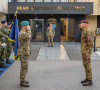
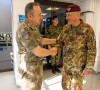
Italian General Roberto Vergori took command of KFOR yesterday, stating that the mission had not changed and that its commitment to Kosovo remained unchanged.
“We remain deeply committed to fulfilling our longstanding mandate, with one primary goal: to ensure that the mission continues to contribute to creating conditions for a future in which new generations can enjoy all the benefits of lasting peace, democracy and prosperity,” Vergori said at the handover ceremony.
In a Kosovo Online analysis published ahead of the change of command at KFOR, interlocutors expressed differing views on whether the change at the top of the mission would bring any changes.
0 comments