
Serbs concerned over new laws in Kosovo – Right to health care also at risk
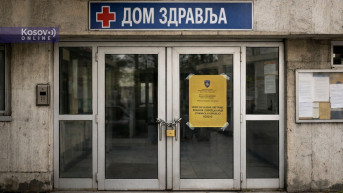
The right to health care is a fundamental human right, but for many citizens of Kosovo who receive treatment in institutions operating within the Serbian system, it could be called into question by the implementation of the laws on foreigners and vehicles starting on March 15. In the final weeks before the laws enter into force, citizens fear that this will further complicate their daily lives, including access to health services. Their concerns are echoed by interlocutors speaking to Kosovo Online, who warn that the new rules could drastically reduce staffing in health institutions, potentially leaving patients even without ambulance services.
Written by: Petar Rosic
The Law on Foreigners in Kosovo was adopted back in 2013, but according to announcements, its provisions concerning residence in Kosovo will begin to be applied on March 15.
Serbs living in Kosovo who do not hold Kosovo citizenship, as well as those who come there to work or study, will have to register with the police and “enter further procedures” in order to obtain a permit to stay longer than three days.
Since the implementation of the laws on foreigners and vehicles was announced, interlocutors of Kosovo Online have warned that the new rules have little to do with establishing order, but rather represent a mechanism for exerting pressure on Serbs.
Analysts speaking to Kosovo Online have also pointed out that the laws skillfully circumvent all obligations arising from agreements reached in the dialogue and that their implementation could trigger a “chain reaction,” potentially leading to an ethnically pure Kosovo.
Political representatives of the Serbs from Kosovo have also warned that nearly 10,000 Serbs—primarily students, professors, and doctors—may not be able to remain in Kosovo because they do not possess Kosovo documents or may be prevented from entering.
Citizens: Life Will Become Increasingly Difficult
Citizens of North Mitrovica have also expressed deep concern to Kosovo Online over the announced implementation of the new laws.
“They have decided to do this and they will not give up on it. Life in Kosovo will only become even harder, nothing else. Everything is getting more and more difficult. There are no medicines, no newspapers, nothing at all. There is no currency either. We have nothing,” said Dragan Mitrovic.
Milan Savic believes that many citizens will face serious problems and that people could be deprived of basic human rights.
“There is an absurd situation. I think it is probably unique in the world—that within one family someone can obtain Kosovo documents, while someone else who failed to do so will not be able to and will become a foreigner in their own country, unfortunately,” Savic said.
Branislav Barovic expects additional pressure. He is particularly concerned about the issue of education and fears that doctors will leave.
“Everything will be different. There will be ultimatums and blackmail. It is even possible that our schools will be banned. That worries me especially. My daughter is in her fourth year of medical high school, and Serbian diplomas are not recognized. Doctors will leave and we will be left on the margins, unable to do anything. My personal view is that if it comes to that, I am already prepared—I will move away. We have no right to take medicines, no right to buy food, no right to spend money. Everything has been taken away from us. And once we had everything together—we ate, drank, received medical treatment, went to school together. We shared everything. Now this is being done deliberately, so that we would leave,” Barovic said.
Work Permits Also in Question
That these fears are not unfounded, according to Kosovo Online, is indicated by political scientist Ognjen Gogic. He explains that a number of health workers employed in Serbian-run health institutions in Kosovo come from central Serbia and reside there based on documents issued by Serbia.
“Under this law, they become foreigners, and the time they are allowed to spend in Kosovo is limited by law. Moreover, they are obliged to register their stay within that period, meaning they will first have to limit the time they spend in Kosovo so as not to exceed the legal threshold, but they will also be forced to report to the Kosovo Police if they stay longer within that timeframe,” Gogic said.
He added that alongside the Law on Foreigners, the issue of work permits may also arise—namely whether those individuals will be allowed to work in institutions that are not legally recognized in Kosovo during the period of their stay.
“Along with limiting the time they spend in Kosovo, their right to work—that is, to carry out activities—could also be restricted, which would call into question the provision of health services. This could lead to a potential reduction in the staffing capacity of those institutions, which depend in part on workers from central Serbia,” Gogic explained.
He also noted that vehicles used by health institutions, such as ambulances, are registered in Serbia and belong to the Serbian Ministry of Health.
“Together with the issue of authorizations for individuals, the question will also arise as to whether drivers will be allowed to operate those vehicles and under what authorization. Therefore, even ambulance services could be brought into question,” Gogic added.
Work, Transport, and Medical Supply Chains at Risk
Gogic’s claims are confirmed by orthopedic specialist and professor at the Faculty of Medicine of the University of Pristina, temporarily headquartered in North Mitrovica, Aleksandar Bozovic. In a statement to Kosovo Online, he pointed out that the new laws will affect both employees and patients of the Kosovska Mitrovica Clinical Hospital Center in two ways. The first problem, he says, concerns doctors and medical staff who do not have Kosovo documents and their ability to come to work. The second concerns the transport of patients, since all ambulances bear license plates from cities in central Serbia.
“First, a large number of colleagues do not have Kosovo documents, and from the 15th they will practically be prevented from carrying out their professional duties. However, a much more important issue is potential patient transport due to the traffic and vehicle laws, because our ambulances are registered in Raska or Belgrade, precisely because it is impossible to register them properly within the system of the provisional institutions of Kosovo. Therefore, the concern is enormous. The question arises whether the health system will be able to function properly and adequately on a 24-hour basis,” Bozovic said.
He also emphasized that patients are very worried about whether doctors will be able to continue providing health services in the same adequate and high-quality manner as before.
“As you know, we maintain tertiary-level links with institutions in Belgrade and other clinical centers in Serbia. Therefore, functioning under conditions of more difficult patient transport using our vehicles further complicates the proper treatment process. So there are two problems: one concerns identity cards, that is, documents of the Republic of Kosovo or the provisional institutions, and the other concerns adequate transport. A third aspect is the supply of medical materials and everything we need for normal work. My opinion, and the opinion of all colleagues working in the clinical center where I work, is that we will certainly remain here to live and work as we have done so far and wait for new developments or decisions related to these laws on vehicles and foreigners,” Bozovic said.
Bozovic is convinced that everyone who has so far carried out their duties with dedication, both at the Clinical Hospital Center and at the University, should continue to do so in the coming period, all for the benefit of patients and students.
“We roughly know what we need to do—we will work even more firmly and more diligently, both with our patients and with our students. We will wait for political decisions related both to the political leadership of the Serbs and to the political leadership of our country, Serbia, and we will act accordingly. We will live and work, because that is what we have been doing in these areas for centuries,” Bozovic concluded.



0 comments