
Muhaxhiri: Yesterday's round of dialogue was merely a formality, without pressure from major powers there will be no progress
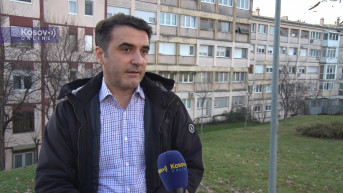
The latest meeting of the chief negotiators was, despite some progress, merely a formality, states Artan Muhaxhiri, an analyst from Pristina, for Kosovo Online, assessing that without the "political wind" of major powers and pressure from the USA, Germany, and France, there will be no progress in the dialogue between Kosovo and Serbia next year.
"If the USA and EU and powerful countries in Europe, like Germany and France, do not apply that pressure, I doubt anything will be achieved. But, these two countries are also facing major problems, with upcoming elections in Germany and a new prime minister chosen in France. Therefore, they have their own issues, and so I don't believe they have the energy or political resources to direct towards the dialogue between Kosovo and Serbia," Muhaxhiri stated.
He said that the last round of dialogue between Belgrade and Pristina in Brussels was better than previous ones but was a formality.
"This round of dialogue was slightly better than others, but it was only a formality in any case because in this context, it is impossible to expect a solution to the substantive agreement. I think the problem is also with the EU, but also with Kosovo and Serbia. Everyone needs a little more 'political wind,' a little encouragement to have justification to continue the dialogue," Muhaxhiri said. He welcomed the fact that an agreement was reached on missing persons, but also warned that it would take a lot of time to resolve this very delicate and important issue.
"I doubt this agreement will lead to a solution. It needs to be much more vigorously pushed on all sides," Muhaxhiri stated.
He believes that the EU should not be expected to exert additional pressure on Belgrade and Pristina next year because the issue of unresolved problems in the Balkans is currently not a priority.
"We must be aware that there are two major global crises, in the Gaza Strip and Ukraine, and until these are positively resolved, I do not believe the Balkans will be in focus. However, if Trump's administration really takes the right political steps he promoted during the election campaign to speed up the end of the war in Ukraine and to find a solution for Gaza, I think the next step would be a final agreement between Kosovo and Serbia," emphasized Muhaxhiri.
Asked whether Miroslav Lajcak's successor could speed up the process of dialogue and normalization of relations, Muhaxhiri says that, regardless of who comes to that position, they would contribute only "five to ten percent" because they do not have the political power that can produce results.
"The main guidelines in the dialogue come from the great powers and one person cannot change them, they do not have such political power to change them. Therefore, regardless of who comes to Lajcak's place, those changes will be maybe five or ten percent, so nothing significant will change. It will still be insisted that both sides fulfill what they agreed in the agreements, and a person from the European administration cannot help with that. That change can only be made by leaders of big countries, presidents, prime ministers of important states like the USA, Germany, France, and others," concluded Muhaxhiri.



comments