
Gogic: Property as a topic in dialogue carries the risk of encroaching on status issues
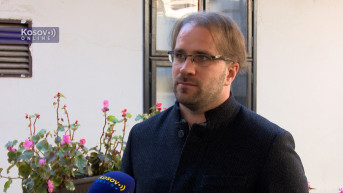
Political scientist Ognjen Gogic says that cases where the central government in Kosovo seeks mechanisms to expropriate land or real estate owned by Serb-majority municipalities fall under the issue of general legal security and that the solution to these cases lies in ensuring that Kosovo's courts protect property ownership rights, whether for individuals or institutions.
"This is a fight that should be carried out through Kosovo's institutions, no matter how hopeless it may seem for Serbs in Kosovo at this moment. Another approach might be to address the issue of legal security and the rule of law through dialogue, perhaps as a form of conditionality imposed by the European Union for Kosovo's progress in the Growth Plan or toward the Council of Europe. This could then serve as a response to these situations, which are likely to continue in the future," Gogic told Kosovo Online.
He views the recent developments in Serb-majority municipalities like Strpce, Gracanica, and North Mitrovica, where municipal property has come under attack, through this lens.
Raising property as a topic in the Belgrade-Pristina dialogue, Gogic says, carries the risk of encroaching on status issues.
"The property issue dates back to the UNMIK era when it took control of all social and state property, as it was called back then, and began the process of privatization. Today, property that hasn’t been privatized is considered public property of Kosovo. In general, Belgrade has never raised this issue in the dialogue because there is no clear way to frame it without the risk that discussions could sound like some kind of 'division' – determining what is Kosovo's and what is Serbia's, i.e., what belongs to the state of Serbia. This could imply a sort of interstate agreement between Serbia and Kosovo, which Serbia has wanted to avoid," Gogic explains.
He adds that Serbia also wants to avoid a situation where it would have to ask Kosovo to recognize certain assets as belonging to the state of Serbia, because that would mean registering Serbia's property under the Kosovo system, which is unacceptable for Serbia as it touches on status issues. For this reason, Gogic says, the property issue has been left in limbo.
"After Kosovo unilaterally declared independence, it continued to privatize enterprises where it could, leaving unresolved only the issue of immovable property in Serb-majority municipalities. These include enterprises whose status remains unresolved, such as Trepca, Gazivode, or Brezovica, as well as other immovable properties used by either temporary administrative bodies or other Serbian institutions, such as schools and hospitals. This issue has remained undefined. One way to address it was for Serb-majority municipalities to become the founders and owners of these immovable properties and institutions, thereby protecting them, ensuring they remain at least in the hands of Kosovo Serbs if not in the hands of the Serbian state. This has been implemented to some extent, particularly in areas south of the Ibar River," Gogic says.
He explains that Pristina's general practice has been to convert all social and state property that once belonged to Serbia and Yugoslavia into public property of Kosovo, to privatize it, or to allocate it to its own institutions.


0 comments