
Should Pristina be concerned about Rohde’s remarks on “football, construction, and circus”?
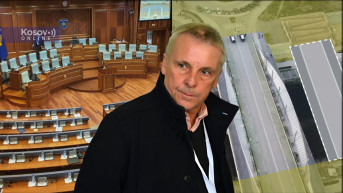
A round of “football talk,” a round of “construction-site topics,” and, as garnish, a story about the “circus.” For analysts, the increasingly sharp statements of the German Ambassador in Pristina, Jörn Rohde, represent a clear message of dissatisfaction with the political reality in Kosovo. The question, they add, is whether these sharper metaphors will also be followed by concrete steps from Berlin and Brussels.
Written by: Djordje Barovic
“As I suggested back in April, using a football analogy: if your team is not successful, replace someone on the team. After 55 attempts, maybe it’s time to change the team, because I know the reaction of the opposition,” Rohde said late last week.
Admittedly, he miscounted slightly—it was at that point the 54th attempt—but reality quickly confirmed his point, as on Wednesday the 55th attempt to constitute the Kosovo Parliament also failed.
And he was relatively milder this time than in mid-July, when he commented on the 47th failure.
“I can describe it in one word: circus,” said Rohde, explaining that the institutional crisis in Kosovo carries serious economic consequences for its citizens.
He reacted in a similar manner to the construction of two new bridges across the Ibar.
“We all intend to open a bridge—that hasn’t happened. But if the climate is not right for opening one bridge, is it right to open two?” Rohde asked, adding that instead of this construction endeavor, the authorities in Pristina should first resolve the traffic bottleneck at the entrance to Vushtrri, on the main road connecting South and North Mitrovica with Pristina.
Reactions to Rohde’s Words
Political analyst Agon Maliqi is convinced that Rohde “believed he was addressing a society interested in integration into Europe.” Former Constitutional Court Vice-President Kadri Kryeziu, however, was blunt in telling the German ambassador that he would “do better to retire.”
“Mr. Rohde, Mitrovica is one city, though it has two municipalities. Kosovo exists both here and there along the Ibar. We will not allow anyone with the dirt of the Berlin Wall to take root and seize the land. Mr. Rohde, today I am a Mitrovica citizen. That is how most people in this country feel. And if you do not like that, in the interest of the good name of Kosovo and Germany, show a little respect and retire,” Kryeziu wrote on Facebook.
The German ambassador did not respond.
Messages from Berlin
Former Ambassador of the Federal Republic of Yugoslavia to Germany, Zoran Jeremic, interprets Rohde’s statements as an open criticism directed at caretaker Prime Minister Albin Kurti—to “come to his senses”—and at other political actors, warning that “an impermissible level of arbitrariness” in relation to EU requirements will not be tolerated.
“I believe this is primarily a message to Kurti: he must come to his senses and start listening more to them. He has obviously begun to act on his own, in ways that do not suit them. While he was doing what they wanted and deemed necessary, everything was fine,” Jeremic told Kosovo Online.
At the same time, Jeremic added, Rohde’s remarks should also be read as a clear signal to other political actors in Kosovo.
“It is also a message to the others: ‘If we remove Kurti, you will also need to listen to us, to demonstrate understanding for our interests and positions, and to refrain from pursuing policies outside the framework of the EU and the values the EU promotes and strives to implement in Kosovo,’” he explained.
Commenting on Rohde’s “football and construction” metaphors, Jeremic stressed that the ambassador conveyed the view that Berlin considers the current authorities unserious.
“The ambassador’s satirical statements suggest that they see this government as immature, unserious, and overly consumed with political calculations of its own, neglecting the interests of Kosovo’s citizens,” Jeremic said.
Thus, he interprets Rohde’s remarks as a form of “warning” to Albin Kurti and to “disobedient elements” that Germany will not tolerate policies that are not aligned with those of the EU.
“This is clearly an attempt to caution both Kurti and these ‘disobedient elements’ pursuing their own policies, now increasingly at odds with the EU. Those in power are showing an impermissible degree of independence or arbitrariness in meeting the requirements placed before them,” Jeremic argued.
He added that this is especially significant for the EU and Germany at a time when the Kosovo issue is becoming an exclusively “European problem.”
“At a moment when the U.S. administration is preoccupied with other issues, Kosovo is gradually becoming a European problem—more precisely, a German problem—where Berlin is asserting itself as the key actor,” Jeremic assessed.
He concluded that official Berlin is dissatisfied with how Kosovo is functioning at present because it is not a state “to their taste.”
“They have no problem with Kosovo existing as a state—they recognize it as such—but they have a problem because it does not function the way they envisioned. It functions in a ‘Balkan manner,’ as they pejoratively put it,” Jeremic added.
For Germany, he said, it is a serious issue, because Berlin regards Kosovo as its “own child.”
“If their child is incapable, after 55 parliamentary sessions, of electing a Speaker and finding a way to reach a basic, normal democratic agreement, that is already a clear sign that something is not right,” Jeremic explained.
Bridges of Connection
University professor Nexhmedin Spahiu agrees with the German ambassador’s assessment of the institutional crisis in Kosovo but disagrees with his view on the construction of two new bridges between South and North Mitrovica.
“I think it is madness to put forward the same candidate 50 times, but for that I don’t blame Albin Kurti or the opposition—I blame the Constitutional Court,” Spahiu said in an interview for Kosovo Online.
He recalled the Constitutional Court’s 2014 ruling that the party with the most seats in parliament has the exclusive right to nominate the Speaker, and that such a decision must be voted on.
He described that ruling as absurd.
“If the post belongs to the largest party, there is no need for a vote—the fact that they won the most seats means they appoint the Speaker. But if a vote is necessary, then the Speaker should be the one who receives the most votes, regardless of the party. I believe Ambassador Rohde is right when it comes to the repeated votes for electing the Speaker,” Spahiu said.
On the other hand, he argued that the German ambassador is mistaken in claiming that two new bridges are not needed in Mitrovica at present.
“Building bridges in Mitrovica is more than necessary due to overpopulation and construction without any urban planning. Mitrovica is indeed in traffic chaos, and bridges ease that flow—they are more than needed,” Spahiu said.
At the same time, he agreed with Rohde’s criticism about the half-kilometer stretch of road at the entrance to Vushtrri, linking South and North Mitrovica with Pristina.
“It is truly absurd that even after five years of Kurti’s rule, this road remains unimproved, causing misery to so many people traveling between Mitrovica and Pristina. In that respect, he is absolutely right,” Spahiu explained.
EU Dissatisfaction
Director of the Institute for European Studies, Slobodan Zecevic, interprets the latest statements of the German ambassador in Kosovo, Jörn Rohde, as reflecting not only Berlin’s dissatisfaction with the situation in Kosovo but also that of Brussels.
“They clearly convey a sense of discontent with the situation in Kosovo and with Kurti’s administration’s response to the implementation of the Brussels Agreement,” Zecevic told Kosovo Online.
He described Rohde’s remarks as “indicative.”
“His reactions regarding the construction of the two bridges over the Ibar, and his comments on the overall implementation of the Brussels Agreement, are indicative and likely reflect dissatisfaction not only in Germany but within the EU more broadly with the pace of implementation of what was agreed,” Zecevic said.
He added that Rohde’s comments on Kosovo’s institutional crisis should also be understood as a “veiled threat” to caretaker Prime Minister and Self-Determination leader Albin Kurti.
“It may represent a veiled threat to Kurti that they could withdraw their support. The process has dragged on too long, to the detriment of Serbs and of the Serbian presence—at least in the north of Kosovo, across the four municipalities where they are a compact community,” Zecevic argued.
He concluded that while the statements of international representatives in Pristina are “steps in the right direction,” what is missing is a concrete reaction from the West.
“The statements are in the right direction, but they must be followed by concrete political action by the EU and the United States,” Zecevic emphasized.



0 comments