
Sixteen years since the declaration of independence of Kosovo – The Serbs facing their toughest times, the Albanians fleeing to the EU
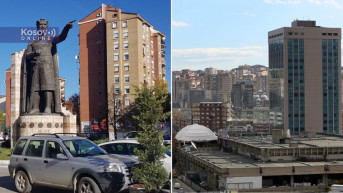
On the sixteenth anniversary since the adoption of the Declaration of Independence in Pristina, Kosovo finds itself under European Union sanctions and facing a barrage of criticism from its greatest ally, the United States. Unlike February 17th of last year, today, holders of Kosovo passports can travel visa-free to EU countries. However, what hasn't changed is Kosovo's stalled progress in attaining candidate status for EU membership, which remains shelved in one of Brussels' drawers. There has been no improvement in the situation of the Serbs, quite the opposite. Kosovo Online interlocutors warn the situation has never been more challenging.
On the international stage, Kosovo is stagnant, with no new recognitions since 2020. Economically, experts point out regression, while unions warn that wages do not provide a dignified life for workers. Nearly 30 percent of citizens plan to emigrate to Western European countries, and since the beginning of this year alone, 20 doctors have decided to leave Kosovo.
Journalist and writer Zivojin Rakocevic tells Kosovo Online that it has long been said that Kosovo's independence is a shell without substance, and as time passes, that shell becomes thinner and thinner. He emphasizes that this system is collapsing on its own and eating away its foundations.
“The economy has collapsed, and institutions have failed; this is an isolated island that continuously, thanks to infusions from outside, maintains an illusion of its greatness and independence. In essence, with every Albanian leaving for the West, almost escaping, it's clear that independence as they imagined it made no sense," Rakocevic says.
It made sense, he adds, to have interdependence and connections.
"How do you explain to individuals that India can have different connections with London, but Pristina cannot have them with Belgrade? How do you explain that some world superpowers have invested much more in Kosovo than the Kosovo Albanians themselves and that it is entirely clear that life has not justified what that resolution on independence justified, those recognitions?" Rakocevic says.
Speaking about what the Serbs and Albanians have gained in the 16 years since the Declaration of Independence, he says that the Serbs got a perfect ghetto.
"In the final option, we got the occupation of the north. Based on the occupation of the north, they are now trying to enter our homes south of the Ibar River and explain their statehood to us there. Essentially, the Albanians did not gain the economy, they did not gain independence, culture, or cities, which they so perfectly ethnically cleansed. They did not gain that feeling that they could share life with others. Independence is when you have love, patience, and trust to share your life with someone else. The Albanians and the authorities in Pristina failed to achieve that. Essentially, we come back to the empty shell in which there is only room for those who have power and force," Rakocevic concludes.
Sixteen years ago, as Safet Gerxhaliu, former President of the Chamber of Commerce of Kosovo, recalls, the dream of several generations was realized. However, the "gray hue" of this anniversary is cast by Kosovo being under European Union sanctions and by many citizens leaving Kosovo because they do not see a perspective.
"There are more reasons to be burdened by why we are where we are if you look at Kosovo today economically, politically, how integrated it is, socially, and what the perception of Kosovo is. The fact that we are under EU measures is a negative sign that perhaps casts a gray shade on the celebration of independence. If Kosovo's image isn't at a level to attract foreign investors, then there are far more reasons to be concerned than happy. Regardless, freedom is measured by freedom, but a completely different approach is needed for the future," Gerxhaliu says.
He states that relations with the USA must be sacred, but there are "a lot of oscillations" in that regard. He also refers to the fact that there are still open issues between the Serbs and the Albanians as an open wound.
"That should motivate politicians in Serbia, Kosovo, and the region to work much harder on normalization and problem-solving. People need a better perspective. Life doesn't have a second half. It's time for politicians to work more for the people because they have been entrusted with power by the people. But, whether they admit it or not, the people have become hostages to politics in the Western Balkans," Gerxhaliu concludes.
What February 2024 will be remembered for is also the efforts of the Kosovo authorities to ban the use of the dinar and the questions of the Serbs, "What will happen to us tomorrow?"
Executive Director of the NGO Advocacy Center of Democratic Culture from North Mitrovica, Dusan Radakovic, states that the Serbs in Kosovo today are in a much more subordinate situation compared to February 17, 2008, when Kosovo declared independence. He notes that human rights are violated every day, while the Deputy Director of the organization Community Building Mitrovica, Nemanja Nestorovic, assesses that the position of the Serbs in Kosovo has actually never been more difficult in the last 16 years.
Radakovic tells Kosovo Online that 16 years ago, there was a greater possibility of support for the Serbian community through the international community on any issue, while today the situation is such that there is no progress even when the entire international community puts pressure on a certain issue.
"I am afraid that if there is no concrete and purposeful dialogue in Brussels, there will be fewer Serbs in Kosovo, which suits the Prime Minister and that policy of the Self-Determination. The fewer Serbs in Kosovo, the smaller the problem. I fear that we will see the 17th and 18th year in an even worse situation regarding human rights and interethnic relations," Radakovic says.
He warns that the international community is looking out for its own interests, that there are more hotspots in the world, and that there is less desire to exert pressure on both the government in Serbia and Kosovo.
"The Serbs and Albanians must solve problems through dialogue on their own. It is important to highlight violations of the rights of all communities at every step," Radakovic says.
Nestorovic points to statistical data showing that recently more than 10 percent of Serbs have emigrated from Kosovo and adds that this number is increasing day by day.
I fear that due to recent events and hasty decisions by Pristina, the number will increase in the future as well. A large number of Albanians are leaving Kosovo. Just since January, after the approval of visa liberalization, more than 140,000 people have left. So, this problem does not only concern the Serbs, who are most negatively affected by Pristina's decisions, but other communities in Kosovo are also affected by the numerous problems Kosovo faces," Nestorovic states for our portal.
According to the assessment of political analyst Visar Ymeri, Kosovo, 16 years after declaring independence, faces the greatest difficulties in economic, social, and societal development, while dialogue with Serbia remains the biggest obstacle in Kosovo's relations with the world. He believes that the integration of the Serbian community over the past 16 years has not been satisfactory.
"I believe that the Serbian community should be more integrated into Kosovo's social, economic, and political life. We have formal integration when it comes to institutions and municipalities, but we do not have satisfactory coexistence with our fellow citizens from the Serbian community. In recent years, we have been in a worse situation than we were before," Ymeri says for Kosovo Online.
He assesses that the unresolved dialogue with Serbia is a barrier to interethnic relations between the majority Albanian and minority Serbian populations. These issues, he says, should have been resolved long ago.
"Citizens are pleased that Kosovo has become a state and that travel without visas is possible with a Kosovo passport, but in terms of economic development, currently they are not because we had significant inflation. Citizens are most dissatisfied that the dialogue with Serbia has lasted this long. No one thought it would last this long. This part of the dialogue began in 2011, and no one sees if it will end this year. Also, people are concerned about the security situation, as the significant influence of Russia in the region is evident, especially in Serbia. This is a problem for Serbia, Kosovo, Bosnia, and Montenegro..." Ymeri notes.
Regarding Kosovo's position on the international scene, he says that upon the implementation of the Brussels agreement, Kosovo is expected to become a part of the Council of Europe, UNESCO, Interpol, and the United Nations.
"It is expected that the number of recognitions of Kosovo will increase, and it is particularly important to receive recognition from the five EU members that have not recognized it. The government will try again for Kosovo to become a member of UNESCO and Interpol. The Council of Europe is the first and most important step because all citizens of Kosovo will have another opportunity for their human rights in the Strasbourg Court. This is important for all of us, especially for the Serbian community in Kosovo," Ymeri says
Kosovo is a member of the International Monetary Fund, the European Bank for Reconstruction and Development, the World Customs Organization, CEFTA, and the International Olympic Committee, but it is not a member of the United Nations, the Council of Europe, the OSCE, Interpol, among others. Recognition of Kosovo has been withdrawn by 27 states, so today it is recognized by fewer than 90 countries.
From the perspective of international public law, as stated by Vladan Petrov, a Professor at the Faculty of Law in Belgrade, Kosovo is not a state.
"It's not just about our unilateral stance or the stance of states supporting it, whether because they consider Serbia a serious free state or due to their own interests as they have potential 'Kosovo cases' on their territories. It's about the principles of international public law and specific legal documents, such as UN Security Council Resolution 1244, which speaks about the sovereignty of the then FR Yugoslavia, now Serbia, over the territory of Kosovo and Metohija, and about the substantial autonomy of Kosovo and Metohija, which is also stated in our Constitution from 2006," Professor Petrov says.
He assesses that it is absolutely excluded that Kosovo will join the United Nations in the foreseeable future, or even at all.
"There are attempts for them to join other organizations such as the Council of Europe. So far, we have fought quite well through diplomatic means and we should continue to do so, and one way to continue is to show, if possible, a slightly higher level of unity when it comes to domestic politics. All political forces should demonstrate a higher level of unity so that at least in that aspect, there are no unnecessary divisions between political entities only for the sake of power struggle," Petrov says.
He points out that "encouraging statements" are coming from diplomatic representatives of the United States of America.
"From Ambassador Christopher Hill and Assistant Secretary of State James O'Brien, who was also in Rambouillet, we can see certain encouraging statements, and I wouldn't say that these are just mild warnings directed at the current regime in Kosovo; I think it's something more than that. There are obviously indications that a partnership cannot be built with such a side, and that's something we've been saying from the very beginning. Ten years ago, it was pointed out that the so-called state of Kosovo emerged out of nothing and has failed to function as a serious democracy. To be a serious partner to relevant actors in international relations, there must be an awareness that these relationships develop better if you are internally a strong and reliable partner. It is increasingly evident that the so-called Kosovo is not that. And that will become more and more apparent," Petrov notes.
Rajko Petrovic, from the Institute of European Studies in Belgrade, says that despite all the efforts of the Albanian side to portray the events of the past 16 years as their victory, today we see a project that is either failed or at least unfinished, with no prospects of being completed in the near future.
According to his assessment, it is unlikely that any new states, which are full-fledged members of the United Nations, will recognize Kosovo.
"There has been speculation by Albanian politicians and media that one of the five EU countries could do so, often mentioning Greece, but we saw after the recent visit of Greek Prime Minister Mitsotakis to Belgrade that this will certainly not happen. This will also not happen in the case of Spain, Slovakia, Romania, and Cyprus. If we look at the trend over the past six or seven years, where thanks to Serbia's diplomatic efforts, more than 15 countries have withdrawn recognition of so-called Kosovo, it becomes clear that things are turning increasingly unfavorable for this Albanian secessionist entity. Regarding membership in international organizations, especially the UN, it is clear that it's out of the question," Petrovic says for Kosovo Online.
He emphasizes that the path to Kosovo's seat in the UN would only lead through Serbia, but Petrovic believes that official Belgrade will never allow it.


0 comments