
A skilled trade is once again “worth its weight in gold”: The region needs craftspeople, while young people still prefer University degrees
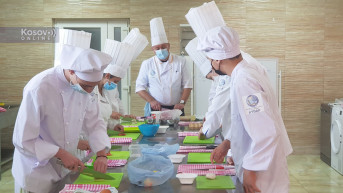
There was once a saying that "a skilled trade is worth its weight in gold" because it guaranteed secure employment immediately after graduation. Today, that proverb is regaining its relevance, as skilled tradespeople are becoming increasingly scarce while labour market demand continues to grow, with some occupations in short supply now offering salaries that often exceed those earned by university graduates.
Written by: Jovana Jovanovic
The shortage of skilled tradespeople is a common challenge across virtually the entire region, as reflected in the lists of occupations in short supply.
For the upcoming school year, Serbia's Office for Dual Education has designated electricians, cooks, waiters, butchers, bakers, carpenters, sales assistants, shoemakers, upholsterers, and auto electricians as shortage occupations. A similar situation exists in Albania, North Macedonia, and Kosovo, prompting increased investment in vocational and dual education, as well as the introduction of scholarships and other incentives designed to encourage young people to pursue professions that are in greatest demand.
At the same time, perceptions of skilled trades are changing. Occupations once viewed as exclusively "male" are increasingly attracting young women, while educational institutions and businesses are working to demonstrate that career choices should be based on individual abilities and interests rather than stereotypes or social expectations.
Interviewees from Serbia, North Macedonia, Albania, and Kosovo told Kosovo Online that addressing the shortage of skilled workers requires better alignment between education systems and labour market needs, stronger promotion of vocational professions, and greater support for young people throughout their education and during their transition into the labour market.
Jelena Jevtovic of the Serbian Employers' Union said that skilled trades are in short supply across the Western Balkans and throughout Europe, making comprehensive reform of the education system necessary in order to align enrolment policies with labour market needs.
"The situation is the same everywhere—there is a shortage of skilled tradespeople not only in our region, the Balkans, but across Europe in general. On the one hand, young people are increasingly reluctant to pursue these professions. Parents tend to steer their children toward office-based careers. On the other hand, many experienced tradespeople have concluded that they can secure a better livelihood by moving abroad. There is a shortage of virtually all skilled trades, as well as technical professions. The construction sector lacks workers across the board. There is also a shortage of drivers, who are not classified as tradespeople, as well as construction technicians, electrical technicians, and auto mechanics. We are certainly facing a serious problem," Jevtovic told Kosovo Online.
She added that interest among young people in vocational secondary schools has been declining for some time.
"We still do not have the official entrance examination results, so we do not yet know how many students have enrolled in vocational schools. This year, just over 60,000 pupils sat the entrance exam. I believe that for some of them, the incentive was the 5,000-dinar subsidy granted to students enrolling in programmes listed as shortage occupations. We are all aware that not everyone can become a doctor or an economist. Children should be educated in accordance with their interests and aptitudes," she said.
According to Jevtovic, skilled trades should be promoted more actively, with particular emphasis on educating parents.
"They need to understand which professions today stand shoulder to shoulder with highly qualified occupations in terms of earnings. Someone who graduates from a vocational school has the opportunity to become their own employer, establish a business, become an entrepreneur, and work independently. At the same time, the media, trade unions, and employers should all become involved so that we can clearly identify the sectors in which our country is expected to develop over the next five, six, or seven years. The goal is not that, if we determine there is a shortage of 200 bricklayers, everyone should become a bricklayer. That is precisely why reform is necessary—to enable accurate labour market analysis," Jevtovic concluded.
Electricians, cooks, sales assistants, and auto electricians rank among the occupations most in demand. Training for these professions is available at two secondary schools in North Mitrovica—the School of Economics and Commerce and the Technical School.
Aleksandar Janicijevic, principal of the School of Economics and Commerce, told Kosovo Online that this year the school once again enrolled students in two three-year vocational programmes—cook and sales assistant—and that both attracted considerable interest.
He noted that student interest in vocational programmes now exceeds that in four-year programmes, primarily because of higher earning potential.
"It seems to me that parents largely determine their children's career paths. The cook programme is particularly attractive because cooks are in high demand, the profession is well paid, and jobs are readily available. I believe the cook programme is especially appealing because it provides students with practical skills that can secure their future, precisely because it is a trade that offers good earnings," Janicijevic explained.
Students at the Mihailo Petrovic Alas Technical School can also acquire qualifications for occupations on the shortage list, including construction technician, electrician, plumbing, heating and air-conditioning installer, and motor vehicle mechanic.
School principal Sasa Markovic said that interest in three-year vocational programmes has declined in recent years, mainly because there are no longer factories in the surrounding area where graduates can find employment.
Although students leave the school with practical vocational skills, most still opt for four-year programmes.
"Before the war we had around 20 students in these programmes. Given the situation after the war and the closure of factories, especially Trepca, interest has declined because young people cannot find employment locally. All of the programmes are good, although one exception is the thermal and refrigeration equipment servicing programme," Markovic said.
Natasa Janevska, Education Adviser in the Office of the President of the Chamber of Commerce of North Macedonia, said that interest in vocational schools has been steadily increasing, although the country still faces a shortage of tradespeople such as locksmiths, welders, and construction technicians.
"In 2019, only 62 percent of students enrolled in vocational schools, while grammar schools filled all available places during the first enrolment round. Today, around 70 percent of students enrol in vocational schools during the first enrolment round, whereas grammar schools often have to wait for the second round before filling all available places. This year, of approximately 15,705 students who enrolled in secondary education, around 10,650 chose vocational schools, while about 4,000 enrolled in grammar schools, including arts schools and the sports grammar school," Janevska explained.
She noted that numerous initiatives have been implemented to encourage students to choose schools according to their interests and abilities rather than parental expectations or outdated notions of "male" and "female" professions.
"Any profession that you enjoy and dedicate yourself to can become a successful career, and it is possible to make a good living from it anywhere. Another important factor is that the government provides scholarships for vocational secondary education through dual education programmes. The Chamber of Commerce also encourages companies to provide additional financial support to students independently of state scholarships, provided this complies with the law. We always advise companies that any financial compensation should be linked to students' attendance and participation in practical training within the company," Janevska said.
Discussing the alignment between labour market needs and enrolment policies, she said educational institutions had gradually recognised that they must work closely with the business sector.
"In recent years, that perception has changed. Educational institutions have realised that they cannot operate separately from the real economy but must respond to labour market needs. Every year, before applications for vocational secondary schools are opened, an analysis is conducted to identify the qualifications required. This is followed by regional consultations involving companies, local governments, chambers of commerce, and vocational schools. Where necessary, new qualifications are introduced, while existing ones are revised to meet employers' needs. As a result, enrolment policy is now aligned with labour market demand," Janevska concluded.
Economist Eduard Gjokutaj of Tirana warned that Albania is facing a serious shortage of skilled tradespeople and qualified workers, arguing that years of investment and education policies have produced labour shortages across key sectors of the economy. He believes stronger vocational and dual education, supported by greater investment from both the state and the private sector, is part of the solution.
"We have many university graduates, but skilled trades are still regarded as second-rate career choices. This mentality has produced more graduates and fewer tradespeople. We particularly lack electricians, welders, construction workers, photovoltaic and energy specialists, vehicle mechanics, and professionals for Albania's key industries, especially construction, tourism, and agro-processing," Gjokutaj told Kosovo Online.
He added that the shortage of qualified professionals is limiting Albania's economic development and competitiveness.
"First, and most visibly over the past decade, many qualified workers have emigrated abroad, creating serious labour shortages and a dangerous situation for the Albanian labour market. Businesses have been forced to address this by importing workers in sectors experiencing acute shortages. Second, the problem is linked to the way vocational education has been developed. Although recent progress has been made, it still falls far short of what the market requires. There are weaknesses in linking theory with practice, as well as insufficient investment," Gjokutaj explained.
Comparing Albania with neighbouring countries, he said Kosovo faces similar challenges but has made greater progress because it has invested more in vocational education, particularly dual education, while also developing stronger links with the German and Swiss labour markets.
He stressed that Albania should develop policies that position vocational education as a first rather than a second choice.
"The dual education model—combining theory and practice—should be designed around labour market needs, with businesses actively involved in shaping curricula. Companies often complain that what students learn in schools does not correspond to their actual requirements," he said.
According to Gjokutaj, young people's aspirations in Albania are similar to those elsewhere in the European Union—they want to participate in a technology-driven economy, but qualifications must also reflect labour market trends if they are to feel secure about their future.
"Without question, salaries play a major role in encouraging young people to remain in the workforce and feel more secure. We are already seeing that young people no longer dream exclusively of obtaining degrees in economics or law," Gjokutaj concluded.
Aulona Grasita, a psychology student at the University of Pristina, said that the lack of work experience and unpaid internships are among the greatest challenges facing young people in Kosovo when seeking employment, stressing that institutions must ensure equal opportunities for everyone.
According to Grasita, employers' insistence on previous work experience makes it extremely difficult for young people to find their first job.
"Today it is very difficult to find employment because everywhere we apply, employers ask for experience. But how are we supposed to gain experience when most internships—if not all—are unpaid? There are also financial and logistical barriers. At a time of economic hardship, how can a student complete an internship if they have to travel, especially since not everyone lives in Pristina? On top of that, they have to pay for meals during the internship, and we all know how expensive everything has become. Internships are costly, and not everyone can afford them," Grasita said.
She therefore believes institutions should take greater responsibility for organising internships and supporting young people entering the labour market.
"They should guide young people from primary school onward by providing information about different professions. They should ensure that everyone has access to internships, whether through paid placements or by covering the costs associated with them. Above all, personal connections should not determine who gets an internship. Everyone should have equal opportunities," Grasita concluded.


0 comments