
Sorensen explored the terrain, what are the next steps in the dialogue?
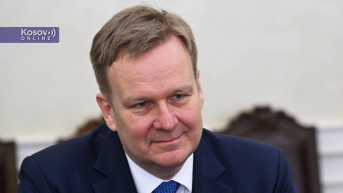
EU Special Representative for Dialogue, Peter Sorensen, completed his first round of consultations in Pristina and Belgrade, and now the harder part of his job begins – encouraging both sides to implement the agreements reached and trying to establish at least the minimum necessary trust between them. According to Kosovo Online's sources, his focus could be on the steps Pristina needs to take to form the Community of Serbian Municipalities, after which the focus would shift to Belgrade regarding the agreement on Kosovo's representation in international organizations.
Written by: Dusica Radeka Djordjevic
Sorensen visited Belgrade yesterday and Pristina last week at a time when high-level dialogue has been absent for a year and a half.
In Belgrade, he met with Serbian President Aleksandar Vucic, Foreign Minister Marko Djuric, and the director of the Office for Kosovo and Metohija, Petar Petkovic.
Vucic described his first meeting with Sorensen, since he took over the EU Special Representative role on February 1, as open and correct. During the talks, the Serbian president, as he noted, expressed particular concern about the difficult position of Serbs in Kosovo due to numerous unilateral and violent actions by Pristina, also pointing out the constant obstructions Pristina carries out in the dialogue process.
"I reiterated that the formation of the Community of Serbian Municipalities, after 12 years of Pristina refusing to fulfill this obligation, is a precondition for the start of substantial normalization of relations. I reiterated Serbia's position that only compromise solutions can contribute to long-term peace and stability in the Western Balkans," Vucic stated.
Minister Djuric pointed out to Sorensen that a stronger role for the EU is needed in the coming period to resume dialogue and find compromise solutions, adding that the precondition for revitalizing this process is the establishment of trust among all parties. Petar Petkovic, the director of the Office for Kosovo and Metohija, conveyed to him that, at this point, the most important issue for Belgrade is the formation of the Community of Serbian Municipalities and that Belgrade will demand that this obligation be fulfilled in accordance with the signed documents from 2013 and 2015, while Veljko Odalovic, the president of the Commission for Missing Persons of the Republic of Serbia, informed the EU representative about the problems related to resolving the issue of the missing.
Earlier, Sorensen visited Pristina, where government representatives emphasized that the Brussels Agreement of 2023 and its Ohrid Annex must be fully implemented "through a fair sequencing plan between the parties," while Kosovar President Vjosa Osmani presented her objections to the draft statute of the Community of Serbian Municipalities proposed by the EU, which, in her opinion, conflicts with the Constitution of Kosovo.
The chief negotiators of the two sides, Petar Petkovic and Besnik Bislimi, last met on December 17 of last year, and Milos Pavkovic, a collaborator at the Center for European Policies in Belgrade, told Kosovo Online that after Sorensen's visit to Belgrade and Pristina, he does not expect a new round of dialogue in the near future, considering that both Belgrade and Pristina have technical governments.
He assumes that the dialogue will continue at the technical level in the coming months, and that high-level political meetings will be postponed until the summer.
"Of course, all of this is subject to change because we see how quickly things are changing both in Belgrade and in Pristina, but as things stand now, I believe Sorensen's focus will be on establishing contacts and potentially continuing the dialogue at the technical level, while meetings of high-level political negotiators will be left for a later period," Pavkovic stated.
He interprets Sorensen's first visits to Belgrade and Pristina as a kind of study tour and as an introduction to the key actors in the dialogue, gathering as much information as possible from the field about the current state of the dialogue, based on which the EU mediator will plan the next steps.
The key topic that the new EU representative for dialogue will focus on, as he assesses, will be the Agreement on the path to normalization and its Ohrid Annex, which were reached two years ago, and whose full implementation is still lacking.
"As for Pristina, the focus is primarily on creating the Community of Serbian Municipalities, specifically on sending the draft statute of the CSM to the Constitutional Court for a review of its constitutionality. When it comes to Belgrade, a constructive approach to Kosovo’s representation in international organizations is likely to be expected, but that step will certainly come after the Pristina side takes action. Currently, the focus seems to be on the CSM and the return of the Serbian community to Kosovo's institutions. This is a crucial issue, without which we can't even discuss other aspects of the dialogue. This is something Sorensen will need to work on with all the parties involved in the dialogue," says our source.
Given that the issues are not new and Sorensen's predecessor, Miroslav Lajcak, was unable to convince Belgrade and Pristina to implement the agreements, the question arises whether the new EU representative for dialogue has any new tactics.
Pavkovic argues that Sorensen’s role has been somewhat strengthened because it is focused solely on the Belgrade-Pristina dialogue, while Lajcak dealt with the broader Western Balkans issues.
"One of the main criticisms of Lajcak was his inability to enforce the implementation of agreements. Whether this will change with Sorensen is difficult to assess at this point. His success will depend primarily on the support he receives from the EU's High Representative for Foreign Affairs, but perhaps even more importantly, from individual EU member states. If they work in synergy with Sorensen, we can expect a better result than with Lajcak. If certain member states continue to act unilaterally, Sorensen’s job will be more difficult, and his credibility undermined by these member states," says Pavkovic.
Historian Luka Jovanovic notes that the real question right now is whether Sorensen will have the strength to compel the side that has not fulfilled its agreements to first meet its obligations, before moving on to new negotiations.
"I personally doubt that this will happen. I believe the old recipe will be followed, where new agreements are sought, even though the old ones remain unfulfilled," Jovanovic tells Kosovo Online.
As he adds, the dialogue has experienced a sort of collapse over the past year or two, and it will be difficult to restart it from scratch. However, he emphasizes that Sorensen is a diplomat with decades of experience, during which he has dealt with all issues concerning the Western Balkans and is up to date with all the facts and challenges of leading the dialogue.
The issues that require primary resolution and attention from both sides, as well as the international community, according to Jovanovic, are the current situation of the Serbian population in Kosovo, particularly the threats they face due to the actions of the Pristina government over the past two years.
"What Pristina has done over the last two years has led to the loss of the little trust that remained, which was built during the previous dialogue process. We have seen the old pattern, where things agreed upon at the table are often ignored on the ground, and when they eventually had to be addressed, they were absolutely annulled and avoided, especially by the Pristina administration," Jovanovic concludes.
According to Aleksandar Sljuka, a collaborator of the non-governmental organization "Nova drustvena inicijativa," it is difficult to expect a significant breakthrough in the dialogue in the near future. He notes that major topics in the dialogue are currently out of focus, and he doesn’t believe that the formation of the Community of Serbian Municipalities (CSM) or the fulfillment of other points from the Ohrid Agreement, to which Serbia is committed, will happen anytime soon.
He adds, "I would say that these were, first and foremost, informational meetings to see where the sides stand and whether there are any common themes or points they could agree on in the initial period."
Sljuka points out that Sorensen, during his visit to Pristina, mentioned that resolving the issue of missing persons is a priority and suggests that work will proceed in this direction. He notes that the last initiative from Lajcak's mandate was the formation of a joint commission for missing persons, which did not start functioning. "I think Sorensen will try to revive the work of this commission and resolve the issue. As he said, he views this issue more as humanitarian than political, and he will present it to the parties as a humanitarian issue, aiming to reach a consensus. This could help gradually restore trust and create space for resolving other issues," Sljuka concludes.
Additionally, Sljuka suggests that some technical issues might come to the table, as there were some technical solutions regarding certificates that were negotiated between Pristina and Belgrade toward the end of Lajcak's mandate.
Regarding a joint meeting between the two sides in the near future, Sljuka does not expect one, stating that Sorensen needs to analyze the situation first to see what opportunities exist for a new meeting. "In Pristina, we now see a confusing political situation, and we still don’t know how a meeting could be organized, as the government in Pristina has not been formed, and it is unclear who could represent Kosovo in Brussels. On the other hand, we have a certain political crisis in Serbia, and until those issues are resolved, we cannot expect significant progress. Maybe a meeting on missing persons or technical issues, but nothing crucial," Sljuka concludes.
Political analyst Artan Muhaxhiri from Pristina believes that in the upcoming period, the messages from the new EU representative for dialogue will focus on the need to respect the Brussels and Ohrid agreements from two years ago and to move forward. "Sorensen cannot differ much from his predecessor, Miroslav Lajcak, because the EU works based on long-term agendas. He will emphasize that obstacles must be removed as soon as possible and that both Belgrade and Pristina need to be much more cooperative in the dialogue. Both Kosovo and Serbia have options; if they remain in the status quo, they will not move forward in their European agendas. But if they decide to cooperate and become more realistic, they will benefit," Muhaxhiri told Kosovo Online.
He adds that the demands facing both sides are clear, as the EU knows what it expects from them, and this will continue to be repeated until the leaderships in Belgrade and Pristina become much more cooperative and progressive. "It all depends on the leaderships of Kosovo and Serbia, their will and plans. Also, all key actors—the United States, Germany, France, Italy, and the United Kingdom—have clearly stated that nothing positive can happen for either Kosovo or Serbia in terms of EU accession before the dialogue is completed. Therefore, the dialogue is the most important thing that must be fulfilled for both Kosovo and Serbia to have hope of joining the European Union one day," concludes Muhaxhiri.


comments