
Specialized chambers of Kosovo in the Hague: Is 2025 the year of resolution for the leaders of the former KLA?
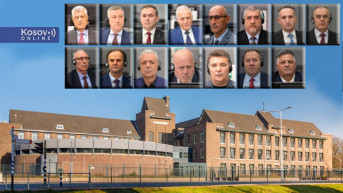
Year of resolution. This is how analysts see 2025 for the leaders of the former KLA who are being tried before the Kosovo Specialist Chambers based in The Hague. For the interlocutors of Kosovo Online, this perception needs a bit of "color": the trials so far indicate significant pressures on witnesses, as well as the absence of indictments for many crimes committed against Serbs, including serious accusations of trafficking in organs of kidnapped and detained individuals in the territory of Albania.
Written by: Arsenije Vuckovic
The Kosovo Specialist Chambers based in The Hague are marking the tenth anniversary of their establishment on August 3 this year.
The Assembly of Kosovo first amended the Constitution by introducing Article 162, and then by adopting the Law on Specialist Chambers and Specialist Prosecutor's Office enabled the formation of this court, which was given the mandate to investigate all crimes committed in Kosovo from January 1998 to December 2000.
The court was established as a direct consequence of the Report of the Parliamentary Assembly of the Council of Europe adopted on January 7, 2011, following the investigation conducted by then-special rapporteur Dick Marty.
The ten-year mandate has seen a total of six trials, of which three are related to war crimes, and three were initiated for "criminal offenses against the judiciary," namely witness intimidation.
The latest indictment was raised at the end of last year against Hashim Thaçi, Isni Kilal, Bashkim Smakaj, and Fadil Fazliu.
"According to the confirmed indictment, approximately in the period from April 12 to November 2, 2023, during separate, non-privileged visits to the detention facility, Hashim Thaçi provided Smakaj, Klilaj, Fazliu, and Kuçi with confidential information about prosecution witnesses, instructed them to influence the testimony of prosecution witnesses, and gave them detailed instructions on how to do so," the summary of the indictment states.
Thaçi submitted a notice to the court on January 6 in which he pleaded not guilty.
During his first appearance before the court on December 17, Thaçi stated that the indictment against him was "hastily" raised because of the February 9 elections, but that he had no such political ambitions.
"Before I plead, I want to add something. At this early stage of this process, you know, four years ago, in November 2020, an indictment was raised against me just three months after I was re-elected as president of the country. Now, ten days ago, the Prosecution hastily raised an additional indictment just two months before the parliamentary elections in Kosovo," said Thaçi.
Less than two months earlier, in another procedure for criminal offenses against the judiciary, and just a few days before the trial began, Sabit Januzi, Hadži Shala, and Ismet Bahtijari pleaded guilty and entered into an agreement in which Shala agreed to a three-year prison sentence, Januzi to two to two and a half years, and Bahtijari to two years in prison.
In cases of war crimes for which the Specialist Chambers were established, so far one final and one first-instance verdict have been issued.
The procedure involving three levels of decision-making regarding the sentence was completed only in the case of Salih Mustafa, the commander of the BIA guerrilla unit within the KLA's Lab operational zone.
After three years of trial, the Appeals Court panel sentenced him on September 10 to a single sentence of 15 years in prison.
He was originally convicted of war crimes to 26 years.
By another, first-instance verdict, on July 16 last year, a former KLA member stationed in Kukës, Albania, Pjetr Shala, was sentenced to 18 years in prison.
He was convicted for arbitrarily detaining at least 18 people from May 17 to June 5, 1999, in a metal factory in Kukës, as well as for torture and murder.
At a session held on November 29, Shala was additionally ordered to pay 208,000 euros as compensation to the victims. This process is in the appeal phase.
The most important process of the Specialist Chambers - the case against Hashim Thaçi and three other high officers of the former KLA - is entering the final phase of presenting evidence by the prosecution this year, after which the defense teams will present their evidence and witnesses.
Last year, this trial was marked by the departure of two main attorneys in the defense teams and the hearing of 39 out of a total of 110 witnesses planned by the Prosecution.
While the defenses of the accused mainly highlight financing as a key problem, Kosovo's Minister of Justice Albulena Haxhiu claims it is unprecedented that the Special Court is not accountable to any institution in Kosovo, stating that an international or domestic mechanism must be created to at least monitor the rights of the accused, court bias, and other circumstances related to the work of the chambers.
Interlocutors of Kosovo Online are convinced that there will be nothing from that demand.
Joint Criminal Enterprise
For associate professor at the Law Faculty in North Mitrovica, Dusko Celic, the key problem with the work of the Specialist Chambers is that there will be no new indictments, and the existing ones do not cover the majority of crimes against Serbs.
"I do not believe there will be more indictments, unfortunately. These indictments are not complete, and whether there will be verdicts, it is possible that as we go with this dynamics, we might expect a verdict regarding the trial of Hashim Thaçi and the accused together with him by the end of this year or the beginning of next year," says Celic in an interview for Kosovo Online.
He views the manner in which the Specialist Chambers were established as a key issue.
"The institutions in Pristina have realized that they are no longer responsible for adjudicating Albanian perpetrators for crimes against Serbs but are solely focused on 'Serbian' crimes, which we have observed in action in recent years. They are engaged in arbitrarily and indiscriminately arresting Serbs and charging them with war and other crimes," points out Celic.
He sees another aspect as the inefficiency of the indictments.
"Upon reviewing the indictments, we see that the vast majority of criminal acts involving Serbian victims are not covered. Only a few dozen Serbian victims are addressed, along with a few dozen Albanian victims. There is no mention of the crimes in the 'Yellow House', involving hundreds of Serbs. As the long-serving president of the Coordination of Serbian Associations of Families of the Missing and Murdered in the Former Yugoslavia, I can say that during the wartime events in Kosovo and Metohija there were more than a thousand Serbian victims, yet only a few dozen are covered here. Additionally, we already have several indictories for witness intimidation, which again points to the inefficiency of this mechanism. With all this in mind, unfortunately, I cannot be optimistic about the outcomes and cannot say that the victims' families will receive just satisfaction in terms of truth and justice," emphasizes Celic.
He sees it as positive that the former KLA leaders have been charged with a joint criminal enterprise.
"What might be interesting from the perspective of Serbian victims is that the criminal acts in these indictments are indeed classified as a joint criminal enterprise of former KLA members. Regardless of the individualization of guilt and the eventual outcome of these proceedings, it indicates that the KLA was part of that criminal enterprise. Thus, it can be said that things in Kosovo and Metohija were not as black and white as Pristina presents them," specifies Celic.
The Dean of the Law Faculty in North Mitrovica assesses that the Specialist Chambers have been a "hybrid court" from the beginning, formed due to the international community's distrust in Kosovo's judiciary.
"The establishment of this quasi-judicial body indicates that even the Western part of the international community has accepted that the institutions in Kosovo and Metohija are incapable of providing justice and satisfaction, primarily to Serbian victims of war crimes and to Albanian perpetrators. And the fact that these quasi-judicial bodies were formed in a hybrid manner to formally belong to the institutions of so-called Kosovo, yet its operation is relocated to The Hague and consists of foreign judges and prosecutors, again indicates a type of distrust in the institutions in Pristina," emphasizes Celic.
He believes that the Specialist Chambers should have been under the jurisdiction of the UN Security Council, not the Kosovar system.
He highlights another problem: the issue of witness intimidation, which began during the work of the International Criminal Tribunal for the Former Yugoslavia.
"Especially considering the experience with witness intimidation, with the fact that we had such situations even in the International Tribunal for crimes in the territory of the Former Yugoslavia. Let's mention the indictments and acquittal verdicts against (Fatmir) Limaj, (Ramush) Haradinaj. Here I am even less optimistic," says Celic.
He believes the only solution for the families and associations of the kidnapped and missing is not to allow the processes before this court to take place in the dark.
"What we perhaps need to do, and what we can do, is to ensure that the work of this Tribunal does not take place in the dark, but that the media and the families and associations of victims are interested in having the process take place under their scrutiny, because there is simply a public interest and the interest of the families of the victims to at least achieve some form of justice, in which I absolutely doubt when it comes to this mechanism," concludes Celic.
Delays in Proceedings
For the lawyer from Pristina, Tom Gashi, the key word in the work of the Specialized Chambers is delay.
"We all know that it is being prolonged. But, considering that this special court can also be treated as international, cases of criminal acts and accusations of war crimes and other criminal acts have never been concluded in proceedings that lasted less than five years. I have repeatedly pointed out that these trials will take a very long time and that the trials before the Special Court will last at least another year to a year and a half," says Gashi for Kosovo Online.
Despite this, he is confident that a first-instance verdict in the key case against Hashim Thaçi and three other former KLA commanders could be delivered by the end of this year or at the latest by the beginning of next year.
"The prosecutor has proposed all witnesses, and approximately by March or April of this year, they will have finished testifying. Then comes the phase when defenders and clients propose and examine defense witnesses. I believe that during this year, and possibly even at the beginning of next year, the trial will be concluded," Gashi believes.
Commenting on the statement by Minister of Justice Albulena Haxhiu that an international or domestic mechanism should be created to at least monitor the rights of the accused, the bias of the court, and other circumstances, Gashi says it is a good, but currently unachievable proposal.
"It would be very good, but it is for now almost impossible since this is not at all envisaged in the Law on the special court," Gashi believes. He thinks that this should have been considered by the members of parliament who on August 2, 2015, voted for the establishment of the Specialist Chambers and the Prosecution.
"They had to consider what would happen with this court, who would be competent, how it would operate... In Kosovo, we have a Judicial Council, but this institution has no jurisdiction when it comes to the Special Court based in The Hague, Netherlands," emphasizes Gashi.
(Un)fulfilled Expectations
Former military prosecutor, lawyer Dragan Pasic believes that the Specialist Chambers have partially met expectations.
He sees the case against Hashim Thaçi and three high officers of the former KLA for accusations of war crimes, which were committed not only in Kosovo but also in Albania, as key but also the most complex.
"This year, I expect the ongoing trial, in which Hashim Thaçi and others are accused, to conclude. Also, I expect other trials to begin, based on past experience, because typically first-instance trials last from a year to a year and a half. Indeed, this trial against Hashim Thaçi and his three associates who had active roles in the so-called KLA is the most complex as it involves crimes not only in Kosovo but also in northern Albania," Pasic emphasizes in an interview for Kosovo Online. He reminds that currently, proceedings against 16 individuals accused of crimes against humanity, war crimes, and other acts defined by the laws of Kosovo are being conducted.
"The number might increase, but what is evident now is that the Specialist Prosecutor's Office is conducting thorough investigations, illuminating the most severe crimes. All this would not have been possible without Dick Marty, the well-known Swiss politician and lawyer, who back in 2010 drafted a report on the inhumane treatment of civilians and human organ trafficking, which consequently led to the adoption of such a report by the Parliamentary Assembly of the Council of Europe and other institutions," says Pasic.
Commenting on the indictments and the number of those accused of war crimes, Pasic believes that this number should have been much larger.
"Regardless of the fact that the leaders of the so-called KLA have been prosecuted, there still exists a large number of crimes known to our country and the public," this expert highlights.
He specifies that proceedings for "obstructing justice" are also being conducted before the Specialist Chambers, which includes influencing investigators and other persons who led the investigations, as well as intimidating witnesses.
"The court has been very effective here, so there are already several individuals who have been definitively convicted for intimidating witnesses, some of whom have repeated this criminal offense, including Hashim Thaçi, against whom a proceeding for obstructing justice is being conducted. Here, the Specialist Chambers and the Kosovo Specialist Prosecutor's Office have shown effective action," Pasic stated.
In December, he recalls, three accused of this criminal act reached a plea agreement with the prosecution.
"So, we have definitive verdicts concerning these criminal acts," specifies Pasic.
He believes that in the course of the proceedings so far, the Specialist Chambers have partially justified their expectations.
This conclusion is drawn from analyzing the final verdict based on the definitive sentence of Salih Mustafa, whose trial began on September 15, 2021, and concluded late last year.
"The first-instance verdict was 26 years, which was later reduced to a 15-year prison sentence in the appeals process. This is so far the only definitive verdict. The length of this sentence, 15 years, is evidence that this court, specifically, the Specialist Chambers, has not fully met expectations, given the severity of the crimes. Salih Mustafa was convicted of unlawful deprivation of liberty, torture, and murder. And this is a relatively lenient sentence," claims Pasic.
Pasic views the claim by Kosovo's Minister of Justice Haxhiu that it is unprecedented for the Special Court not to be accountable to any institution in Kosovo and that it is necessary to establish an international or domestic mechanism to oversee the rights of the accused, the bias of the court, and other circumstances, as a political statement without legal foundation.
"The Kosovo Specialist Chambers and the Kosovo Specialist Prosecutor's Office are only formally part of the Kosovo legal system. However, Kosovo's institutions have no jurisdiction over these judicial institutions, nor do they fund them. They are funded by the European Union, or the countries of the European Union. Thus, no supervision, no instructions, and no control can be exercised by any body of so-called Kosovo, including the Kosovo Assembly," explains Pasic.
0 comments